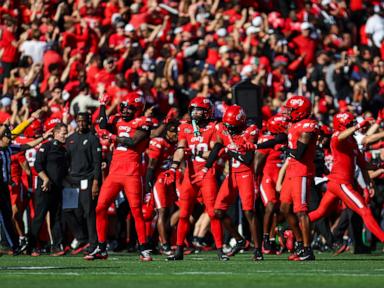
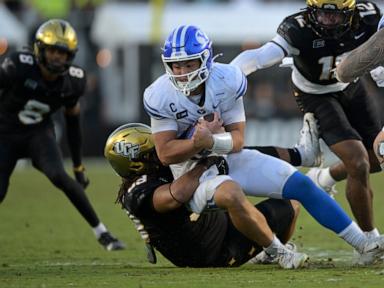
The sound does not belong on a Friday night under bright stadium lights. It is a dull, wet thud—the acoustic signature of two hundred-pound bodies meeting at twenty miles per hour, compressed into a fraction of a second.
I still remember the metallic taste in the back of my throat during my junior year of high school, sitting on the cold aluminum bench after a routine slant route went wrong. My vision didn't go black. Instead, the stadium lights smeared into long, greasy streaks of white, and the roar of the crowd sounded as though it were being filtered through six feet of muddy water. The trainer asked me what day it was. I knew the answer, yet the word Friday felt heavy and foreign on my tongue, like trying to speak through a mouthful of cotton.
We have spent over a century trying to armor the human body against a game built on violent momentum. We traded leather caps for polycarbonate shells, added steel facemasks, and lined the interiors with dense foam. Yet, if you ask the neuroscientists and biomechanical engineers currently hunched over high-speed crash footage in laboratories from Virginia Tech to Stanford, they will tell you an uncomfortable truth. We got the physics of protection completely backward.
The Myth of the Hard Shell
To understand why football remains so perilous, you have to picture what actually happens inside the skull during a tackle. Consider a hypothetical scenario involving a seventeen-year-old linebacker—let’s call him Marcus. Marcus is wearing a brand-new, five-star-rated helmet. On third-and-long, he lowers his shoulder to meet a running back in the hole.
From the bleachers, the collision looks like a triumph of modern engineering. The plastic shells clack loudly, absorbing and dispersing the blow, and both players bounce back to their feet. No penalty flag is thrown. Neither player is diagnosed with a concussion.
Inside Marcus’s head, however, a silent disaster has just unfolded. Think of the human brain not as a solid organ, but as a delicate, three-pound mass of warm gelatin floating inside a rigid, bony bowl filled with cerebrospinal fluid. When Marcus’s helmet stops abruptly against the running back’s pads, his skull halts instantly. His brain does not. Driven by inertia, that soft tissue surges forward, slamming against the jagged interior ridges of his skull before snapping backward against the opposite wall.
Even worse than the straight-line impact is what engineers call rotational acceleration. Most football hits do not happen dead-on; they strike at an angle, twisting the head violently to the side. That sudden torque stretches and shears the microscopic axons—the delicate wiring that allows brain cells to communicate with one another.
For decades, helmet manufacturers designed gear to prevent skull fractures, a goal they achieved brilliantly. Hard shells and stiff padding excel at spreading out linear force so the bone does not crack. Unfortunately, those exact same materials do very little to stop the brain from sloshing and twisting inside the fluid. By making the outside of the head nearly indestructible, we inadvertently created an environment where players felt invincible, leading them to use their heads as battering rams.
The Accumulation of Invisible Hits
The cultural obsession with the highlight-reel knockout hit has blinded us to the real danger. We wince when a wide receiver gets leveled across the middle and stays down on the turf, surrounded by medical staff. Those catastrophic moments are terrifying, but they are not the primary driver of long-term neurological decline.
The true threat is mathematical, quiet, and cumulative.
A typical high school or college lineman endures hundreds of "sub-concussive" impacts over a single season—routine, low-grade collisions that happen on almost every snap. Individually, none of these hits trigger dizziness, nausea, or blurred vision. The player feels fine. He jogs back to the huddle, slaps his teammate on the shoulder pads, and lines up for the next play.
Yet, when researchers at Boston University and Purdue University began placing tiny accelerometers inside players' helmets and mouthguards, the data told a chilling story. Functional MRI scans revealed that linemen who had never been diagnosed with a single concussion still showed measurable changes in their brain's white matter by the end of the season. Their neural pathways were fraying, bit by bit, under the relentless percussion of everyday practice.
This brings us to Chronic Traumatic Encephalopathy, or CTE—a progressive degenerative brain disease linked to repeated head trauma. Right now, CTE can only be definitively diagnosed after death, when pathologists slice into brain tissue and look for abnormal clumps of a protein called tau. Tau normally helps stabilize internal structures in brain cells, acting like the ties on a railroad track. Repeated rotational forces shake those proteins loose. Once dislodged, tau tangles together, choking off healthy neurons and triggering a slow, cascading wave of cell death that can continue spreading years after an athlete hangs up their cleats.
In a landmark 2017 study published in the Journal of the American Medical Association, researchers examined the brains of 202 deceased football players. They found CTE in 177 of them—including 110 of the 111 former NFL players studied. Those numbers are skewed by selection bias, since families who noticed behavioral changes in their loved ones were more likely to donate their brains. Even so, the sheer scale of the findings shattered any lingering illusion that brain trauma was a rare occupational hazard.
Rewriting the Physics of Protection
Faced with this biological reality, scientists realized they could no longer rely on thicker plastic or stiffer foam. If they wanted to save the brain, they had to change how energy moves during a collision. They needed to buy time.
In physics, force is a function of mass and deceleration. If you drive a car into a concrete wall, the stop is instantaneous, and the destructive force is massive. If you drive that same car into a row of water-filled barrels, the barrels crumple sequentially, stretching the deceleration out over several milliseconds and drastically reducing the peak force felt by the driver.
Modern helmet engineers are now building those crumple zones directly into the headgear.
Take the Vicis Zero2, a helmet that looks subtly different from traditional models. Instead of a rigid outer shell, it features a deformable outer layer that yields upon impact, buckling inward like a car bumper before rebounding. Beneath that soft shell sits an array of buckled columns—tiny, flexible struts designed to bend sideways when struck at an angle. By collapsing laterally, these columns absorb rotational torque before it can twist the athlete's neck and skull.
Other researchers are looking beyond the helmet entirely, questioning why we focus exclusively on the outside of the head when the damage happens on the inside.
Consider the Q-Collar, a C-shaped device worn around the base of the neck that has received clearance from the U.S. Food and Drug Administration. The concept sounds bizarre until you understand the physiology behind it. Woodpeckers slam their beaks into tree trunks at forces exceeding 1,000 Gs without suffering brain damage, in part because they possess specialized muscles that gently compress their jugular veins right before impact. This slight restriction increases blood volume inside the cranium, tightening the fit of the brain within the skull—much like filling a shipping box with extra bubble wrap so the fragile item inside cannot rattle around. The Q-Collar mimics this biological mechanism, applying light pressure to the sides of the neck to reduce the brain's "slosh" during a hit.
Meanwhile, biomechanics labs are replacing foam with liquid-filled shock absorbers and non-Newtonian fluids—materials that remain soft and pliable at rest, allowing air to circulate, but instantly harden into a protective solid the millisecond they experience a sharp impact.
The Smart Mouthguard Revolution
Technology, however, is useless if coaches and doctors remain blind to what is happening on the field in real time. For generations, concussion diagnosis relied entirely on self-reporting—a system doomed to fail in a locker room culture that prizes toughness above self-preservation. When I sat on that bench in high school, every instinct in my body told me to lie to the trainer, tell him my head was clear, and get back into the game before I lost my starting spot.
Today, silicon sensors are stripping away the guesswork.
Engineers have miniaturized accelerometers and gyroscopes to the size of a grain of rice, embedding them directly into custom-molded mouthguards. Why mouthguards? Because the upper teeth are rigidly attached to the skull. Unlike a helmet, which can shift and slide independently of a player's head during a tackle, a mouthguard moves in exact lockstep with the cranium.
During professional and collegiate games, these smart mouthguards transmit live telemetry to tablet computers on the sidelines. Every time a player takes a hit exceeding a predetermined threshold of linear or rotational force, an alert pings the medical staff’s screen. Even if the athlete pops up immediately and insists he feels great, the independent neurotrauma consultant on the sideline sees the raw physics of the collision and can pull him into the blue medical tent for a mandatory evaluation.
The Rulebook as a Scalpel
Ask any honest biomechanical engineer whether they can build a "concussion-proof" helmet, and they will give you a blunt answer. No. As long as human beings run at full speed and collide with one another, the brain will continue to move inside the skull. Hardware can dampen the shockwave, taking the sharp edge off a violent blow, but engineering alone cannot outsmart Newton’s laws of motion.
The most effective safety breakthroughs over the past decade have not come from a materials science lab, nor from a billion-dollar tech startup. They have come from changing how the game is played.
Look at what happened when the Ivy League—hardly a hotbed of radical anti-football sentiment—decided to eliminate full-contact tackling from regular-season practices in 2016. Coaches initially worried their players would forget how to tackle properly, leading to sloppier form and higher injury rates on Saturdays. The exact opposite occurred. By stripping away thousands of repetitive practice collisions, Ivy League teams saw their overall concussion rates plummet by more than half, while their on-field performance remained entirely unchanged.
The NFL followed a similar path when it overhauled its kickoff rules. Historically, the kickoff was the most dangerous play in sports—a high-speed car crash in cleats where coverage players sprinted forty yards downfield before colliding at maximum velocity. By moving the kickoff line forward and later redesigning the alignment so players start just five yards apart, the league dramatically reduced the closing speed of those collisions. Concussions on kickoffs dropped precipitously, proving that small adjustments to geometry and distance could save brains without ruining the spectacle of the sport.
Even the way coaches teach tackling has undergone a quiet revolution. Inspired by rugby—a sport played without helmets or shoulder pads—football programs across the country are abandoning the old-school mantra of "put your face mask on the ball." Instead, players are trained in "hawk tackling," keeping their heads completely out of the contact zone, leading with their shoulders, and wrapping the ball carrier’s thighs. When you take the head out of the equation, the helmet ceases to be a weapon and returns to its original purpose: a last line of defense against accidental contact.
The Uncomfortable Bargain
I still love watching football on crisp autumn afternoons. I love the chess match between an offensive coordinator and a middle linebacker, the geometric beauty of a perfectly timed corner route, and the communal electricity that hums through a packed stadium when the home team mounts a fourth-quarter drive.
Yet, watching the game now feels different than it did twenty years ago. Every time a running back lowers his crown to fight for an extra yard, or a safety flies across the field to break up a pass, my mind automatically calculates the invisible physics behind the spectacle. I see the soft tissue surging against bone. I picture the microscopic fibers stretching under sudden torque.
Science is giving us sharper tools every single year. Deformable shells, liquid shock absorbers, biometric mouthguards, and smarter practice schedules are steadily chipping away at the worst excesses of the sport. Football is undeniably safer today than it was when I was swallowing blood on that high school bench.
Still, there is a hard limit to what laboratory innovation can accomplish when paired with a sport whose fundamental currency is physical collision. We can cushion the blow, track the impact, and rewrite the rules to eliminate the most reckless hits, but we cannot engineer away the human brain's vulnerability to sudden deceleration. Ultimately, making football safer requires more than better helmets; it demands a willingness to keep changing the game itself, even when those changes challenge the very traditions that made us fall in love with it in the first place.
Down on the turf, the referee blows his whistle, spots the ball at the forty-yard line, and waves the chains forward while twenty-two young men jog back to their huddles, their helmets gleaming brightly beneath the stadium lights.