Chasing stolen millions across borders used to feel like running in wet concrete. You knew where the money went, you could practically see the luxury condos and shell companies on your screen, yet the legal paperwork took months to catch up. By the time a formal Mutual Legal Assistance Treaty (MLAT) landed on a foreign desk, the accounts were empty.
That's the exact problem Interpol’s silver notice was built to solve, and why the discussions surrounding its rollout—including the pivotal gathering in Hong Kong—matter so much to anyone watching global finance and law enforcement. Recently making headlines recently: Inside Norman Eisen’s Legal War Machine Against the Trump Administration.
If you've only ever heard of a Red Notice, you're not alone. Hollywood loves them. They're the international alerts asking police worldwide to locate and provisionally arrest a fugitive pending extradition. But arrests don't pay back victims, and locking up a cartel boss doesn't stop their lieutenants from funding operations using hidden real estate in London, Dubai, or Vancouver. For decades, international policing had a massive blind spot when it came to the actual cash.
What the Interpol Silver Notice Actually Does
Let's clear up the biggest misconception right away. A Silver Notice isn't an international asset freeze order. Interpol doesn't have the legal authority to walk into a bank in Zurich or Singapore and lock down an account on its own. Additional information regarding the matter are covered by The Guardian.
Instead, think of it as a high-speed, standardized intelligence flare.
When a member country requests a Silver Notice, they're asking the other 195 Interpol member nations to help locate, identify, and obtain information about assets linked to criminal activities. We're talking about properties, vehicles, financial accounts, corporate stakes, and high-value items like art or yachts.
Before this system existed, investigators had to rely on informal police-to-police channels or painfully slow diplomatic requests just to confirm whether a suspect owned a specific holding company in another jurisdiction. You couldn't even ask a foreign court to freeze an asset until you proved the asset existed. That Catch-22 allowed organized crime syndicates, cybercriminals, and corrupt officials to move billions of dollars with minimal friction.
According to data frequently cited by the United Nations Office on Drugs and Crime (UNODC) and the Financial Action Task Force (FATF), global law enforcement intercepts less than two percent of illicit financial flows. Two percent. That means ninety-eight cents of every dirty dollar stays in criminal hands. The Silver Notice is an admission by the international community that the old way of doing things was failing miserably.
Why Hong Kong Became a Focal Point for Asset Recovery
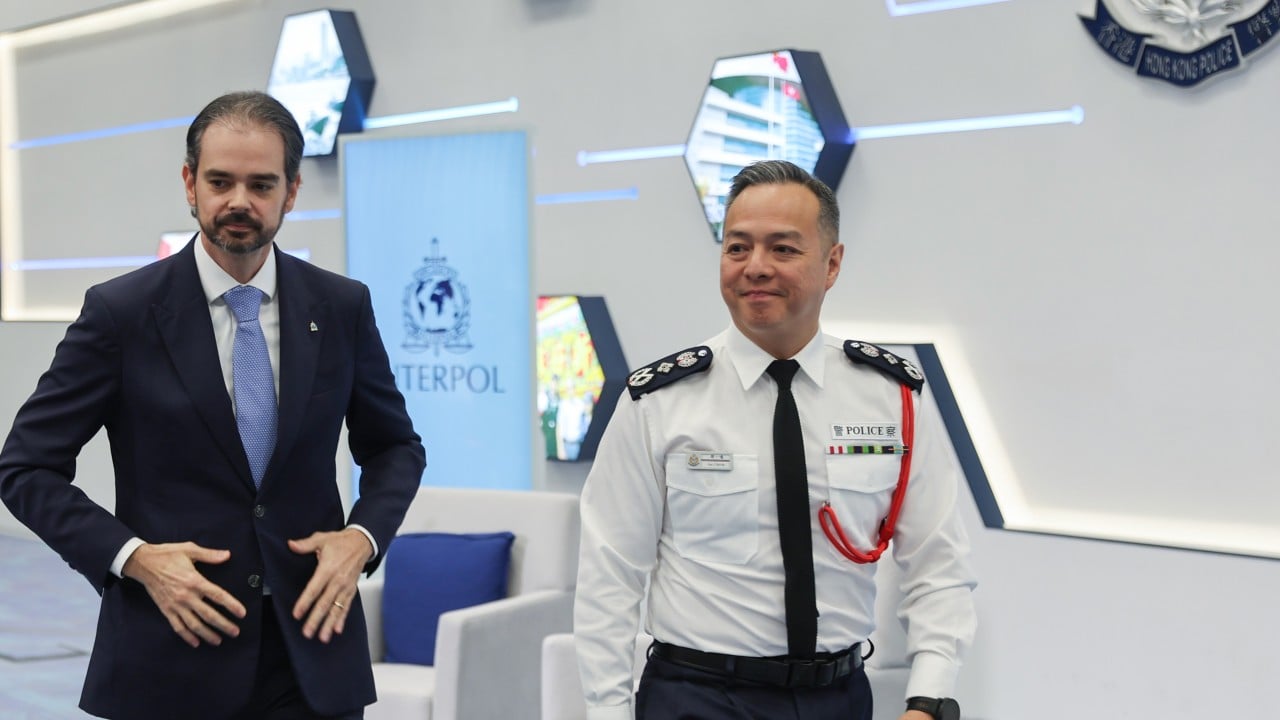
Choosing Hong Kong as a venue for major Interpol discussions around financial crime and the Silver Notice wasn't an accident. As one of the world's premier financial hubs, Hong Kong sits at the crossroads of global capital flows, cross-border trade, and complex corporate structuring.
When Interpol's financial crime experts and member delegations met in Hong Kong, the conversations centered on operationalizing this new tool without bogging it down in red tape. Financial hubs face a unique tension. They want to attract legitimate global capital with speed and efficiency, yet they're under intense pressure from bodies like FATF to prove they aren't safe havens for laundered money.
Hong Kong's own law enforcement infrastructure—specifically the Joint Financial Intelligence Unit (JFIU) and the Commercial Crime Bureau—deals daily with the exact types of cross-border fraud and money laundering schemes the Silver Notice targets. Think about the explosion in "pig butchering" investment scams and business email compromise (BEC) fraud originating across Asia and targeting victims globally.
In those cases, stolen funds hop through five or six jurisdictions in under forty-eight hours. A victim in Texas wires money to a bank in Hong Kong, which immediately splits the funds into cryptocurrency wallets or shell entities in Southeast Asia and Europe. Local police in Texas have zero visibility once the wire leaves the country. By bringing the Silver Notice framework into focus at a major financial hub, Interpol signaled that major banking centers need to be active participants in rapid asset tracing, not passive bystanders waiting for years-old court orders.
How the Pilot Phase Tested the Waters
Interpol didn't just flip a switch and launch the Silver Notice globally overnight. They ran a carefully structured pilot phase involving roughly fifty-one member countries and territories.
Why a pilot? Because adding a new color to Interpol's notice system is a massive deal. The organization hadn't introduced a brand-new notice type in decades—not since the Interpol-United Nations Security Council Special Notice was created in 2005 to target individuals and entities linked to Al-Qaeda and the Taliban.
During the pilot, participating nations tested how the requests moved through Interpol's secure communications network, known as I-24/7. They had to figure out basic, unglamorous logistical questions that make or break international investigations:
- What minimum threshold of evidence is required before a country can issue a Silver Notice?
- How quickly can a receiving country's Financial Intelligence Unit (FIU) legally share banking or corporate registry data back to the requesting nation?
- How do you prevent authoritarian regimes from abusing the system to harass political dissidents and seize their personal wealth?
That third point is the elephant in the room whenever Interpol expands its powers.
The Abuse Problem Nobody Can Afford to Ignore
If you follow international law, you know Interpol's Red Notice system has faced heavy criticism over the years. Organizations like Fair Trials and various human rights groups have documented numerous instances where autocratic governments used Red Notices to track down exiled journalists, opposition politicians, and business rivals on fabricated charges.
Now imagine giving those same governments a streamlined tool to locate the bank accounts and properties of dissidents living abroad.
Interpol's leadership and its Commission for the Control of Interpol's Files (CCF) are acutely aware of this risk. Article 3 of Interpol's Constitution strictly forbids the organization from undertaking any intervention or activities of a political, military, religious, or racial character. Every Silver Notice request has to pass through a strict legal compliance review at the General Secretariat in Lyon before it ever gets published to member states.
Honestly, whether this safeguard holds up under pressure is the single biggest test for the Silver Notice. During the Hong Kong discussions and subsequent evaluations, legal experts emphasized that asset tracing requests must meet a high bar of dual criminality—meaning the underlying offense has to be a crime in both the requesting country and the country holding the assets—and must be tied to serious offenses like organized crime, corruption, or large-scale fraud.
If the system gets flooded with politically motivated requests, major financial centers like the United States, the UK, Switzerland, and Singapore will simply stop responding to them. Trust is the only currency Interpol actually trades in. Lose that, and the whole network goes dark.
Silver Notice vs. Traditional Asset Recovery Tools
To understand why investigators are genuinely excited about this, you have to look at how clunky the alternatives are.
Mutual Legal Assistance Treaties (MLATs)
An MLAT is a formal diplomatic agreement between two countries to gather and exchange information for law enforcement. They're legally binding, which is great when you need admissible evidence for a criminal trial. They're also brutally slow. Drafting an MLAT request, getting it translated, routing it through the Department of Justice or Ministry of Foreign Affairs, and waiting for a foreign judge to approve a subpoena easily takes twelve to twenty-four months. Criminals move money in milliseconds.
Informal Police Channels and Egmont Group Requests
Financial Intelligence Units use the Egmont Group secure web to share intelligence quickly. That works well for bank-to-bank suspicious activity reports. However, Egmont intelligence generally can't be used directly as evidence in court, and it doesn't always cover non-financial assets like luxury real estate, aircraft registrations, or corporate shareholdings held through nominee directors.
Where the Silver Notice Fits In
The Silver Notice bridges the gap between informal intelligence and formal diplomatic requests. It uses Interpol's universal infrastructure—which reaches almost every police force on earth—to cast a wide net when investigators don't even know which country the money went to.
Say an investigator knows a suspect stole fifty million dollars, and they suspect the money went into overseas real estate, but they have no idea whether it's in Spain, Thailand, or the United Arab Emirates. Sending out separate MLATs to dozens of countries on a hunch is impossible. Issuing a single Silver Notice alerts all participating jurisdictions simultaneously. Once Spain or the UAE replies, "Yes, this individual owns three villas here through an LLC," the requesting country now has the exact target information needed to file a focused, surgical MLAT to freeze and confiscate those properties.
It turns a blindfolded dart throw into a guided missile.
What This Means for Banks, Compliance Teams, and Cross-Border Business
You don't have to be an international fugitive for the Silver Notice to affect your world. If you work in banking compliance, corporate law, real estate, or wealth management, this shifts the risk calculus significantly.
For years, corporate service providers and offshore registry agents operated under the assumption that cross-border ownership structures were practically invisible unless a massive data leak—like the Panama Papers or Pandora Papers—exposed them to journalists. Law enforcement simply lacked the bandwidth to trace multi-layered shell companies across three or four jurisdictions for a single fraud case.
That obscurity is evaporating.
As Silver Notices become routine, domestic police forces will receive far more inquiries from abroad asking for beneficial ownership details and local asset records. That means local authorities will knock on the doors of domestic banks, trust companies, and real estate brokerages much faster than they used to.
If your Know Your Customer (KYC) and Anti-Money Laundering (AML) onboarding processes rely on rubber-stamping shell companies without verifying the ultimate beneficial owner, you're sitting on a ticking time bomb. When a foreign Silver Notice triggers a domestic inquiry, regulators won't just look at the criminal suspect. They'll look at the financial institutions that facilitated the transactions without asking basic questions.
The Practical Reality Moving Forward
Interpol's push to normalize the Silver Notice—cemented through high-level summits like the one in Hong Kong—marks a permanent shift in how global policing operates. Arresting criminals is no longer the finish line; bankrupting their networks is.
For compliance professionals, legal advisors, and investigators watching this space, the immediate priorities are clear:
- Audit beneficial ownership records now. Ensure that every corporate client in your portfolio has documented, verifiable human owners on file, not just layers of holding companies in secrecy jurisdictions.
- Monitor Interpol's General Assembly updates. Pay close attention to how the organization refines the compliance rules around Silver Notices, particularly regarding data privacy and dual-criminality standards.
- Prepare for faster domestic subpoenas. Expect local Financial Intelligence Units and commercial crime bureaus to issue information requests on shorter timelines as they respond to incoming international alerts.
The era where moving money across a border bought criminals years of breathing room is closing. The paperwork finally learned how to run.