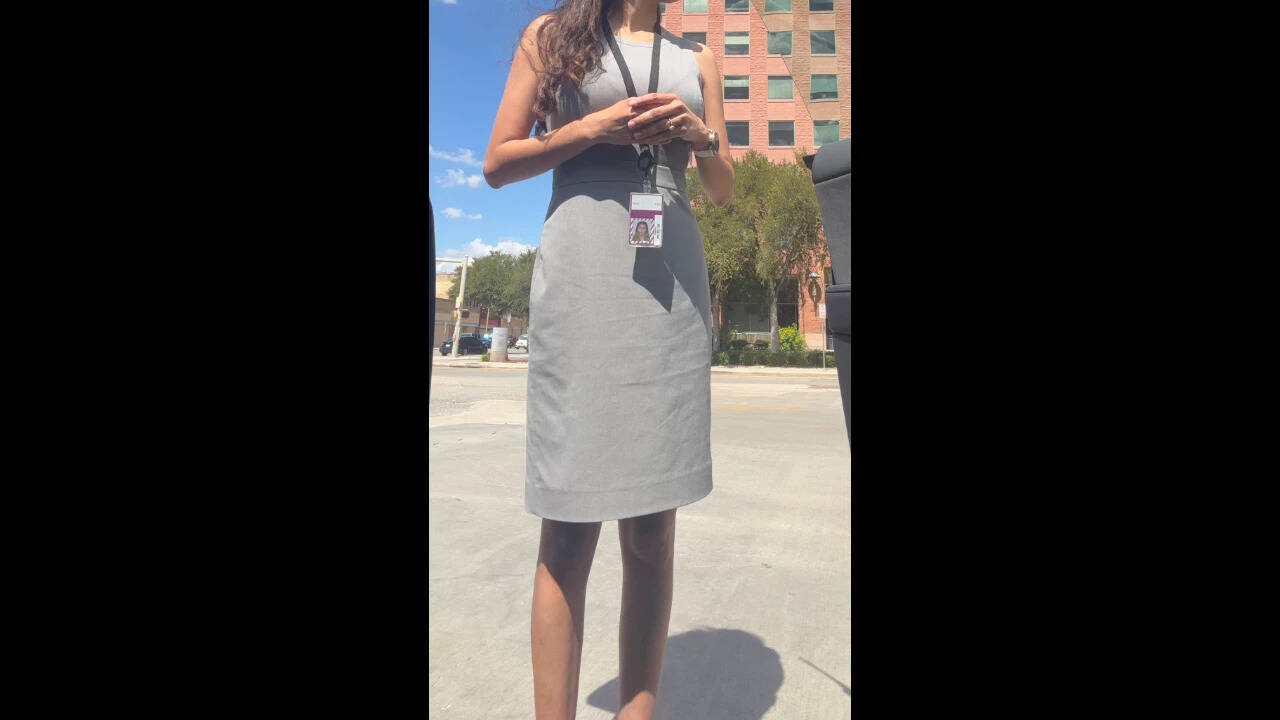
A gray shift dress without sleeves should never cause a constitutional crisis. Yet when criminal defense attorney Mariah Medina walked into a Bexar County courtroom in San Antonio, Texas, her outfit triggered a confrontation that instantly ignited a massive online debate. You would think she walked in wearing beachwear based on the initial reaction. Instead, she wore a standard, knee-length J. Crew work dress that professionals wear across corporate offices, newsrooms, and legal settings every single day.
Judge Yolanda Huff of County Court at Law No. 12 thought differently. Pulling Medina aside during a trial docket, the judge questioned whether the attire was appropriate for court, suggested there was a strict duty to cover shoulders and maintain modesty, and asked if Medina had a blazer waiting in her car. Medina, caught completely off guard, posted about the encounter online. Within hours, the legal community and the general public split straight down the middle. Half the internet argued that judicial authoritarianism had officially gone too far, while critics claimed the young lawyer crossed a line by disrespecting court decorum.
To understand why a sleeveless dress captured global attention, you have to look past the fabric and examine the rigid, often antiquated expectations still governing modern courtrooms. Let's break down what actually happened, why people are so divided, and what this viral clash reveals about professional standards today.
The Morning That Broke Legal Twitter
Monday mornings in criminal courtrooms are chaotic. Dockets are packed, attorneys juggle multiple clients, and defendants shuffle in and out of the gallery. Mariah Medina expected a standard routine appearance. She didn't expect to become the epicenter of a nationwide conversation about women's professional attire.
According to reports and Medina's own viral social media posts featuring the exact outfit, she wore a professional gray shift dress. She had worn that exact outfit on television broadcasts and in multiple other courts without a single complaint. When Judge Huff flagged the garment, the exchange happened quietly enough that people sitting nearby barely noticed. But the private courtroom reprimand didn't stay private for long. Medina felt singled out and confused, leading her to share her frustration online.
The internet responded instantly. Legal forums flooded with opinions. Some seasoned trial lawyers pointed out that local courtrooms have always operated under unwritten or explicit codes requiring formal business wear, which traditionally means full suits for men and conservative coverage for women. Other local attorneys, such as Bexar County defense lawyer Joe Holscher, publicly stated that Medina's outfit was completely normal, noting that he sees women attorneys dressed similarly all the time without incident.
The Clash Between Modern Workplaces and Judicial Tradition
The legal profession has always lagged behind corporate America when it comes to dress codes. While tech companies, marketing firms, and even financial institutions embraced business casual years ago, courtrooms remain frozen in an older time warp. Judges wield immense discretionary power over their courtrooms. If a judge believes bare shoulders undermine the dignity of the bench, then bare shoulders are suddenly a legal infraction.
This creates a frustrating guessing game for attorneys. One courtroom might tolerate a stylish shift dress or neat separates, while another expects a heavy wool blazer even when the air conditioning fails in the middle of a brutal Texas summer. Medina's experience highlights the arbitrary nature of these unwritten rules. When standards depend entirely on individual judicial temperament rather than clear, objective administrative policies, lawyers find themselves walking through a professional minefield.
Critics of Medina argued that adherence to traditional courtroom standards is non-negotiable. They contend that respect for the judiciary starts with outward appearance. If you look too casual, the argument goes, you fail to show proper deference to the rule of law. But this perspective ignores how professional norms have shifted everywhere else. Women's professional fashion evolved past the requirement of a mandatory jacket decades ago. Expecting female attorneys to conform to strict, outdated modesty rules while male lawyers frequently shed suit jackets or dress down in hot weather feels like an obvious double standard.
Digging Into the Double Standards of Courtroom Attire
Ask any female trial lawyer about courtroom dress codes, and you will likely hear stories of intense scrutiny that male colleagues never face. Women constantly navigate a narrow tightrope. Dress too conservatively, and you look frumpy. Dress too fashion-forward, and you risk drawing critique for being unprofessional or distracting.
In this specific case, the critique focused heavily on shoulders. Exposing one's shoulders in a professional setting has somehow become a moral panic in certain traditional circles. Yet millions of working professionals wear sleeveless or short-sleeve professional dresses to offices, boardrooms, and legislative floors daily. Why should a courtroom demand a level of coverage that exceeds almost every other high-stakes professional environment?
The conversation also turned quickly toward how discipline is handled. Judge Huff later defended her actions in statements to local media, emphasizing that the issue was never just about fashion, but about respect and decorum. The judge argued that Medina exhibited unprofessional behavior by taking the disagreement public instead of handling it quietly through professional channels.
This brings up another fierce debate within the legal community. Should attorneys air their courtroom grievances online? Many older practitioners believe that publicly criticizing a judge, even indirectly, is career suicide. They warn that young lawyers must swallow their pride, appease the bench, and never rock the boat. Younger attorneys, however, see social media as an essential tool for transparency, community support, and calling out what they perceive as arbitrary policing of women's bodies.
Judicial Discretion Versus Clear Administrative Rules
Judges possess broad administrative authority to maintain order. They control contempt powers, set scheduling rules, and enforce dress codes to ensure the courtroom retains an atmosphere of solemnity. That authority is necessary. Without order, trials would collapse into chaos.
However, discretion without clear boundaries breeds inconsistency. If Bexar County or specific courts want a mandatory blazer policy for women, that rule should be explicitly written in local court guidelines where every attorney can read it before stepping inside. Relying on subjective interpretations of modesty leaves too much room for bias, whether conscious or unconscious.
When a judge pulls an attorney aside to critique a standard shift dress that passes muster in countless other jurisdictions, it transforms a routine administrative docket into an uncomfortable public spectacle. Medina's choice to speak out resonated with thousands of professionals who have felt micro-managed or unfairly judged based on outdated aesthetic expectations rather than their competence as advocates.
Historical Precedents and the Evolution of Courtroom Rules
To truly grasp why this conflict generated such intense passion, it helps to examine how courtroom dress codes evolved historically. For centuries, British barrister traditions dictated black robes, wigs, and strict conservative attire. American courts adopted a slightly more relaxed version of this formality, emphasizing dark suits, conservative ties, and muted colors to project absolute neutrality and gravity.
Yet these traditions were designed during an era when the legal profession was overwhelmingly male. As more women entered the bar over the past several decades, professional fashion norms expanded to include pantsuits, skirts, and dresses. Unfortunately, judicial dress codes did not always evolve in step with mainstream fashion. Instead, they often remained anchored in male-centric definitions of formal business wear.
When a judge enforces a rule about covered shoulders, they are relying on unwritten customs rather than codified statutes. These customs vary wildly from county to county and judge to judge. A defense attorney practicing across multiple jurisdictions in Texas might appear before three different judges in a single week, facing completely contradictory expectations in each courtroom. One judge might appreciate a modern, fashionable appearance, while another demands strict adherence to mid-century standards of modesty. This systemic unpredictability creates an unnecessary burden on advocates who are already managing high-stress dockets.
What Lawyers and Professionals Can Learn From This Viral Debate
This entire controversy offers valuable takeaways for anyone working in high-stakes professional environments, especially those entering the legal field.
First, know the specific quirks of every judge before you appear. Trial advocacy isn't just about knowing criminal procedure or civil law; it requires understanding the unwritten preferences of the person sitting behind the bench. If a specific judge leans traditional, playing it safe with a blazer or a traditional suit jacket can save you from an unwanted public reprimand, regardless of how modern your dress might be.
Second, recognize that social media is a double-edged sword. Going viral can rally immense public support and validate your frustrations, but it can also alienate traditional members of the local bar and strain your relationship with the judiciary. Weigh the short-term catharsis of an online post against the long-term professional fallout of antagonizing local judges who control your daily docket.
Third, the legal profession needs a serious conversation about modernizing dress codes. As younger generations populate both the bar and the bench, archaic standards that disproportionately police women's bodies will face increasing pushback. Professionalism should be measured by preparedness, eloquence, ethical conduct, and zealous advocacy for clients—not by the presence of sleeves.
The internet will eventually move on to the next viral controversy, but the underlying tension between rigid courtroom traditions and modern professional reality isn't going away anytime soon. Until clear, standardized rules replace arbitrary judicial whims, attorneys will keep guessing what counts as appropriate attire, and stories like Mariah Medina's will continue to ignite fierce debate across the country.