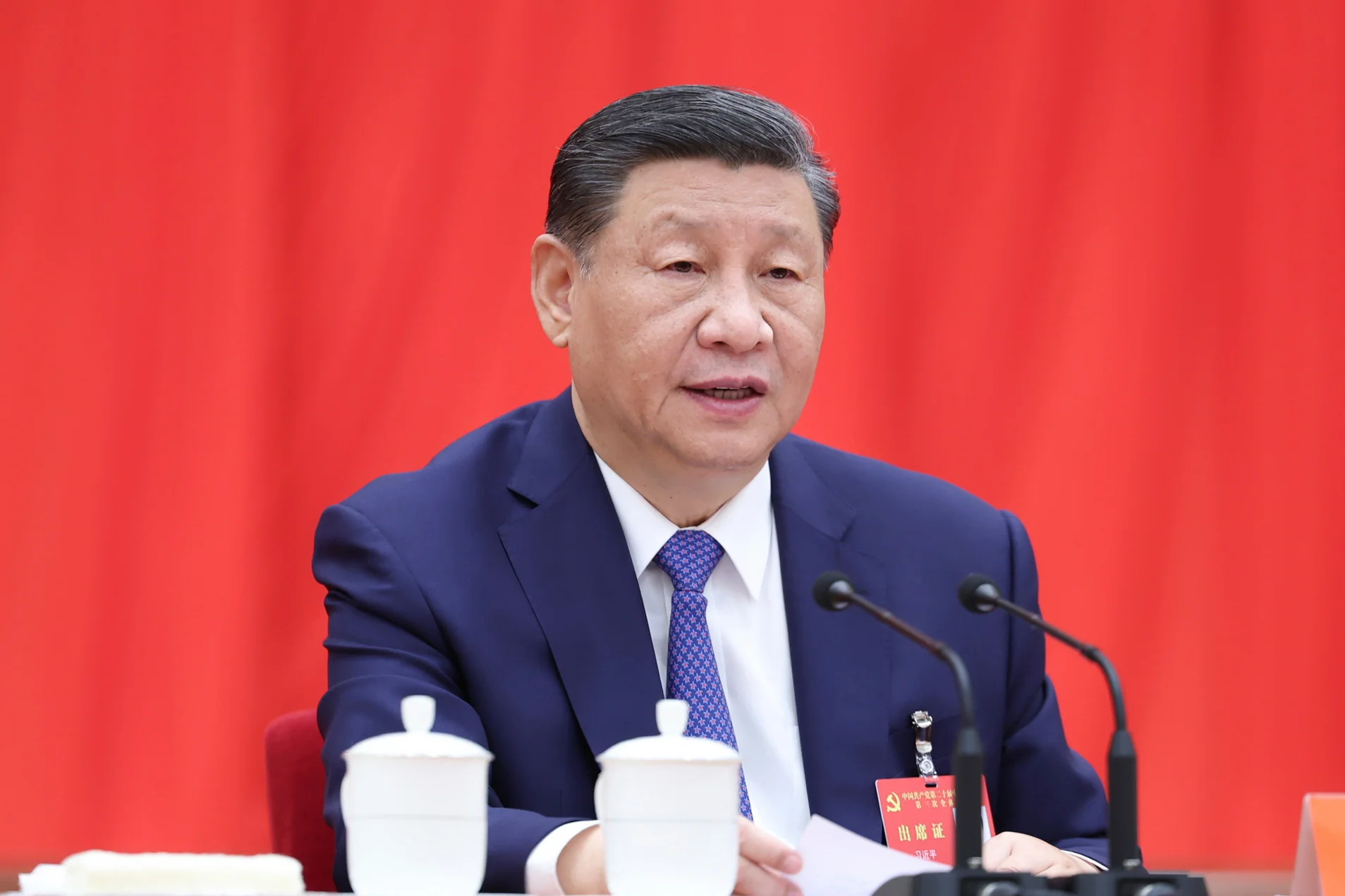
China’s latest Communist Party plenum is not a routine administrative gathering to rubber-stamp economic targets; it is a high-stakes mechanism designed to enforce ideological obedience, purge wavering bureaucrats, and centralize control over an economy struggling with structural stagnation. While Western media often reduce these closed-door meetings in Beijing to dry policy readouts, the reality inside the Jingxi Hotel is far more visceral. President Xi Jinping is using the plenary session to tighten party discipline to levels unseen since the Mao era, signaling to the party’s 99 million members that political loyalty now strictly outranks economic growth as the primary metric of survival.
For decades, the unspoken social contract inside the Chinese Communist Party (CCP) was straightforward. Local officials were given wide latitude to experiment, cut corners, and even enrich themselves, provided they delivered double-digit GDP growth and maintained social stability. That era is dead. The current plenary agenda centers on codifying absolute compliance through updated disciplinary regulations and expanding the reach of the Central Commission for Discipline Inspection (CCDI). When Beijing talks about "self-revolution," it is using sanitized ideological shorthand for an ongoing, systemic purge of anyone suspected of passive resistance, policy hesitation, or ideological drift.
The Architecture of Compliance
To understand why Xi is doubling down on internal policing right now, you have to look at the mechanics of how power actually moves through the Chinese state. A plenum—a full meeting of the roughly 370 full and alternate members of the Central Committee—serves as the ultimate boardroom of Chinese politics. Historically, the third plenum of a five-year leadership cycle is where major economic reforms are unveiled. Think of Deng Xiaoping’s 1978 pivot toward market liberalization or Xi’s own 2013 pledge to let the market play a "decisive" role in allocating resources.
The cadence has shifted. Economic restructuring cannot happen, in Xi’s view, if the bureaucratic machinery executing those orders is compromised by divided loyalties or institutional inertia. Over the past few years, Beijing has rolled out successive revisions to the CCP Disciplinary Regulations, vastly expanding the behaviors that can get an official expelled, stripped of assets, or imprisoned.
It is no longer just about taking bribes or embezzling state funds. Under the tightened rules, officials can be punished for "failing to fully implement central decisions," engaging in "empty talk," or privately questioning party orthodoxy. Even reading unauthorized books or maintaining loose associations with disgraced colleagues can trigger a career-ending investigation. By weaving these strictures directly into the plenum’s communiqués and organizational resolutions, Xi is turning party discipline into an inescapable legal and political grid.
Why Economic Anxiety Drives Political Crackdowns
Conventional wisdom among many market analysts suggests that a slowing economy should force Beijing to loosen its grip and unleash private enterprise. That logic assumes the leadership’s primary goal is maximizing short-term GDP. It is not.
Consider the headwinds battering the Chinese economy. A protracted real estate crisis has wiped out trillions in household wealth and gutted the primary revenue source for municipal governments. Local government debt has ballooned to unsustainable levels, leaving cities struggling to pay civil servants and fund basic infrastructure. Youth unemployment remains a persistent social flashpoint, while foreign direct investment has cooled dramatically amid geopolitical friction and tightening national security laws.
In a system built on top-down command, economic distress creates a dangerous dynamic for the supreme leader. When local mayors and provincial governors run out of money, they stop taking initiative. They fear making a mistake that could be interpreted as a political failure, leading to widespread bureaucratic paralysis—a phenomenon Chinese state media itself has repeatedly condemned as "lying flat" among cadres.
Xi’s answer to bureaucratic paralysis is not decentralization; it is intimidation. If officials will not act out of ambition or financial reward, they must be compelled to act out of fear of disciplinary sanction. The plenum reinforces the message that inaction is just as punishable as corruption. A hypothetical provincial finance director facing a massive municipal bond default cannot simply wait for a bailout from Beijing while freezing local spending. Under the current disciplinary framework, failing to proactively resolve local debt risks while maintaining social stability is treated as a failure of political resolve.
The Invisible Hand of the CCDI
The enforcement arm of this campaign is the Central Commission for Discipline Inspection, working in lockstep with the National Supervisory Commission. Together, they operate outside the traditional court system, wielding the power to detain suspects incommunicado under a system known as liuzhi—a form of extra-legal detention where targets have no access to lawyers and can be held for months until they confess.
During a plenum, the CCDI’s presence is felt not just through formal reports, but through the empty chairs in the conference hall. Over the last two years, high-profile disappearances have swept through the upper echelons of the Chinese state, claiming former defense ministers, foreign ministers, top rocket force generals, and senior executives at state-owned financial giants. When a Central Committee member vanishes from public view without immediate explanation, the subsequent plenum is typically where their expulsion is formally ratified, cementing their political demise.
This constant state of purge serves a dual purpose. First, it prevents the formation of rival factions within the elite. By rotating officials rapidly and subjecting every ministry to intrusive inspection tours, the center ensures no regional boss or ministerial head can build an independent power base. Second, it shifts blame for systemic policy failures away from the top leadership. When a multi-billion-dollar semiconductor fund fails to produce breakthroughs, or when a state-backed property developer collapses, the narrative framed by the CCDI is rarely that the state-led economic model is flawed. Instead, the failure is pinned on corrupt, undisciplined executives who betrayed the party’s trust.
The Financial Sector Under the Microscope
Nowhere is the intersection of party discipline and economic control more visible than in China’s $60 trillion financial system. For years, investment bankers, regulators, and state fund managers operated in a semi-autonomous bubble, adopting Western compensation models and financial engineering techniques. That autonomy has been systematically dismantled.
Successive waves of disciplinary inspections have targeted the central bank, securities regulators, and the largest state-owned commercial banks. Scores of senior financiers have been detained on corruption charges. Beyond individual arrests, the plenum’s broader structural push aims to subordinate financial institutions entirely to the strategic goals of the state. Capital is no longer meant to flow simply where returns are highest; it must flow toward "new quality productive forces"—Beijing’s catch-all term for advanced manufacturing, green energy, artificial intelligence, and domestic supply-chain resilience.
For international investors and multinational corporations operating in China, this shift alters the fundamental rules of engagement. Due diligence can no longer be purely financial. Understanding a Chinese state-owned partner or counterparty now requires tracking their standing within the party’s disciplinary apparatus. A sudden leadership shuffle at a major state enterprise, often dressed up as a routine retirement, frequently signals an impending compliance audit that can freeze deals, delay regulatory approvals, and void informal assurances overnight.
The Unintended Cost of Absolute Control
There is a glaring contradiction at the heart of Xi’s governance model, and even veteran China watchers acknowledge there is no easy resolution for Beijing. You cannot simultaneously demand unquestioning ideological conformity and expect dynamic, risk-taking innovation.
Modern economies thrive on decentralized information, rapid trial-and-error, and the freedom to challenge flawed assumptions before they become catastrophic mistakes. When every policy directive carries the weight of ideological orthodoxy, bad news stops traveling upward. Lower-level officials sanitize economic data, mask local debt obligations behind opaque financing vehicles, and tell Beijing what it wants to hear rather than what is actually happening on the ground.
During the sudden abandonment of zero-COVID policies in late 2022, the world saw how rapidly an hyper-centralized system can swing from rigid enforcement to chaotic improvisation when reality finally breaches the ideological wall. By elevating party discipline above pragmatic governance at the plenum, the leadership risks blinding itself to emerging economic shocks until they are too large to contain quietly.
Furthermore, the relentless focus on internal policing drains institutional energy. Ministries spend countless hours holding political study sessions, writing self-criticisms, and preparing for inspection teams. Every hour a regulator spends proving ideological fidelity is an hour not spent untangling complex cross-border trade rules or designing viable stimulus measures for struggling small businesses.
Reading Between the Lines of the Communiqué
When the plenum concludes and state media release the official communiqué, the document will inevitably be dense with ideological jargon, historical references, and sweeping declarations of unity. Most casual readers will skim past the boilerplate language, assuming nothing concrete has changed. That is a mistake.
In Beijing, phrasing is policy. Analysts look closely at the ordering of priorities—whether "security" precedes "development," how frequently "struggle" is invoked, and which specific sectors are singled out for centralized oversight. A single sentence calling for the "strict enforcement of political discipline in the economic sphere" translates directly into heightened regulatory scrutiny, stricter capital controls, and accelerated state intervention across private tech, finance, and manufacturing.
The true outcome of the plenum will not be measured by a sudden spike in the Shanghai Composite Index or a flashy stimulus announcement. It will be visible over the next twelve months in the quiet disappearance of mid-level regulators, the cautious paralysis of municipal mayors, and the unmistakable reality that in today’s China, surviving the party’s internal machinery matters far more than growing the economy.


