Modern professional sports leagues work hard to project an image of absolute control. Arenas are sanitized environments where every security protocol, seating chart, and promotional spot is meticulously engineered to prevent chaos. Yet beneath that polished veneer, structural tensions are bubbling over into the public eye. When former NBA center Enes Kanter Freedom was confronted courtside by Chicago Sky guard Natasha Cloud during a game against the Indiana Fever at Wintrust Arena, it was not merely a random flashpoint. It was an inevitable collision between culture-war politics, player activism, and corporate sports management. The fallout was swift: Freedom found himself ejected from the arena and subsequently banned indefinitely from Chicago Sky home games.
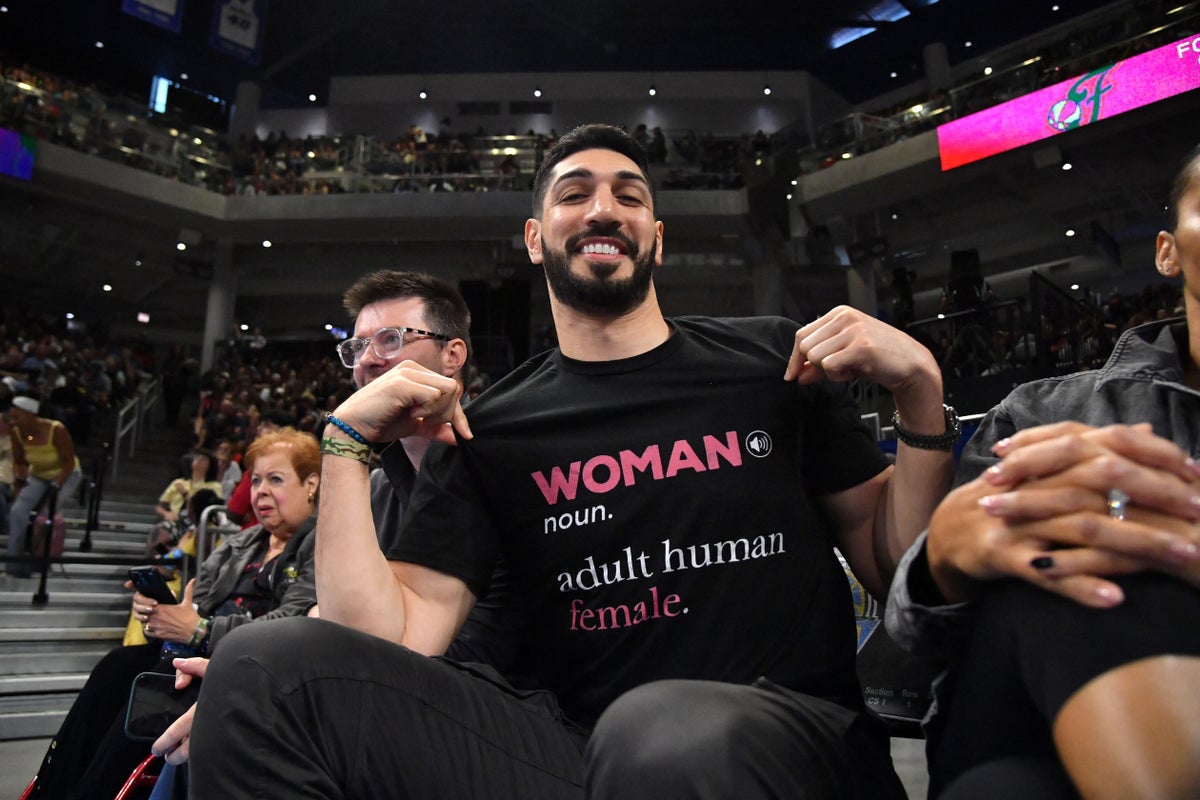
To understand how a routine August basketball matchup descended into a multi-layered governance crisis, one must examine the environment leading up to the tip-off. Freedom had spent the afternoon participating in a rally outside the venue alongside Fever guard Sophie Cunningham, voicing support for restrictions on transgender athletes in women's sports. Seated courtside along the baseline, Freedom wore a black shirt bearing a specific dictionary definition of the word woman. The tension was palpable before the first whistle. When an athlete uses a professional platform to wage broader social battles, the boundary between spectator and participant dissolves. Learn more on a connected subject: this related article.
The confrontation itself unfolded late in the third quarter. Following a basket and a celebratory chest bump with teammate Aicha Coulibaly, Natasha Cloud turned her attention away from the court action and marched directly toward Freedom. Eyewitness accounts, television broadcasts, and subsequent interviews revealed a sharp verbal exchange. Freedom claimed Cloud used explicit language and directed a personal remark about his relationship status toward him. Cloud, maintaining her defensive stance regarding community protection, did not back down. Security personnel and several Chicago Sky players rushed to intercede, creating a volatile scene that forced a temporary halt to the game.
The immediate organizational response was uncompromising. Chicago Sky owner and management evaluated the security breach and swiftly slapped Freedom with an indefinite ban from future home games, citing his potential to act as an ongoing threat to arena order. Chicago coach Tyler Marsh publicly backed his player, framing Cloud's actions as an instinctive act of team protection. In professional sports, the franchise will almost always circle the wagons around its rostered talent when external agitators cross structural boundaries. Freedom's presence courtside was calculated to provoke a response, and the organization chose to eliminate the vector of provocation entirely. More analysis by NBC Sports explores comparable perspectives on this issue.
Yet the aftershocks extend far beyond a single evening in Chicago. The WNBA has increasingly found itself at the epicenter of cultural debates regarding gender identity, competitive equity, and locker-room politics. While the league's collective bargaining agreement restricts participation to women, explicit guidelines addressing sex assigned at birth remain sparse. Public statements from players like Cunningham, coupled with high-profile protests and counter-activism from figures like Freedom and former NBA player Royce White—who both declared eligibility for the WNBA draft under gender identity provisions—have turned the league into a lightning rod.
Athletes utilizing social media platforms to stake out positions add fuel to the fire. Following the game, Cloud posted a message on digital platforms reaffirming her commitment to protecting transgender youth. This stance drew quick counter-criticism from tennis legend Martina Navratilova and other public figures, proving that the ideological battle lines within women's athletics are deeply entrenched. The sports ecosystem is discovering that it can no longer insulate itself from broader societal polarization. When athletes become ideological symbols, arenas transform into political colosseums.
The decision to ban Freedom raises complex questions regarding arena access and free speech protocols. Private venues hold the legal discretion to eject and ban spectators whose behavior disrupts event operations or threatens crowd safety. Freedom argued that he was simply sitting quietly and cheering for a peer until escalation arrived from the floor. The franchise countered that the intentional wearing of polarizing political apparel coupled with targeted spectator posturing alters the baseline definition of a fan. When a spectator becomes a moving billboard for contentious political discourse, stadium operators face mounting pressure to draw a hard line to preserve the integrity of the game experience.
As professional leagues move forward, the precedent set at Wintrust Arena will undoubtedly shape how security teams handle courtside activism. The intersection of professional sports and cultural warfare leaves little room for neutral ground. Franchises must decide whether to tighten spectator dress codes and behavioral boundaries or accept that arenas will increasingly mirror the fractured political climate outside. The ban on Freedom is not the end of this friction; it is merely a signpost pointing toward a more contentious future where the sidelines are just as contested as the scoreboard.