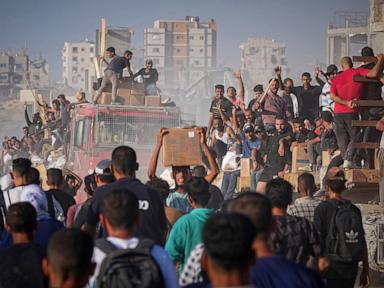
The United Nations World Food Programme announced a desperate measure for the occupied West Bank: food assistance programs are being cut in half, stripping vital aid from 200,000 vulnerable people because international donor coffers have run dry.
This is not merely a logistical setback or a temporary belt-tightening exercise. It is a quiet catastrophe unfolding across hillsides and rural communities where food is physically present on supermarket shelves, yet entirely out of reach for a population whose livelihoods have been systematically dismantled. Discover more on a similar subject: this related article.
To understand how a territory not traditionally classified as a primary food crisis zone has plunged this deeply into destitution, one must look past the headline numbers. The crisis in the West Bank is a structural failure born of restricted movement, surging economic paralysis, and donor fatigue on a global scale.
The Anatomy of an Invisible Collapse
Two years ago, roughly 11 percent of the West Bank population suffered from food insecurity. Today, that figure has skyrocketed past 25 percent, encompassing nearly one million people. Income levels have cratered, with more than three-quarters of households reporting severe financial drops. Additional journalism by The New York Times highlights related perspectives on this issue.
Yet, the grocery stores in towns like Hebron, Nablus, and Ramallah are stocked. Flour, oil, and fresh produce sit behind glass windows. The failure is entirely economic and political.
Intensified military checkpoints, expanding movement restrictions, and mounting friction from localized violence have severed the arteries of Palestinian commerce. Farmers who once tended profitable olive groves or grazed livestock on communal lands can no longer reach their properties safely. Daily wage laborers who previously commuted across municipal barriers find themselves locked out of employment markets.
When income drops to zero while food and fuel prices remain among the highest in the region, households face an impossible arithmetic. They sell heirlooms, livestock, and household appliances just to buy basic provisions. When those assets run out, the cliff edge appears.
The Arithmetic of Abandonment
The World Food Programme operated on a lifeline that was already dangerously thin. Prior to the latest directive, the agency reached 400,000 people in the West Bank with basic interventions—primarily small cash transfers and electronic food vouchers valued at roughly 50 shekels, or less than twenty dollars, per person per month.
To an outside observer, twenty dollars a month sounds negligible. On the ground, it represented the margin between survival and starvation. It meant purchasing flour to bake bread for a week.
Now, even that minimal safety net has been sliced in half. Starting this month, the agency restricted its outreach to just 200,000 individuals, prioritizing only those deemed to be at the absolute threshold of destitution.
This triage approach exposes a brutal operational reality. When humanitarian organizations are forced to choose who eats and who goes hungry, human dignity is the first casualty. Field officers are tasked with deciding whether a family with slightly higher debt is more or less deserving than their neighbors. There are no good choices left. There are only degrees of suffering.
Donor Fatigue and the Global Blind Spot
The immediate trigger for these cuts is a severe funding deficit. Across the occupied Palestinian territories, the World Food Programme requires an urgent injection of 386 million dollars to sustain operations over the next six months across both the West Bank and Gaza.
That money is not materializing. Major donor nations, facing their own domestic fiscal pressures and distracted by competing geopolitical flashpoints around the globe, are pulling back their foreign aid budgets. Traditional contributors are reallocating funds inward or toward high-visibility conflict zones, leaving protracted crises like the West Bank to wither in the shadows.
This donor fatigue creates a dangerous feedback loop. Because the West Bank has historically received less emergency food infrastructure than active combat zones, its descent into hunger happens quietly. There are no dramatic televised broadcasts of mass famine camps, only the slow, grinding erosion of family savings and the quiet adoption of coping mechanisms like skipping meals entirely.
By the time malnutrition statistics trigger widespread alarm bells, the window for cost-effective intervention will have closed, replaced by the need for expensive, large-scale therapeutic feeding programs.
The Spillover Effect
The crisis in the West Bank cannot be compartmentalized away from what is happening in Gaza. The two economies and administrative landscapes are deeply interconnected, even as physical barriers divide them.
In Gaza, where the agency struggles to support 1.5 million people, cash assistance values were slashed by 40 percent earlier this year. When the entire regional operation faces a liquidity crisis, the West Bank absorbs the shock through immediate, sweeping reductions in beneficiary rolls.
The human cost of this regional shortfall is rippling through rural pockets and marginalized communities, particularly in Area C and the southern governorates where herding and agriculture formed the backbone of local resilience. Bedouin communities, already facing displacement pressures, find themselves completely cut off from institutional support networks.
Without an immediate course correction from the international community, the 200,000 people who lost their aid allotments this week will not magically find alternative means of survival. They will sink further into debt, sacrifice their children's nutritional intake, and swell the ranks of an escalating humanitarian emergency that the world is choosing to ignore until it becomes irreversible.