The statistics emerging from the occupied West Bank reveal a grim reality. Hundreds of Palestinian children and teenagers have been killed by Israeli forces and settlers since October 2023, driving fatality rates among minors to levels unseen since 1967. While global headlines remain fixated on the immense destruction in the Gaza Strip, a parallel escalation of lethal force has unfolded quietly across the hills and refugee camps of the West Bank. This surge is not merely a collection of tragic anomalies. It is the direct product of systemic policy shifts, relaxed rules of engagement, and total institutional impunity.
Understanding this quiet crisis requires looking beyond the raw numbers compiled by organizations like the United Nations Office for the Coordination of Humanitarian Affairs (OCHA) and human rights monitors like B'Tselem. The machinery governing the West Bank has transformed fundamentally over the past few years. To dissect how an average month now claims the lives of numerous minors, one must examine the mechanics of military raids, the legal shield protecting shooters, and the changing definition of a legitimate target.
The Mechanics of Escalation and Altered Rules of Engagement
For decades, the operational doctrine governing the Israel Defense Forces in the West Bank maintained nominal distinctions regarding the use of live ammunition against non-combatants and minors. However, the operational environment shifted dramatically following the outbreak of regional hostilities in late 2023. Military commanders expanded the discretionary authority granted to individual soldiers on the ground, permitting live fire in situations previously managed through crowd control measures.
Teenagers throwing stones during military incursions into dense urban enclaves like Jenin, Tulkarem, and Nablus are routinely treated as combatants. Statements from high-ranking military officials have openly framed these high fatality figures as operational successes rather than operational failures. When Major General Avi Bluth, head of the military's Central Command, remarked publicly on the unprecedented scale of fatalities, he highlighted a combat mindset that views the entire population as a potential security threat.
Consider a hypothetical scenario reflecting documented operational patterns: During a daytime search operation in a West Bank village, armored personnel carriers enter a neighborhood. Youths gather to throw stones at the heavily armored vehicles. Rather than deploying tear gas or rubber bullets, snipers positioned on rooftops or firing ports open live rounds. The response is swift, lethal, and legally insulated by internal military classifications that brand anyone near a confrontation as an active threat.
The Architecture of Impunity
The most striking element of the West Bank child fatality crisis is the absolute absence of legal accountability. Investigative journalism and human rights documentation confirm that accountability mechanisms within the military justice system function primarily as procedural shields.
Since late 2023, independent monitoring groups have not identified a single criminal indictment filed against an Israeli soldier for the unlawful killing of a Palestinian child in the West Bank. Military police investigations are frequently protracted, opaque, and closed without charges. This institutional protection creates a moral hazard on the ground. When troops know with statistical certainty that pulling the trigger will not result in a court-martial or civil prosecution, the deterrent against excessive force vanishes entirely.
Furthermore, accountability failures extend beyond the courtroom. Documentation shows numerous instances where military forces have actively delayed or obstructed medical teams from reaching wounded children. Ambulances are held at checkpoints during active raids, bleeding out teenagers who might otherwise have survived gunshot wounds to the limbs or torso. The withholding of bodies—whereby authorities retain the remains of deceased minors for months—adds a layer of psychological punishment for grieving families, denying them closure or traditional burial rites.
The Normalization of Lethal Airstrikes
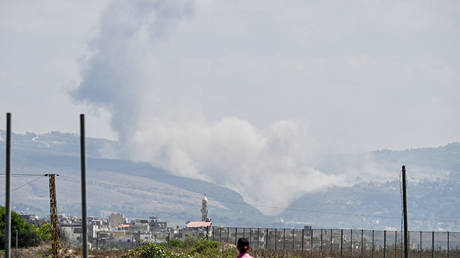
Another overlooked factor driving the surge in child casualties is the introduction of aerial warfare to the West Bank. Historically, military operations in the territory relied on ground troops, infantry units, and armored vehicles. Beginning in 2023 and continuing through 2025 and 2026, the military dramatically increased the frequency of drone strikes and targeted missile attacks in densely populated refugee camps.
Using high-payload munitions in cramped residential neighborhoods inevitably results in high collateral damage. Children sleeping in their bedrooms or playing in alleyways are caught in the blast radius of strikes ostensibly aimed at local armed cells. This tactical shift mirrors the doctrine applied in larger urban theaters, effectively importing total-war methods into an occupied territory governed nominally by policing law.
The international community's response to these developments has remained largely rhetorical. Diplomatic condemnation rarely translates into concrete punitive measures, leaving local populations exposed to an escalating cycle of violence involving both state forces and radicalized settlers. As systemic impunity deepens and military operations face zero external constraint, the baseline of violence in the West Bank continues to set new, devastating benchmarks.