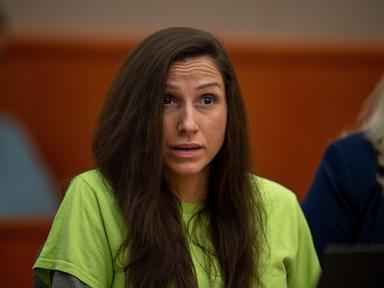
Wasatch County Sheriff Jared Rigby and former Summit County Sheriff Dave Edmunds face felony charges for obstruction of justice, a stunning development tied directly to the prosecution of convicted murderer Kouri Richins. Grand jury indictments unsealed in Utah's 3rd District Court accuse the high-ranking law enforcement officials of interfering with the foundational mechanisms of a high-profile homicide investigation. This extraordinary turn of events has handed Richins' defense team fresh ammunition in their ongoing efforts to secure a new trial, exposing a tangled web of local politics, internal institutional friction, and severe legal fallout.
The core mechanics of the charges center on allegations that the law enforcement leaders attempted to manipulate or obstruct aspects of the investigative pipeline surrounding Richins, who was convicted of poisoning her husband. Rigby was charged with a second-degree felony obstruction count alongside a misdemeanor charge for making a false written statement, while Edmunds was indicted on a third-degree felony obstruction charge. Both men have entered pleas of not guilty, maintaining that their administrative and professional actions remained entirely lawful. Yet the mere existence of these charges highlights a profound institutional breakdown within neighboring Utah jurisdictions.
To understand how a murder case opens the door to the indictment of sitting and former sheriffs, one must examine the friction surrounding internal witnesses. Investigators and local police personnel who build complex criminal cases often become lightning rods for administrative maneuvering. Court documents and unsealed warrant affidavits point toward an anonymous letter, political rivalries involving local municipal elections, and strategic decisions made by prosecutors regarding witness testimony. When a key investigator's credibility or employment history becomes a point of contention, the boundary between normal institutional oversight and unlawful interference can blur rapidly.
Prosecutors face an absolute obligation under constitutional precedents to disclose exculpatory or impeachment evidence regarding witnesses to the defense. When internal disciplinary records or political disputes threaten to taint a witness, district attorneys must weigh whether to use that witness or shield the trial from collateral attacks. In the Richins prosecution, choices made regarding who would testify set off a chain reaction. Investigators scrutinized actions taken by upper management within law enforcement agencies, leading directly to the grand jury proceedings that targeted Rigby and Edmunds.
Defense attorneys smell blood in the water whenever the integrity of an investigation is publicly compromised. Richins' legal counsel swiftly moved to leverage the sheriffs' indictments, arguing that hidden institutional conflicts may have deprived their client of a fair trial. While prosecutors have pushed back against attempts to overturn the conviction, claiming the defense motion relies heavily on recycled local reporting rather than substantive trial prejudice, the optics alone create a heavy burden for the judicial system. Courts must now disentangle whether administrative malfeasance by law enforcement leaders actually altered the evidentiary reality presented to the jury, or if it represents a separate political scandal running parallel to a valid murder conviction.
The ripple effects extend far beyond a single courtroom in Park City. Public trust in county law enforcement relies entirely on the separation between policing and personal politics. When sheriffs are booked into their own jail facilities—even if released quickly on their own recognizance—the institutional damage is immediate. Sheriff Rigby subsequently requested administrative leave, a step accepted by the county council as the legal battle intensified.
As Judge Richard Mrazik weighs post-trial motions and navigates requests for disqualification, the intersection of institutional corruption and capital prosecution remains under intense scrutiny. The ultimate resolution of these obstruction cases will dictate whether Richins secures a procedural lifeline or whether the convictions stand against a backdrop of institutional disgrace
Legal expert breaks down charges against sheriffs tied to Kouri Richins case
This video provides an expert legal breakdown of how the obstruction charges against the Utah sheriffs intersect with the broader Kouri Richins prosecution.