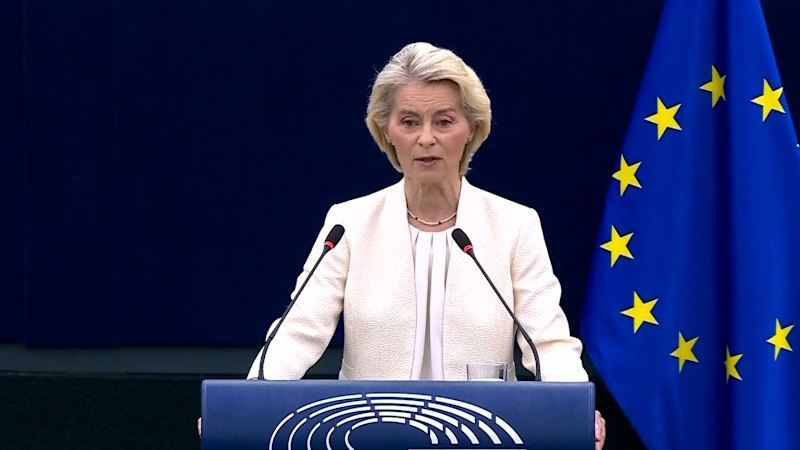
European Commission President Ursula von der Leyen stood before the European Parliament in Strasbourg and delivered an invitation that caught career diplomats flat-footed. She proposed bringing Canada into the European fold as the bloc's very first associate member, creating a political and economic bridge across the Atlantic that bypasses traditional geographic boundaries. Standing alongside Canadian Prime Minister Mark Carney, von der Leyen argued that shifting global dynamics require western democracies to radically redesign their institutional architectures. What began as a broad diplomatic overture quickly materialized into the October Montréal summit, where leaders formalized an expansive framework known as the Alliance for the Future. This agreement goes far beyond standard trade modernization. It represents an urgent attempt by middle powers and democratic states to insulate their economies, supply chains, and digital infrastructures against intensifying geopolitical shocks.
For decades, transatlantic relations operated on predictable bureaucratic tracks. Trade deals took years of painful negotiation, defense policies followed strict NATO lines, and technology sharing remained locked behind national firewalls. The arrival of Mark Carney to the Canadian leadership post altered that cadence. Confronted by mounting protectionist pressures and erratic trade postures from traditional superpowers, Ottawa and Brussels recognized the necessity of a tighter alignment. The associate membership concept, though still lacking a fully codified legal definition, signals a profound shift in how modern sovereign states cooperate. Instead of treating international treaties as static transactional agreements, both capitals are attempting to build an integrated space for commerce, defense readiness, and technological research.
The immediate catalyst behind this rapprochement lies in economic vulnerability. European capitals absorbed severe shocks when global supply chains fractured, while Canadian exporters faced recurring turbulence in North American trade corridors. By institutionalizing ties through the Alliance for the Future, both governments are actively insulating their industries. The trilateral or bilateral frictions that usually plague international accords are being met here with preemptive harmonization. European authorities and Canadian officials concluded a specialized competition agreement designed to crack down on anti-competitive practices by multinational entities operating on both sides of the ocean. This mechanism allows regulatory bodies to share intelligence and coordinate enforcement actions, effectively creating a unified regulatory front against corporate overreach.
Critics within Brussels and various European national capitals have questioned the substance behind the grand rhetoric. One European diplomat dismissed associate membership as an empty phrase during early closed-door deliberations, warning that political declarations often outpace institutional capacity. Yet subsequent policy rollouts in Montréal demonstrated that concrete administrative machinery is already spinning into motion. Rather than waiting for a cumbersome treaty ratification process across twenty-seven member states, officials are executing targeted sectoral integrations. These initiatives touch upon critical minerals financing, digital trade rules, and supercomputing access. Each individual agreement adds weight to an institutional architecture that was originally designed solely for European continental integration.
Financial security forms the bedrock of this new partnership. The European Investment Bank has signed a groundbreaking treaty framework allowing its vast lending power to flow directly into Canadian critical minerals projects. Western industrial economies face an acute strategic bottleneck over rare earth elements and battery materials required for both the energy transition and advanced defense manufacturing. By coupling European capital pools with Canadian resource extraction and processing capabilities, both partners aim to break dependency cycles controlled by authoritarian states. This resource stockpiling and investment framework establishes joint procurement protocols that guarantee supply lines during international crises, transforming raw material extraction into a pillar of collective security.
Digital sovereignty has emerged as an equally powerful driver of the transatlantic realignment. European tech policy has historically focused on heavy regulation, while Canadian innovation sectors have looked southward toward Silicon Valley for capital and scaling opportunities. The newly minted digital trade agreement alters this dynamic by establishing common standards for cross-border data flows, e-commerce rules, and regulatory transparency. More importantly, Canada has formally joined the European High Performance Computing Joint Undertaking. This grants Canadian researchers and artificial intelligence firms direct access to JUPITER, one of the most powerful supercomputers on the planet. Academic and commercial entities on both sides of the Atlantic can now pool computing power to run complex climate models, simulate extreme weather events, and accelerate pharmaceutical discovery without relying on proprietary foreign platforms.
Defense industrial cooperation provides another stark indicator of how fast this relationship is evolving. Canada has utilized its security instruments, known as SAFE contracts, to procure military equipment from domestic suppliers for deployment within European allied territories. A Montréal-based manufacturer secured a contract to supply advanced radio systems for Poland's cyber command, while another local firm contracted to provide military helmets to Latvia, where Canada maintains its largest foreign military deployment. These defense contracts reflect a growing realization that North American and European security are indivisible. Rather than maintaining completely separate military-industrial complexes, both regions are synchronizing procurement cycles to ensure interoperability during regional conflicts.
Space exploration and satellite connectivity further cement this strategic convergence. Access to secure communication channels remains paramount for modern governance and military readiness. Canada and the European Union have committed to advancing cooperation on IRIS², the advanced satellite constellation designed to provide independent, highly secure connectivity for European and allied governments. Furthermore, Canadian navigation services are integrating more deeply with the European Galileo program and the European Space Agency. This technical integration improves positioning data accuracy across northern latitudes and the Arctic, a region experiencing rapid geopolitical competition and environmental transformation. As polar ice recedes and shipping routes open, shared surveillance and navigation infrastructure become indispensable for asserting sovereignty.
Public perception and political theater have played notable roles in accelerating this diplomatic pivot. Prime Minister Carney entered office carrying a reputation as a crisis manager, a former central banker whose administrative style resonates strongly with European parliamentarians weary of populist volatility. European leaders observed how Canada managed trade pressures through firm counter-measures, earning respect in Brussels conference rooms. This mutual ideological alignment among center-left and moderate governing coalitions created a rare window for ambitious policy action. Political leaders recognized that voters on both sides of the Atlantic are demanding greater economic affordability and sovereignty, transforming abstract international diplomacy into a domestic political asset.
Despite the momentum, significant structural hurdles remain on the horizon. Translating the political ambition of an ever-closer association into binding legal frameworks requires navigating notoriously complex domestic jurisdictions. Canada operates under a federal system where provincial authorities hold jurisdiction over natural resources, healthcare, and education, complicating national implementation of international treaties. Meanwhile, the European Union must manage internal dissension among member states that harbor distinct foreign policy priorities or economic anxieties. Harmonizing regulatory standards across such diverse political landscapes demands extraordinary bureaucratic endurance, and progress will inevitably face bureaucratic inertia and localized pushback.
People-to-people ties are slated for formal expansion to anchor the institutional changes in everyday reality. Negotiations are underway to expand Canadian participation in Erasmus+, Europe's flagship educational exchange program. By making it simpler for students, researchers, and young professionals to study and work across the Atlantic, policymakers hope to build a generational constituency dedicated to transatlantic cooperation. Professional mobility agreements, such as mutual recognition frameworks for architects and specialized engineers, remove longstanding administrative barriers that prevented skilled labor from moving freely between markets. These micro-level adjustments accumulate over time, weaving a durable social fabric that survives short-term political shifts in either Ottawa or Brussels.
The path toward defining the exact legal boundaries of associate membership will be tested ahead of the upcoming summit cycles. Officials have been tasked with drafting concrete proposals by the next scheduled joint gathering, forcing bureaucrats to move past inspirational speeches into hard legal drafting. Skeptics will continue to scrutinize whether an ocean-spanning association can truly function effectively without diluting the internal coherence of the European project or compromising Canadian national autonomy. Yet the sheer velocity of recent agreements suggests that necessity is overriding traditional diplomatic caution. Modern states are discovering that traditional isolationism or bilateralism offers little protection against systemic economic and security disruptions.
History rarely records clean breaks from established international order; instead, it notes the gradual accumulation of new treaties, shared infrastructure projects, and strategic alignments that quietly render old assumptions obsolete. By reaching across the ocean to formalize an alliance that treats a North American democracy as an internal associate, European leaders are signaling that the traditional boundaries of regional integration are permanently shifting. The success of this endeavor will not be measured by the eloquence of joint declarations signed in ornate halls, but by whether factory floors, research laboratories, and military command centers can genuinely operate as a unified ecosystem when the next global shock arrives. The machinery is now in motion, grinding forward across the Atlantic without a clear blueprint, inventing its own destination as it goes.