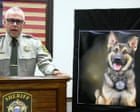
When a police service dog dies a preventable death on duty, the public outrage is immediate, sharp, and entirely justified. In September 2026, the Madison County Sheriff’s Office in Tennessee announced a criminal investigation into the heatstroke death of K-9 Bart, a working German Shepherd who perished after being left in an outdoor kennel for 36 hours without access to water as the heat index hovered around 101 degrees. The dog's handler subsequently resigned, and the incident laid bare an uncomfortable and systemic vulnerability within law enforcement agencies across the country: the lack of uniform protection, standardized oversight, and strict accountability for police-owned animals.
Working dogs are routinely classified by departments as police equipment or property, a legal distinction that historically complicates how criminal charges or internal discipline are applied when handlers commit egregious acts of negligence. While agencies across the United States demand absolute loyalty and high-stress operational output from these animals, internal safeguards often rely entirely on individual handler discretion rather than institutional checks and balances. When that discretion fails, the results are catastrophic.
The Mechanics of Preventable Tragedy
Canine heatstroke is rarely a sudden medical mystery. It is a physiological collapse brought on by hyperthermia, which occurs when a dog's internal body temperature exceeds safe thresholds and their cooling mechanisms—primarily panting—fail to dissipate the heat. In high humidity and extreme temperatures, such as those recorded in West Tennessee during the incident, a dog left without water and shelter adjustments can suffer irreversible organ failure within hours.
Leaving a service animal unattended for 36 hours transcends simple administrative oversight; it represents a complete breakdown of basic animal husbandry. Police dogs are specialized assets trained in criminal apprehension, tracking, and narcotics detection. They live with their handlers 24 hours a day, embedding them within the domestic routines of deputies. Because these animals exist in a hybrid space between working gear and household pets, they often fall through the cracks of standard kennel inspections and animal welfare monitoring that ordinary commercial boarding facilities or civilian pet owners might experience.
Sheriff Julian Wiser, who addressed the media following Bart's death, noted that he himself had previously served as a K-9 handler. His public admission that "our canines depend on us to take care of them" highlights a central paradox in modern policing. Departments trust these animals with human lives during high-risk operations, yet structural frameworks frequently fail to mandate regular welfare checks on the dogs when they are off duty at the handler's personal residence.
The Legal and Institutional Gap
The response to K-9 Bart's death involved both an internal affairs inquiry and a parallel criminal investigation, eventually leading to the arrest of the former deputy under state animal cruelty statutes. Historically, prosecuting law enforcement officers for the mistreatment or death of service animals has faced steep institutional hurdles. Qualified immunity doctrines, internal code-of-silence cultures, and the categorization of police dogs as government property rather than sentient victims have frequently shielded handlers from facing the full weight of the law.
When a civilian leaves a pet in hazardous conditions, charges are filed swiftly. When a badge-holder commits the same act against a departmental asset, the process often stalls behind administrative leaves, resignations, and prolonged internal reviews. The resignation of Bart's handler allowed the individual to exit the agency before internal disciplinary procedures could run their course, a common pattern that critics argue shields problem actors from permanent accountability within the profession.
Reforming Oversight in K-9 Units
Preventing future tragedies requires a fundamental overhaul of how law enforcement agencies manage their canine divisions. Relying on the honor system is no longer tenable. Effective reform must include mandatory, unannounced supervisory inspections of home kennels, strict limits on continuous confinement, and technology-driven monitoring systems that track environmental conditions wherever service dogs are housed.
If departments are going to deploy animals as frontline tactical tools, they must accept absolute institutional responsibility for their welfare both on and off the clock. The loss of K-9 Bart is a grim reminder that accountability cannot stop at the edge of the shift.
Tennessee K-9 left without water for 36 hours before death, officials say
This news report covers the official statements and investigation details surrounding the tragic death of K-9 Bart in Madison County, Tennessee.