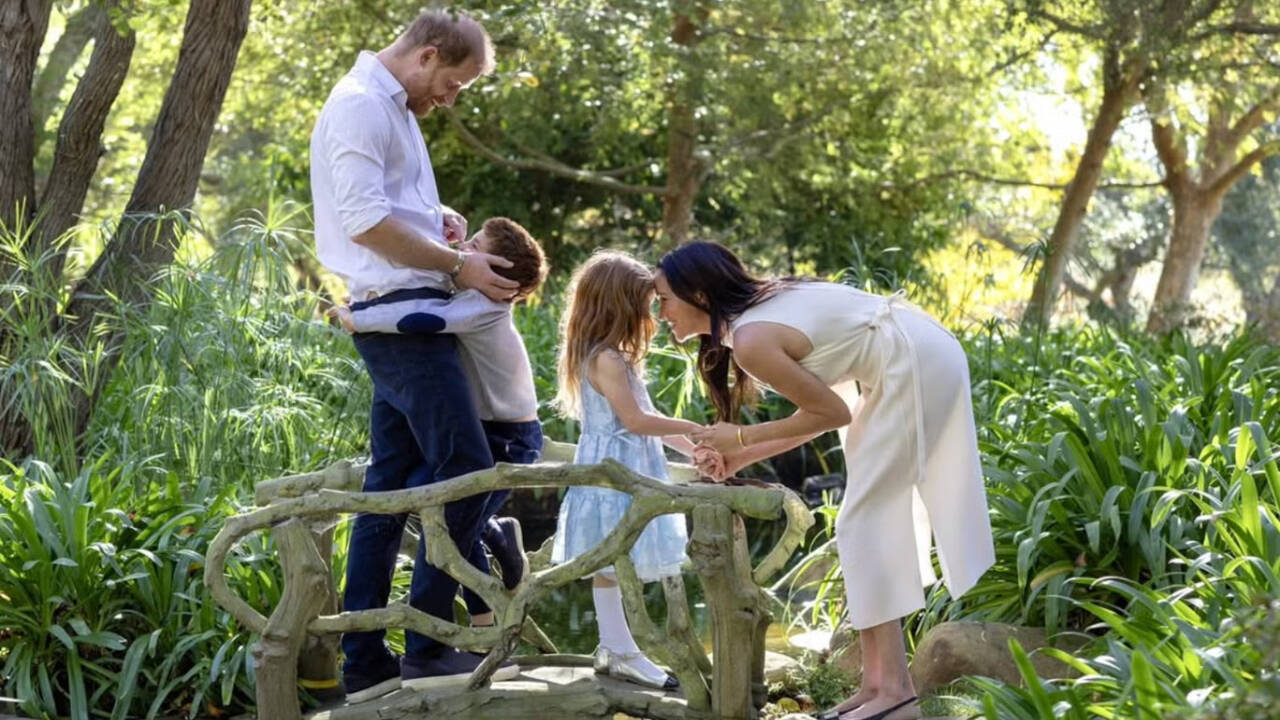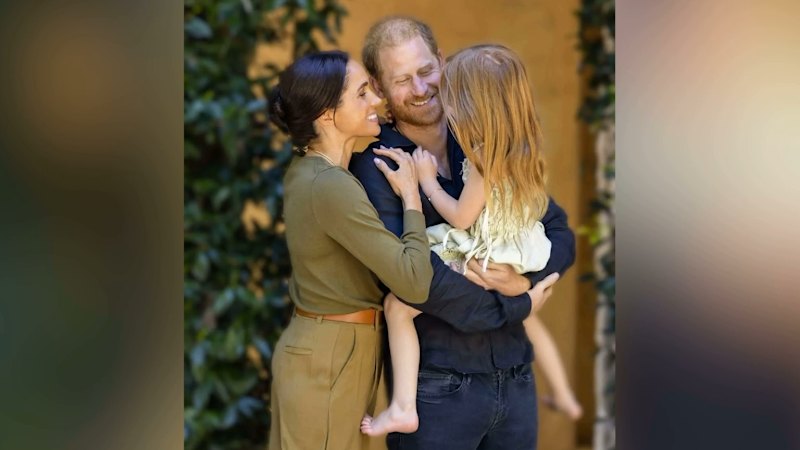
Prince Harry's admission that moving back to the UK has brought a big culture shift for his children is not just a passing comment on morning television. It is the clearest sign yet that relocating from California back to Britain in late August 2026 has forced the Duke and Duchess of Sussex to confront practical realities that six years of transatlantic distance kept hidden. Behind the warm talk of school uniforms and rising confidence in Prince Archie and Princess Lilibet sits a far harder adjustment: navigating frosty family boundaries, unresolved security battles, and a British public that treats their return with skepticism rather than nostalgia.
When Harry spoke on ITV's This Morning about his children adapting to British life, he framed the change around routine. Uniforms replaced casual West Coast habits. His children's confidence climbed once they settled into a UK school after an initial false start in which security concerns forced them out of their first school in less than a week. That single detail tells you more about the real stakes of the move than any polished soundbite.
The Myth of an Easy Homecoming
Six years after stepping away from senior royal duties and building a life in Montecito, Harry and Meghan arrived back in Britain on August 26, 2026. On paper, a return to London and the surrounding countryside should feel like a reset. Harry still speaks of Britain as home and admits he missed the winters.
Homecoming is not a rewind button. The country Harry left in 2020 is not the country he walked back into. Public patience has worn thin after years of televised grievances, legal battles, and commercial pivots. Polling data reported in September 2026 underscored that divide, showing that only six percent of surveyed Britons favored taxpayer-funded security for the prince while sixty-three percent believed the couple should pay for their own protection.
A culture shift is rarely just about weather, accents, or school gates. For the Sussexes, it means operating inside an institution and a media ecosystem that no longer grants them the benefit of the doubt.
Even the family calendar reflects how much ground has been lost. Reports in late November 2026 indicated that Harry and Meghan were not invited to King Charles's main Christmas gathering at Sandringham or the wider family lunch at Buckingham Palace, prompting a pivot back to California for the holidays so Archie and Lilibet could spend time with Meghan's mother, Doria Ragland. If a quiet meeting between Harry and the King reportedly took place at Balmoral in October, it did not translate into a full festive reconciliation.
School Gates and Security Friction
The earliest test of the move was intensely practical. Pulling seven-year-old Archie and five-year-old Lilibet out of their initial UK school after less than a week due to security worries exposed the gap between parental hopes and operational risk.
For years, Harry has argued that his family faces acute threats in Britain and that his security downgrade after stepping back from royal duties left them exposed. British courts rejected his legal challenges over police protection, leaving the family to shoulder the logistical weight of keeping the children safe while establishing a normal daily rhythm.
Consider a hypothetical example of how that plays out for a high-profile family in a new school. In a hypothetical scenario, a school administrator must balance standard safeguarding rules—like drop-off windows, parent events, and emergency contacts—against heightened threat assessments and aggressive press interest. Even minor friction over arrival times or perimeter checks can turn an ordinary Tuesday morning into a major stress test for young children.
Finding a school where Archie and Lilibet could settle and grow in confidence was a genuine win for the couple. Yet the very fact that a basic schooling transition became a high-stakes security hurdle shows why their return carries constant friction.
Why California Looked Different from London
From Santa Barbara, it is easy to view Britain through a selective lens. Six years away softens sharp edges and turns old routines into comforting memories.
Living on the ground in 2026 is a different proposition entirely. The culture shift cuts in several directions at once:
- Everyday schooling: British classrooms enforce stricter dress codes, structured term calendars, and traditions that contrast sharply with relaxed California norms.
- Institutional distance: Being physically closer to the monarchy does not mean being inside the tent, especially while tensions with Prince William remain unresolved.
- Media scrutiny: Every public appearance, school run, or holiday plan is dissected immediately by British tabloids and broadcast commentators.
- Transatlantic pull: Keeping ties alive with Meghan's mother and maintaining US work commitments pulls the family back toward California even after setting up in Britain.
Some observers have even suggested that Harry's immigration paperwork in the United States played a role in prompting the move back to Britain. Because Harry's exact visa status has never been publicly disclosed, any claim that expired or delayed paperwork drove the relocation remains unverified. Still, the rumor highlights how little transparency surrounds the couple's long-term residency plans.
The Commercial and Personal Tightrope
Moving back to Britain also complicates how Harry and Meghan manage their public brand. In the United States, celebrity reinvention thrives on reinvention, lifestyle media, and speaking circuits. In Britain, public life is tightly bound to class markers, institutional hierarchy, and a long memory.
Meghan has continued building her media footprint, including cooking content and television appearances such as her role on Junior MasterChef Australia, while Harry remains tied to patronage work like the Invictus Games. Balancing those projects with raising young children in England requires constant calibration.
| Dimension | Life in California | Return to the UK in 2026 |
|---|---|---|
| Daily family rhythm | More distance from royal spotlight, familiar US routines | Stricter school structure, heightened local media focus |
| Extended family access | Close to Doria Ragland, estranged from Windsor core | Physically closer to King Charles, yet still outside major royal events |
| Security dynamics | Private security arrangements established over six years | Ongoing sensitivity over protection after court defeats |
| Public reception | Mixed celebrity interest and commercial positioning | Skeptical public polling and intense press scrutiny |
There is also an undeniable human cost in the middle of all this calculation. Archie and Lilibet are growing up between two worlds, shaped by parents who have spent years fighting institutional battles in full view of the public. Helping two young children feel secure and confident amidst shifting borders and family rifts is no small task.
What the Culture Shift Actually Tests
Surface-level coverage loves to treat Harry's remarks about school uniforms as proof that everything is falling neatly into place. A sharper reading suggests something more fragile.
A culture shift becomes real when old assumptions collide with new facts. If Harry and Meghan want their return to Britain to stick rather than wobble between London and Montecito, they have to prove they can build durable privacy, steady schooling, and clear boundaries without relying on royal reconciliation as a crutch. Watch how they handle their routine in the months ahead—not what they say in interviews, but where their children go to school, how they manage security on ordinary days, and whether they stay put once winter gives way to spring.