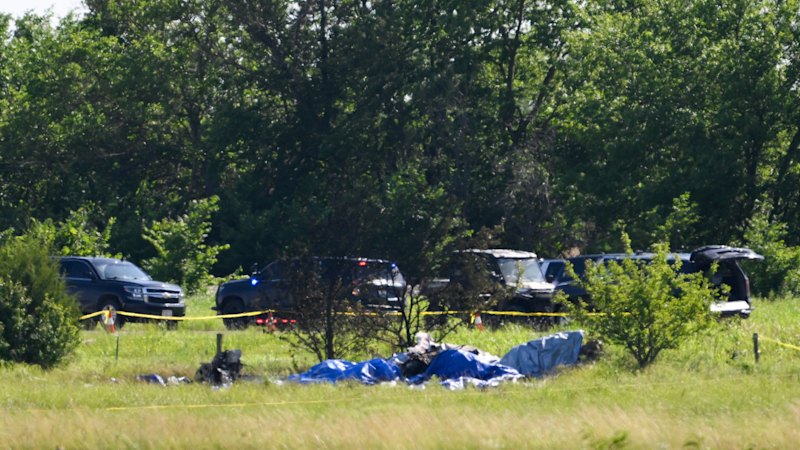
Twelve people are dead after a Pacific Aerospace 750XL carrying eleven skydivers and a pilot crashed moments after takeoff near Butler Memorial Airport in Missouri. The aircraft, operated by Skydive Kansas City, plunged into a field adjacent to Business 49 Highway around 11:30 a.m. on Sunday, instantly erupting into a catastrophic fire that left zero survivors. Family members watching from the tarmac witnessed the entire tragedy unfold.
Initial reports from local authorities paint a classic, horrifying picture of an airport-bound emergency. The single-engine turboprop took off, initiated a sharp left turn, and immediately began losing power. Investigators believe the pilot attempted to stretch the glide toward a nearby highway for an emergency landing, but the aircraft stalled, plummeted nose-first into the turf, and combusted.
The immediate tragedy belongs to the families mourning in Butler. The broader, systemic crisis belongs to the commercial skydiving industry, an industry operating under a regulatory loophole that former federal investigators warn has been costing lives for decades.
The Illusion of Commercial Safety Oversight
Every weekend, thousands of thrill-seekers sign waivers, strap into harnesses, and board small aircraft with the reasonable expectation that the federal government regulates these flights with strict scrutiny. They are wrong.
Commercial airlines operate under the stringent rules of Federal Aviation Administration (FAA) Part 121. Charter flights and air taxis fall under Part 135, which demands rigorous pilot training intervals, mandatory maintenance tracking, and strict corporate accountability. Skydiving operators do not belong to either group. Instead, they fly under Part 91, the exact same general aviation rules that govern a private hobbyist flying a single-engine Cessna on a clear afternoon.
Aviation safety experts have spent years screaming into the void about this regulatory gap. The distinction is not academic; it dictates how often an engine is torn down, how components are tracked, and who inspects the aircraft. Under Part 91, the responsibility for maintaining an incredibly demanding flight cycle falls almost entirely on the honor system of the operator.
Skydiving aircraft do not fly like normal planes. They do not climb to altitude, cruise for three hours, and gently descend. They engage in what investigators call a high-stress duty cycle. They execute maximum-power climbs to 10,000 or 14,000 feet, dump their human cargo, and perform rapid, steep descents to pick up the next group. They repeat this cycle up to a dozen times a day, putting immense thermal and mechanical stress on the engine, turbine blades, and airframe.
Data from FlightAware shows the ill-fated Pacific Aerospace 750XL had already completed two short flights earlier that Sunday morning. It had logged two flights on Saturday and five on Friday. To the untrained eye, a busy schedule suggests a well-oiled machine. To an airworthiness inspector, it represents a brutal operational tempo that demands flawless, aggressive maintenance—the kind of maintenance that Part 91 regulations simply fail to mandate.
The Deadly Anatomy of the Turn Back
While the National Transportation Safety Board (NTSB) will spend the next year analyzing the wreckage in Missouri, the physics of the crash point to a notorious killer in general aviation: the impossible turn.
When an engine fails or loses significant power shortly after takeoff, a pilot faces an instantaneous, life-or-death calculation. The natural human instinct is to turn back toward the safety of the runway. Aviation telemetry proves this instinct is frequently fatal.
[Takeoff] ---> [Power Loss at Low Altitude]
                     |
                     +---> Instinct: Left Turn Back to Airport
                     |     (Increases Bank Angle, Skyrockets Stall Speed)
                     |
                     v
               [Aerodynamic Stall] ---> [Nose-First Impact]
When a pilot banks an aircraft hard to turn back toward the field without engine power, the aerodynamic stall speed of the wings increases drastically. If the airspeed drops below that critical threshold, the wings stop producing lift entirely. The aircraft rolls, drops its nose, and plunges into the ground before the pilot can react.
Witnesses in Butler reported the aircraft made a left turn immediately after takeoff, appearing to lose power while trying to reach the highway for an emergency landing. It stalled and went down nose-first. The lack of altitude left the eleven skydivers on board trapped. Parachutes are useless at a few hundred feet; you cannot jump out of a spinning, stalling aircraft that has not even reached pattern altitude.
A History of Ignored Warnings
The tragedy in Missouri is a horrific echo of past disasters that should have forced regulatory reform.
In 2019, a Beechcraft King Air carrying eleven people crashed shortly after takeoff from Dillingham Airfield in Hawaii, killing everyone on board. The NTSB investigation into that disaster revealed a history of substandard maintenance, an overworked airframe, and an operator navigating the absolute minimum requirements of the law. Following the Hawaii crash, the NTSB explicitly criticized the FAA, stating that the current regulatory system is fundamentally inadequate to ensure the safety of skydiving passengers.
The FAA ignored the warning. The agency chose to maintain the status quo, preserving the regulatory shield that allows skydiving operations to police themselves as private hobbyists rather than commercial transport businesses.
The Pacific Aerospace 750XL involved in the Missouri crash was manufactured in 2010. It is a rugged, New Zealand-built turboprop designed specifically for short takeoff and landing operations, highly favored by drop zones for its ability to haul up to 17 divers to altitude quickly. The machine itself is capable. The regulatory framework surrounding its operation, however, remains stuck in the twentieth century.
Relying on the current framework means accepting a reality where a plane can fly multiple high-stress legs a day with less federal oversight than a regional jet carrying commuters between two midwestern cities. Until the FAA closes the Part 91 loophole and forces skydiving operators to meet the maintenance and training standards of commercial carriers, the field in Butler, Missouri, will not be the last one lined with emergency vehicles.