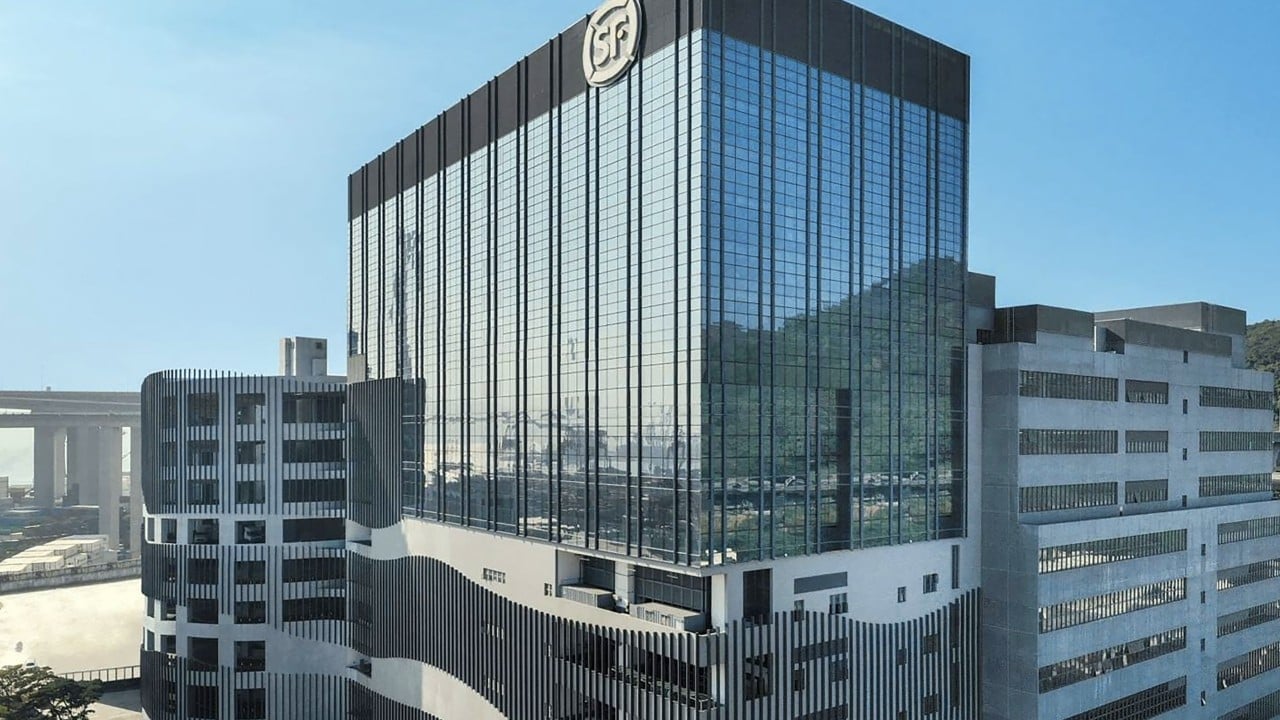
Headline metrics often lie in commercial real estate. When SF REIT announced a 7.3 percent year-on-year drop in first-half distributable income to HK$110.7 million, casual market observers immediately checked the occupancy rate to see if the sky was falling. It was not. The portfolio of logistics assets spanning Hong Kong's Tsing Yi hub and mainland Chinese operational nodes reported a seemingly pristine occupancy level of 96.8 percent, down a negligible fraction from the prior period.
That high-level stability creates a comforting narrative for equity holders. Yet, a superficial glance at physical occupancy conceals a much harsher operational reality underneath the ledger. High asset utilization fails to protect cash flow when structural headwinds, negative rental reversions, and parent-company tenant concentration quietly erode the underlying yield. Behind the stable doors of these massive warehouses, the actual value extracted per square foot is shrinking. Don't miss our previous post on this related article.
The Illusion of Full Buildings
Asset utilization metrics are frequently weaponized by property managers to project calm during market downturns. A warehouse filled to 96.8 percent capacity sounds like an unmitigated triumph in a sluggish economic climate. But physical space utilization tells us nothing about rent pricing power or lease terms.
Consider a hypothetical commercial facility where a landlord keeps every square foot occupied by slashing contract rents by fifteen percent. The occupancy report looks phenomenal on paper. The cash flow statement tells a very different story. SF REIT faces a similar dynamic across its portfolio, where maintaining high headcounts inside its distribution centers requires concessions that ultimately drag down net property income. Total revenue for the six months ended June 30 dipped 4.6 percent to HK$219.3 million, while net property income slipped 7.1 percent to HK$178.4 million. To read more about the context here, Reuters Business provides an informative summary.
The math is unforgiving. When revenue contracts faster than building utilization drops, the culprit is almost always pricing pressure. Tenants hold the leverage in current negotiations. They know competing facilities across the region are fighting for scraps, forcing landlords to trade top-line rental growth for high physical occupancy numbers.
The Parent Company Paradox
Another vital factor buried beneath aggregate statistics is internal dependency. The trust is controlled by Chinese logistics titan SF Holding, which serves as both primary sponsor and massive anchor tenant across the portfolio.
In stable economic cycles, this close corporate alignment acts as a bedrock of security. Guaranteed space uptake from a well-capitalized parent company secures baseline operational cash flows without the expensive friction of hunting for third-party tenants. But this concentration introduces a hidden vulnerability. When broader supply chain adjustments happen, or when the parent company seeks cost optimization across its internal divisions, the trust absorbs the shock directly.
Passing rents generated by sponsor-linked units often sit above prevailing open-market rates due to historical step-up mechanisms negotiated during earlier expansions. As those major leases face renewal windows, the structural gravity of the open market pulls down contract rates. Landlords cannot indefinitely charge internal entities a premium when external market rents are drifting downward. The friction of resetting these rates to match current economic realities directly compromises the distributable pool available to public unitholders.
Capital Preservation and the Payout Reality
To understand why distributions fell to 12.15 HK cents per unit down from 13.11 HK cents, one must look beyond top-line earnings and evaluate active capital defense strategies. Management kept the payout ratio steady at 90 percent, mirroring prior efforts to preserve cash liquidity in a high-cost financing environment.
While maintaining a strict payout discipline protects the balance sheet from external debt shocks, it also signals a defensive posture. REIT investors purchase units primarily for yield, treating the vehicle as a cash-flowing bond substitute. When macroeconomic volatility forces trusts to prioritize cash retention over payout maximization, the investment thesis shifts. The cushion provided by high occupancy numbers fails to translate into superior cash returns because financing overheads and shrinking net margins siphon away the gains before they reach the distribution stage.
The logistics sector across Hong Kong and mainland China is navigating a painful transition phase. While e-commerce platforms and specialized industrial sectors sustain baseline leasing demand, they do so on their own terms. Shippers are unwilling to absorb aggressive rate hikes, and warehouse owners have lost the pricing supremacy they enjoyed during pandemic-era supply chain crunches.
Unitholders monitoring this asset class must stop relying on occupancy percentages as a proxy for financial health. A full warehouse does not guarantee a full wallet when the underlying rents are quietly bleeding out. The contraction in distributable income is not an administrative anomaly; it is the mathematical consequence of a market finding a lower equilibrium price for industrial space. Until rental growth turns positive and structural reversions stop dragging down gross margins, high occupancy remains an expensive facade hiding a deeper income compression.