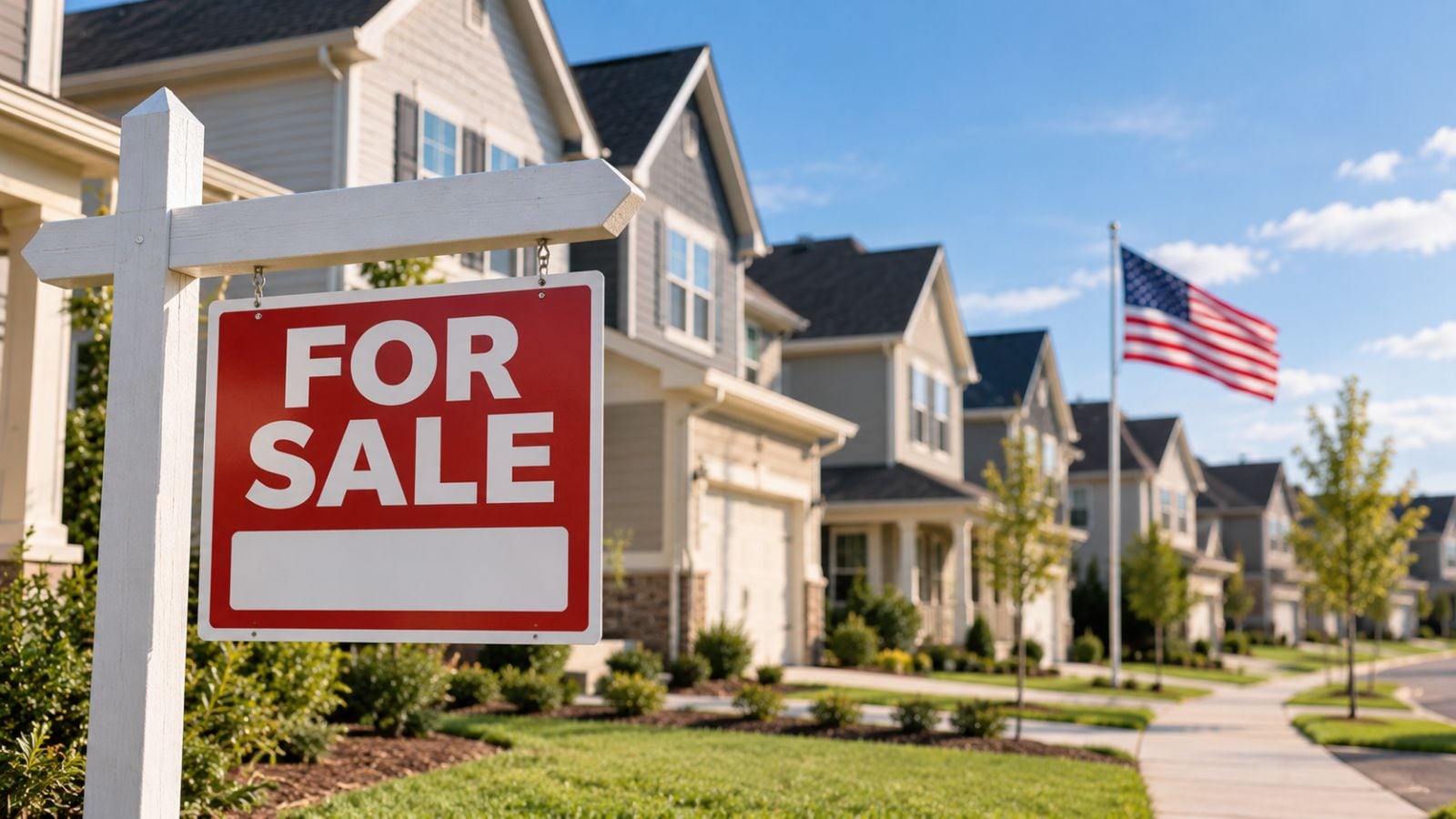
Mortgage rates have crossed the seven percent threshold for the fifth consecutive week, grounding the American housing market in a quiet, suffocating freeze. When the average rate on a thirty-year fixed home loan pushes past this psychological and financial barrier, it triggers an immediate contraction in borrowing power. Buyers suddenly find their purchasing budgets slashed by tens of thousands of dollars without a single change to their actual income. This is not just a statistical milestone. It is a structural choke point that is trapping prospective buyers in high-rent apartments while freezing homeowners with low-rate legacy mortgages inside houses they might otherwise sell.
The immediate answer to the primary question is straightforward: persistent inflation prints and stubborn federal reserve policy have driven long-term bond yields upward, dragging mortgage rates behind them in a direct mathematical tether. But blaming central bank rates alone misses the deeper plumbing of the modern financial system. The thirty-year mortgage rate does not take its marching orders directly from the federal funds rate. Instead, it tracks the yield on the ten-year treasury note, which is influenced by international capital flows, quantitative tightening, and inflation expectations. When markets realize that inflation is sticky and federal debt issuance is reaching historic volumes, investors demand a higher risk premium to hold long-term debt. That premium is passed directly to anyone trying to finance a roof over their head.
The Lock-in Effect
For the past several years, the housing sector has operated under an abnormal constraint known widely as the lock-in effect. More than eighty percent of current mortgage holders secured interest rates below five percent during the pandemic-era monetary stimulus. Asking those homeowners to trade a three percent rate for a seven percent rate is equivalent to asking them to take a voluntary, permanent pay cut on their monthly housing costs.
As a result, inventory has vanished. Potential sellers are staying put, choosing to remodel, expand, or simply endure cramped living spaces rather than forfeit their cheap debt. This inventory drought creates an artificial floor under home prices. Even as demand plummets due to punishing borrowing costs, prices refuse to drop significantly because supply is constrained by homeowners who refuse to budge. The market is caught in a standoff between buyers who cannot afford current rates and sellers who cannot afford to abandon old ones.
Consider a hypothetical buyer looking at a median-priced home of four hundred thousand dollars with a twenty percent down payment. At a three percent interest rate, the monthly principal and interest payment sits at roughly one thousand three hundred and forty-four dollars. At seven percent, that same monthly payment balloons to over two thousand one hundred dollars. That difference of nearly eight hundred dollars every month represents groceries, utility bills, car payments, or retirement savings. Over the course of a thirty-year term, the higher interest rate adds hundreds of thousands of dollars in pure financing costs to the purchase price of the home.
The Secondary Market Strain
Beneath the consumer-facing friction lies a deeper operational strain within the mortgage origination industry. When volume dries up because buyers and sellers have gone on strike, independent mortgage banks face severe revenue compression. Originators rely on transaction velocity to cover fixed overhead costs. Five consecutive weeks of climbing rates cause rate locks to drop, pipeline pull-through rates to collapse, and layoffs to ripple through regional lenders.
This contraction in origination capacity has long-term consequences for competition. Smaller, independent lenders either fold or get absorbed by mega-banks with diversified balance sheets. When consolidation concentrates market share among a handful of massive financial institutions, consumer choice narrows, and underwriting standards can become rigid and impersonal.
Financial analysts often point to historical precedents, reminding anyone who will listen that mortgage rates hovered near double digits during the early nineteen-eighties without completely destroying the economy. That historical comparison ignores the fundamental divergence between wages and home prices today. Forty years ago, home price-to-income ratios were vastly more favorable. Today's seven percent rate hits a consumer base already squeezed by decades of escalating housing costs relative to wage growth. The math simply does not scale in the same way.
Navigating the Stalemate
First-time buyers are bearing the brunt of this structural shift. Without equity from a previous home sale to roll into a new purchase, they must bring massive down payments or accept debt-to-income ratios that stretch household finances to the breaking point. Some buyers are turning to adjustable-rate mortgages or temporary rate buydowns offered by builders desperate to clear inventory. These instruments offer short-term relief, but they introduce refinancing risk down the road if rates do not decline as anticipated.
Builders have attempted to bridge the affordability gap by constructing smaller homes, offering mortgage rate concessions, or absorbing closing costs. Yet these measures are stopgaps. They cannot alter the underlying macroeconomic reality of expensive debt.
The housing market is currently undergoing a painful, protracted price discovery phase. Without a sudden shift in macroeconomic fundamentals, relief will not come from a miraculous drop in borrowing costs. It will require either a significant correction in property valuations or a protracted period of wage growth that allows household incomes to catch up to the new reality of expensive capital. Until one of those pressures gives way, the seven percent barrier remains a formidable wall keeping millions of Americans on the sidelines.