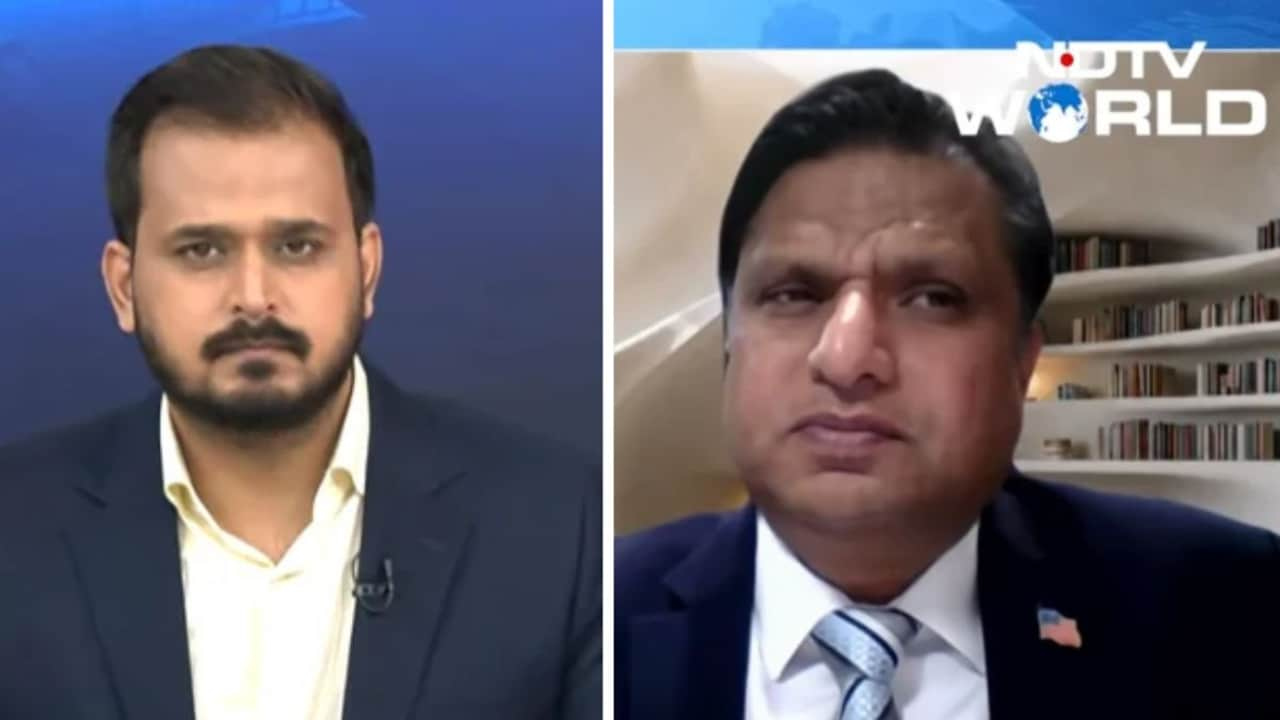
When a Republican candidate publicly breaks ranks to declare that the Iran war has inflicted severe damage on the United States, it is rarely an isolated outburst. It is a flare shot into a darkening sky. For years, the modern Republican Party operated under an unwritten rule of absolute loyalty to Donald Trump, particularly on matters of national security and foreign intervention. That consensus is fracturing. Across swing districts and primary battlegrounds, GOP contenders are confronting an uncomfortable reality that party leadership would prefer to bury—that escalating conflict in the Middle East is alienating the very working-class voters who built the America First coalition.
The immediate trigger for this backlash is straightforward. Voters are tired of foreign entanglements, skeptical of open-ended military commitments, and deeply anxious about the economic blowback hitting their wallets at the gas pump and the grocery store. When a Republican hopeful steps up to a microphone and criticizes Trump's handling of the Iran conflict, they are not merely attacking a political figure. They are voicing a growing panic inside the party apparatus that foreign policy overreach is jeopardizing their electoral viability. Meanwhile, you can find other stories here: What Really Happened When 135 People Were Arrested in France With a Katana Seized.
The Anatomy of a Fracturing Coalition
To understand why a Republican would take the political risk of criticizing Trump over Iran, you have to look at the mechanics of the conservative coalition built since 2016. That alliance rested on a clear, transactional promise. Trump vowed to end the era of "endless wars," dismantle the neoconservative interventionism of the Bush years, and focus American resources strictly on domestic renewal. For millions of voters in the Rust Belt and Sun Belt, that pledge was non-negotiable.
Escalation with Iran strikes directly at the heart of that bargain. Every airstrike, naval deployment, and retaliatory threat forces Republican candidates on the ground to answer questions they cannot easily spin. To see the complete picture, we recommend the excellent report by NPR.
Consider what happens in a typical town hall in Pennsylvania, Michigan, or Arizona. A candidate runs on inflation, border security, and bringing manufacturing jobs home. Instead, the local press and undecided voters demand to know why American troops are stationed in harm's way in the Persian Gulf, why global shipping lanes are disrupted, and why crude oil prices are creeping upward again. The disconnect between the campaign talking points and the geopolitical reality becomes impossible to ignore.
Internal polling circulating among Republican strategists reflects this vulnerability. Independent voters—who decide general elections in battleground states—view military escalation in the Middle East with profound skepticism. Even among reliable conservative base voters, enthusiasm drops precipitously when foreign conflict threatens to morph into a prolonged regional war. A candidate who echoes Trump's hawkish rhetoric without qualification risks looking out of touch with the daily economic pressures facing their constituents.
The Economic Toll Nobody Wants to Own
Wars do not stay contained to the regions where they are fought. They bleed directly into domestic balance sheets, and the conflict with Iran carries uniquely volatile economic consequences.
The Strait of Hormuz remains the single most critical chokepoint for global energy supplies. Roughly one-fifth of the world's petroleum passes through that narrow waterway. When military tensions flare in the region, insurance premiums for commercial tankers skyrocket, shipping routes are altered, and energy markets price in the risk of catastrophic disruption long before a single refinery is hit.
For an American consumer already squeezed by elevated living costs, the downstream effects are immediate. Higher diesel prices drive up the cost of transporting food, construction materials, and consumer goods. Interest rates remain stubbornly high as central bankers watch energy-driven inflation threaten to reignite.
Republican candidates running on economic competence find themselves trapped. You cannot effectively blame the opposing party for high prices while simultaneously cheering on a foreign policy posture that destabilizes global energy markets. By calling out the damage caused by the Iran conflict, dissenting Republicans are attempting to insulate themselves from the economic fallout before voters hold them accountable at the ballot box.
How the Neoconservative Ghost Returned to the GOP
There is a deep irony watching this debate unfold inside the Republican Party. For nearly a decade, Trump and his allies defined themselves in opposition to the foreign policy establishment that orchestrated the 2003 invasion of Iraq. They mocked traditional hawks, sidelined figures like John Bolton, and framed restraint as the ultimate expression of patriotism.
Yet the institutional machinery of Washington has a way of reasserting itself. When crises erupt in the Middle East, the loudest voices in the room are almost always the ones advocating for overwhelming force, regime pressure, and military deterrence. Think tanks, defense contractors, and veteran hawkish lawmakers quickly flood the zone, arguing that anything less than total escalation projects weakness.
Trump's own instincts have always been contradictory on this front. He relishes the image of a strongman who commands the world's most powerful military, even as he harbors a genuine distaste for nation-building and prolonged troop deployments. In practice, that tension produces a volatile policy of "maximum pressure"—crippling economic sanctions, targeted strikes, and aggressive rhetoric—that pushes adversaries toward confrontation while insisting that war is not the goal.
For younger, populist-leaning Republicans, this looks dangerously familiar. They recognize the rhetoric of escalation because they grew up watching it lead to trillions of dollars in debt and thousands of American casualties in Iraq and Afghanistan. Their criticism of Trump is not a betrayal of the America First movement; in their eyes, it is an effort to save it from being hijacked by the very interventionists they thought they had defeated.
The Generational Divide on Foreign Policy
A stark generational split is driving much of this dissent. Older Republican lawmakers, shaped by the Cold War and the immediate aftermath of September 11, tend to view American military dominance in the Middle East as an unquestioned necessity. To them, confronting Iran is a moral and strategic imperative, regardless of the domestic political cost.
Younger Republicans—many of whom served in post-9/11 deployments or watched their peers return home from inconclusive conflicts—operate from a completely different worldview. They view America's resources as finite. Every dollar spent policing the Persian Gulf is a dollar not spent securing the southern border, rebuilding domestic infrastructure, or competing economically with China.
When a Republican candidate breaks ranks to say the Iran war has done massive damage, they are speaking directly to this younger demographic. They are signaling that they understand the limits of American power and refuse to sign a blank check for another Middle Eastern quagmire.
The Strategic Cost in the Indo-Pacific
Beyond the domestic political fallout and immediate economic pain, military analysts point to a quieter, far more consequential damage inflicted by the Iran conflict—strategic distraction.
For years, defense planners across both parties have agreed that the primary long-term challenge to American security and economic primacy lies in the Indo-Pacific. Countering the rapid military modernization and regional ambitions of China requires sustained naval presence, advanced munitions stockpiles, and focused diplomatic capital.
Escalation with Iran pulls those exact assets in the opposite direction. Aircraft carrier strike groups diverted to the Mediterranean and the Red Sea are carriers not patrolling the South China Sea. Patriot missile batteries, interceptor munitions, and surveillance drones expended in the Middle East are systems drained from reserves that would be vital in any Pacific contingency.
To make matters worse, prolonged conflict in the Middle East actively benefits Beijing. While Washington expends political capital, military hardware, and financial resources managing crises with Tehran, China deepens its economic ties across the Global South, buys discounted Iranian crude, and positions itself as a pragmatic diplomatic broker.
Serious defense thinkers inside the Republican Party know this. Even those who hesitate to criticize Trump publicly acknowledge in private briefings that getting bogged down in a conflict with Iran is a strategic gift to America's most formidable rival. The candidate willing to say it out loud is simply stating what Pentagon planners have been warning about behind closed doors.
Why Criticizing Trump Remains a High-Wire Act
Speaking truth to power inside the modern Republican Party carries severe career risks. Trump's grip on primary voters remains formidable, and his political operation is notoriously unforgiving toward perceived disloyalty. A single critical soundbite can trigger a barrage of attacks from conservative media outlets, dry up donor networks, and invite a well-funded primary challenger overnight.
That reality makes the emergence of open criticism over the Iran war all the more significant. Politicians are risk-averse creatures by nature; they rarely step out onto a limb unless they believe the tree itself is rotting from the inside.
To survive this high-wire act, dissenting Republicans are carefully calibrating their language. Notice how they frame their arguments. They rarely attack Trump's character or question his intentions. Instead, they focus relentlessly on outcomes and advisors. They argue that the president is being misled by entrenched Washington hawks, or they frame their opposition around protecting American troops and taxpayers.
This rhetorical framing allows them to criticize the policy without triggering an automatic, reflexive backlash from the base. It creates a permission structure for conservative voters who love Trump's domestic agenda to quietly agree that the situation with Iran has gone too far.
What Happens When the Narrative Shifts
Political narratives rarely collapse all at once. They erode slowly, through a series of cracks that eventually widen until the entire structure gives way.
In the early stages of any military escalation, the pressure to rally around the flag is immense. Dissenters are dismissed as naive, weak, or disloyal. Media coverage focuses on tactical strikes, hardware capabilities, and geopolitical posturing.
Then the bill comes due. The conflict drags on without a clear resolution. Economic friction mounts at home. Allies grow restless, and adversaries adapt. Suddenly, the dissenting voices that seemed marginal weeks earlier start sounding prophetic.
We are witnessing that exact inflection point inside the Republican Party. The candidate slamming Trump over the damage caused by the Iran war is testing the waters for a broader realignment. If voters reward that candor—or if the economic and geopolitical costs of the conflict continue to mount—more Republicans will inevitably follow suit.
For decades, the iron law of American politics has been that foreign policy rarely decides elections until it goes visibly, undeniably wrong. Once voters decide a conflict is hurting their country more than helping it, no amount of political loyalty can hold back the tide. The cracks in the Republican wall over Iran are no longer hidden, and no strategist in Washington knows how to seal them.