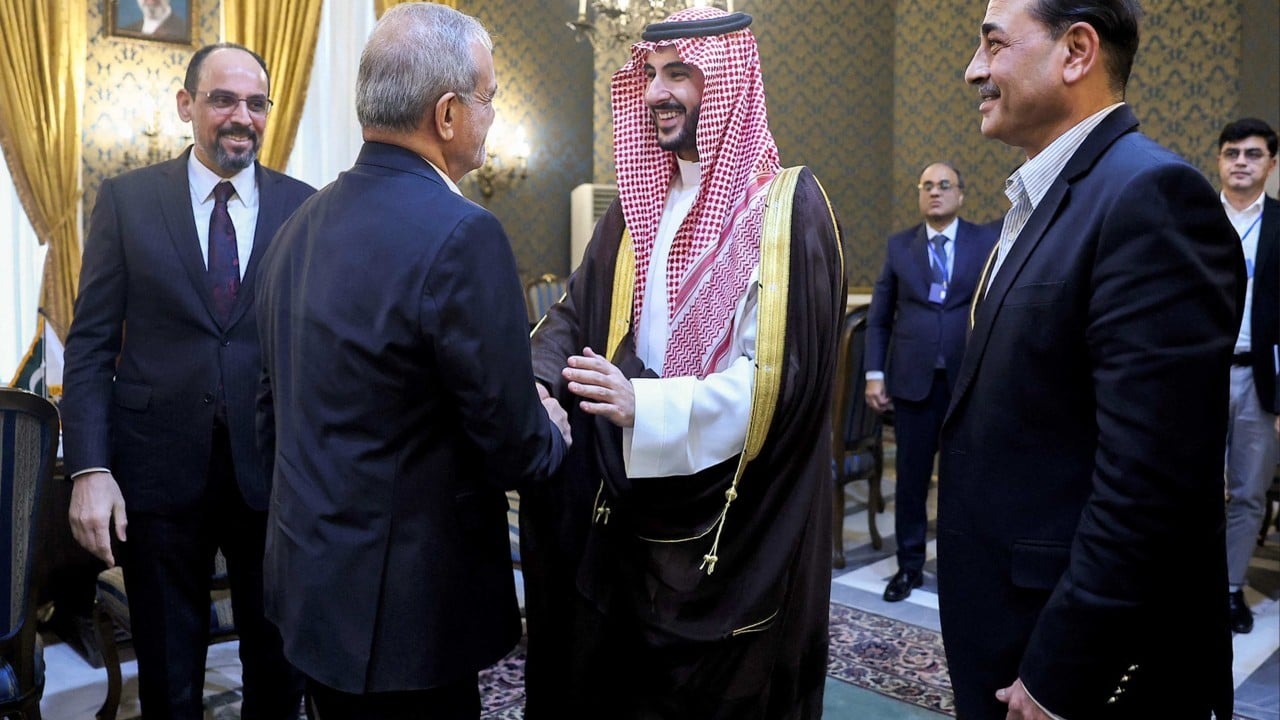
High-level delegations from nations aligned under the Mecca agreement have arrived in Tehran with a single, urgent mandate. They are there to prevent a localized ceasefire from collapsing back into a full-scale regional war. By leveraging religious authority, backchannel security guarantees, and quiet economic incentives, these mediating states are attempting to lock in a fragile truce before miscalculation triggers another devastating round of cross-border strikes.
For months, the diplomatic world has watched the slow-motion erosion of deterrence in the Persian Gulf and the Levant. When traditional Western mediation channels hit a wall of mutual distrust, the burden fell to regional neighbors who share both borders and existential stakes with the Islamic Republic. The presence of these envoys in Tehran marks a sharp departure from public posturing. It is an admission that another military escalation would spare no capital in the region, regardless of which side fires the first missile.
The Anatomy of a Fragile Truce
Most observers miss the real reason these delegations are sitting across from Iranian officials right now. They assume this is a routine diplomatic courtesy or a photo opportunity designed to project regional unity. It is neither.
The Middle East is currently operating under a shadow truce that lacks formal verification mechanisms. Without an agreed-upon framework for what constitutes a violation, every drone launch, every cyber intrusion, and every naval interception carries the risk of spiraling out of control. The visiting diplomats are acting as human circuit breakers.
Their strategy relies on three distinct pressures that Western powers simply cannot replicate.
First, there is shared economic vulnerability. The Gulf states and neighboring nations have spent the last decade pouring trillions of dollars into infrastructure, tourism, and energy transition projects. A renewed conflict threatens shipping lanes in the Strait of Hormuz and instantly vaporizes foreign direct investment. Tehran, grappling with severe domestic inflation and currency depreciation, faces an equally grim ledger. Both sides know that prolonged war means economic ruin, even if their public rhetoric suggests otherwise.
Second, the mediators bring religious and cultural legitimacy to the table. Agreements brokered in European capitals often carry the stain of foreign interference in the eyes of hardline factions in Tehran. Deals rooted in Islamic solidarity—symbolized by the spiritual weight of Mecca—are far harder for domestic critics to dismiss as Western capitulation. It gives Iranian decision-makers the political cover required to make tactical concessions without looking weak to their base.
Third, these countries offer direct intelligence deconfliction. When adversaries refuse to speak directly, third-party neighbors become the clearinghouse for red lines. If an Iranian-aligned faction prepares an operation, or if an opposing military mobilizes near a border, the mediating states pass quiet warnings to prevent accidental escalation.
Why Traditional Diplomacy Failed
To understand why this specific group of nations had to step in, you have to look at the wreckage of previous international efforts. For years, security architecture in the Middle East was built on external guarantees. Washington provided the military umbrella, while European diplomats drafted the frameworks. That model is broken.
The collapse of the 2015 nuclear accord left a permanent scar on diplomatic credibility. From Tehran's perspective, signing agreements with Western governments became a fool's errand when a single election cycle in Washington could erase years of negotiation. Meanwhile, regional capitals watched how slowly international bodies reacted when missiles and drones actually began flying toward critical infrastructure.
When the 2019 attacks on Saudi oil facilities occurred, the realization in Riyadh, Abu Dhabi, and other regional hubs was immediate and sobering. External allies would issue strong condemnations, deploy defensive batteries, and call for restraint. They would not, however, fight a war to protect regional economic interests unless their own personnel were directly targeted.
This realization birthed a new doctrine of regional self-reliance. If the neighbors wanted stability, they had to buy it themselves through direct engagement with Tehran. The March 2023 Beijing-brokered normalization deal between Saudi Arabia and Iran was the first major domino to fall. The current mission in Tehran is the logical, urgent evolution of that shift.
What Happens Behind Closed Doors in Tehran
Diplomacy in Tehran rarely happens in the ornate reception halls shown on state television. The real work takes place in smaller, quieter rooms with officials from the Supreme National Security Council and the Islamic Revolutionary Guard Corps.
The visiting delegations face a delicate balancing act. They cannot issue ultimatums. Public pressure almost always forces Iranian leadership into a defensive crouch, compelling them to escalate just to prove they cannot be intimidated. Instead, the envoys present a stark, clinical assessment of the battlefield and the global economy.
Consider a hypothetical scenario that mirrors the exact math these diplomats use. Imagine a maritime incident in the Persian Gulf results in the sinking of a commercial vessel. Under normal circumstances, retaliatory strikes would follow within forty-eight hours. The mediating states map out the exact sequence of events that would follow day three, day ten, and day thirty. They show how insurance rates for all regional ports would spike to unpayable levels, how energy exports would stall, and how international coalitions would inevitably be drawn into direct combat. By walking through the mechanics of the aftermath, they force military planners to confront the second- and third-order consequences of tactical wins.
The Proxy Dilemma
The single hardest issue on the agenda is the behavior of non-state actors. Tehran has spent decades building a network of allied militias across Iraq, Syria, Lebanon, and Yemen. While Iran provides funding, weapons, and strategic guidance, these groups maintain their own local political agendas and domestic pressures.
Mediating nations are demanding guarantees that these groups will hold their fire. Iranian officials routinely counter that they do not micromanage the daily tactical decisions of their allies. Both statements contain a grain of truth, which is precisely what makes the problem so dangerous.
If a faction in Yemen or Iraq launches a strike to score domestic political points, the target nation will hold Tehran responsible. The visiting diplomats are pushing for a tiered accountability framework. Under this concept, Tehran agrees to use its financial and logistical leverage to restrain major operations, while regional powers agree to avoid disproportionate strikes that would force Iran to intervene to save face.
The Skeptics and the Spoilers
Not everyone in the region or in Washington is cheering this diplomatic offensive. A loud chorus of analysts and policymakers views the Mecca pact outreach with deep suspicion.
Their argument is straightforward and rooted in decades of hard experience. Critics contend that Tehran uses diplomatic pauses not to build lasting peace, but to buy time. While envoys drink tea and draft communiqués, factories continue assembling drones, enrichment centrifuges keep spinning, and supply lines to regional militias get quietly restocked. From this perspective, engaging with Iran without credible military deterrence is simply appeasement dressed up in regional garb.
There is also the problem of spoilers. Peace in the Middle East has many enemies, and they do not all sit in Tehran. Hardline factions within multiple governments benefit politically from a state of perpetual crisis. External powers with geopolitical rivalries against the West have little incentive to see the Middle East stabilize, as a distracted and bogged-down international community serves their broader strategic goals elsewhere in the world.
Furthermore, the mediating countries themselves do not speak with a single voice. Each state in the delegation has its own bilateral irritants with Iran, ranging from disputed gas fields and islands to sectarian tensions and water rights. Tehran is famously skilled at exploiting these minor divisions, offering bilateral side-deals to one neighbor while stalling another.
The Structural Flaws of Regional Mediation
Even if the delegations succeed in securing verbal commitments during their stay in Tehran, the structural weaknesses of this approach remain glaring.
The Absence of Verification
Unlike formal arms control treaties, which rely on international inspectors, satellite monitoring, and strict timelines, these regional understandings are built largely on trust and mutual self-interest. There are no neutral observers stationed at ports or border crossings to verify whether weapons shipments have actually stopped. When compliance cannot be independently verified, every rumor becomes a crisis.
The Domestic Political Trap
Leaders in Tehran must constantly manage their own internal power dynamics. The tension between pragmatic technocrats who want sanctions relief and ideological hardliners who view resistance as the core identity of the state never truly goes away. A diplomat can reach an understanding with the Foreign Ministry on Tuesday, only to see it undermined by a hardline Friday prayer sermon or a unilateral military exercise on Friday.
The Shadow of Nuclear Thresholds
Beneath every conversation about ceasefires and border security lies the unresolved question of Iran's nuclear program. Regional states know that a nuclear-armed Iran would fundamentally alter the balance of power forever, potentially triggering a regional proliferation cascade. Yet these delegations lack the technical mandate and the sanctions-lifting power to solve the nuclear file on their own. They are trying to put out a brushfire while sitting next to an unexploded bomb.
Why This Mission Still Matters
Despite the cynicism of seasoned observers and the undeniable fragility of the process, writing off this diplomatic push would be a massive mistake.
In international relations, perfection is frequently the enemy of survival. The delegations in Tehran are not trying to solve forty years of ideological hostility in a single weekend. They are not drafting a comprehensive Middle East peace treaty that will win awards in Geneva or Oslo. Their goal is far more modest and infinitely more practical. They are trying to buy time.
Every week that passes without a major exchange of ballistic missiles is a week where economic interests take deeper root. Every month that the backchannels remain open is a month where military commanders get used to picking up the phone instead of pressing a launch button. Stability in this part of the world is rarely achieved through grand, sweeping bargains; it is cobbled together through messy, incomplete, and deeply flawed compromises that make war slightly more expensive than peace.
The diplomats boarding their flights out of Tehran will likely leave without a signed treaty or a triumphant joint statement, carrying only a handful of conditional promises and a direct phone line that might just keep the region from burning down tomorrow.


