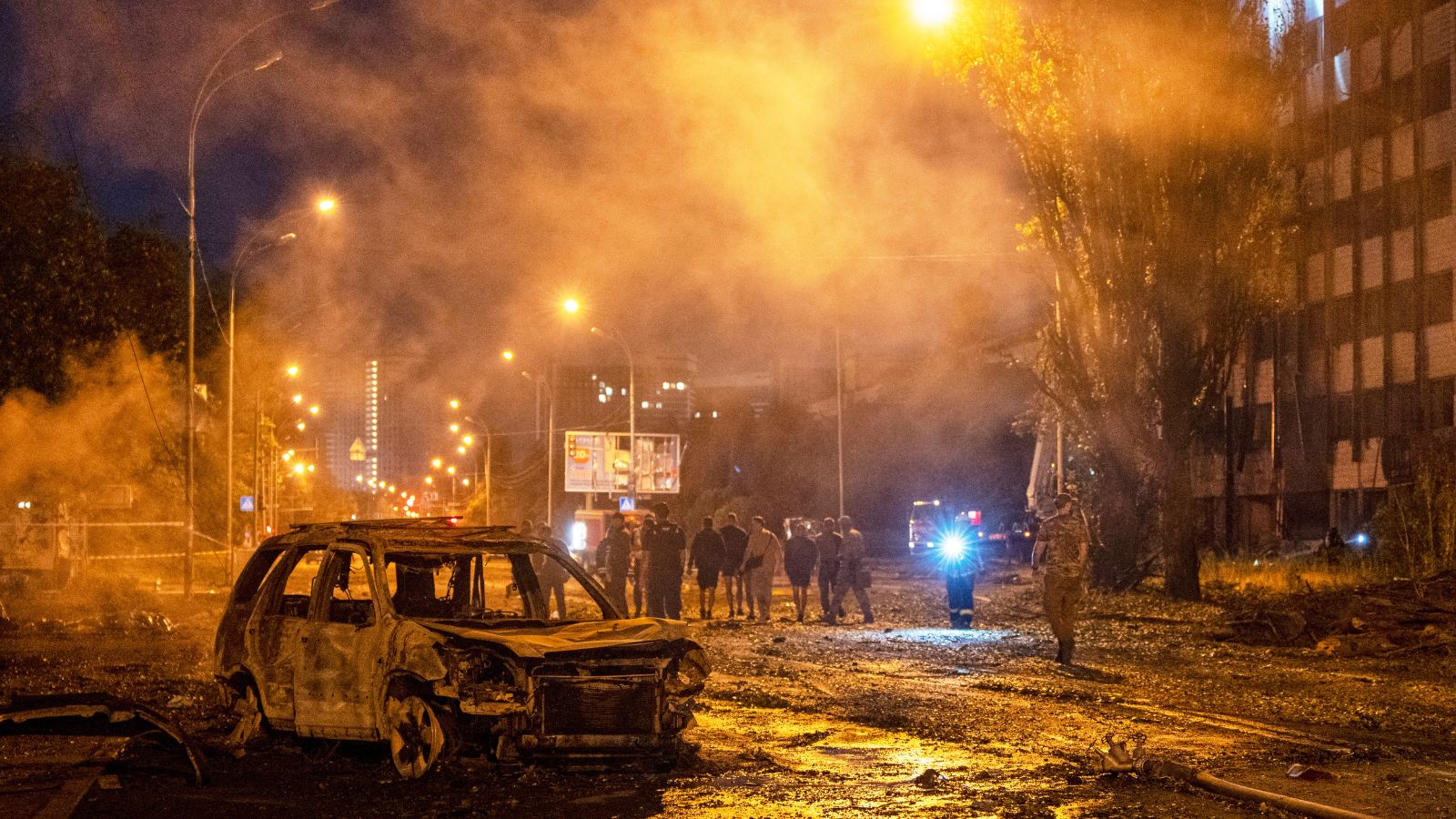
When long-range strikes hit a Russian oil refinery just as temporary truce talks faltered, the immediate headline pointed straight to a diplomatic rupture between Kyiv and Washington. Yet the deeper story sits in how energy warfare functions when diplomatic guarantees begin to fray. President Volodymyr Zelenskyy signaled deep frustration over perceived pressure from Donald Trump, and Ukrainian forces moved back toward targeting petroleum infrastructure that fuels Moscow's war machine. Understanding why a truce collapses into a refinery strike requires looking past soundbites and examining fuel logistics, air-defense trade-offs, and the hard math of wartime leverage.
In wartime reporting, "truce" is often treated like a formal treaty with clear borders and penalties. Real-world pauses in long-range infrastructure attacks rarely work that way. They tend to be fragile, conditional arrangements shaped by unspoken limits, intelligence leaks, and shifting battlefield incentives. When one side doubts that a pause will yield durable security or credible backing from a major power, restraint starts looking less like diplomacy and more like unilateral disarmament.
Why Truce Talk Collapses Under Pressure
Diplomatic friction rarely begins on the day a strike happens. It builds over weeks of competing definitions of success. In high-stakes conflicts involving outside powers, capitals often speak past one another even while using similar words. One side hears "negotiate from strength" as a green light to hit high-value targets; another hears it as a demand for immediate concessions.
Public expressions of betrayal by a wartime leader carry a specific strategic weight. Zelenskyy voicing resentment toward Trump is not just an emotional reaction for cameras. It is a signal to domestic audiences, European partners, and adversaries alike that assumptions about unconditional backing can no longer be taken for granted. When a government concludes that external political shifts could leave it exposed without firmer guarantees, its tolerance for self-imposed restraint shrinks fast.
Consider a hypothetical example to see how incentives distort a fragile pause. Suppose two sides observe an informal moratorium on hitting energy facilities for three weeks. Side A holds back on drone launches while waiting for diplomatic movement, absorbing artillery and front-line pressure in the meantime. If Side A sees talks stall and hears rumors of reduced external support, waiting another month carries a steep cost. Launching a strike against a refinery becomes a way to reassert agency before options narrow further.
Ceasefires and informal pauses fail most often when participants believe time is working against them rather than for them.
That dynamic explains why a diplomatic rift and an energy strike so often arrive together. Energy targets sit right at the intersection of military logistics and political signaling. Hitting a refinery does not win a trench line on its own, yet it reminds everyone in the room that escalation remains on the table.
The Mechanics of Oil Refinery Warfare
To see why a Russian oil refinery remains such a tempting target, look at how modern petroleum systems operate. A refinery is not a single tank of fuel sitting in an open field. It is a dense web of distillation columns, catalytic crackers, pipelines, power substations, storage farms, and rail or port terminals.
Strikes rarely need to level an entire complex to cause headaches. Damage to a specialized processing unit or a control station can force a shutdown or slow throughput across an entire facility. Repairs take time because replacement parts, specialized welding, and skilled engineers are finite resources, especially under wartime constraints.
At the same time, oil markets and domestic fuel supply chains behave differently depending on which part of the chain gets hit. Refining capacity affects motor fuels like diesel and gasoline, as well as aviation fuel and logistics supplies. Crude extraction and export routes involve separate bottlenecks, pricing mechanisms, and maritime or pipeline dynamics. Conflating the two leads to sloppy analysis.
What Strikes Actually Disrupt
Long-range drones and munitions face tough physical limits. Payload weight, guidance accuracy, electronic warfare, and point air defenses all shape what gets through. Even when a strike reaches a refinery, results vary sharply from site to site.
- Processing bottlenecks: Damaging key units can cut output even if storage tanks remain intact.
- Logistics friction: Rerouting fuel supplies adds transit time, rail or truck strain, and regional price pressure.
- Defense dispersion: Protecting dozens of scattered energy sites stretches air-defense batteries thin across a vast geography.
- Repair timelines: Restoring complex industrial gear depends on parts availability and worker safety, not just concrete and steel.
None of these effects acts like a magic off-switch for a sprawling economy or a large military. Large producers often have redundant capacity, alternate routing, or workarounds that blunt immediate shock. Still, friction compounds. Every repaired unit, diverted shipment, and repositioned air-defense launcher carries an opportunity cost somewhere else.
Washington's Leverage and Kyiv's Dilemma
Every major external power brings its own domestic clock to a foreign crisis. Trump's approach to foreign commitments has consistently centered on burden-sharing, dealmaking rhetoric, and skepticism toward open-ended entanglement. For Kyiv, that creates a sharp strategic bind. Relying solely on promises from a shifting political environment is risky, yet alienating a key supplier of weapons, intelligence, and diplomatic weight is equally hazardous.
Washington has never had a single, unified view on energy strikes anyway. Policymakers have long debated whether hitting refineries squeezes an adversary's war effort or risks spiking global energy prices, complicating allied politics, and triggering retaliatory escalation. Those disagreements existed long before the latest round of friction, and they sharpen whenever diplomatic signals turn messy.
Kyiv looks at the same map through a survival lens. When frontline attrition is grinding and air-defense interceptors are rationed, leaders look for asymmetric ways to impose costs on the other side. Hitting an oil refinery offers a way to strike deep inside territory, force air defenses outward, and demonstrate capability despite diplomatic headwinds.
Yet deep strikes carry trade-offs that do not always show up in celebratory clips. Drones and missiles used against refineries are munitions not used against airfields, command posts, or frontline concentrations. And if external partners worry that energy strikes undercut broader negotiating tracks, political friction can widen just when a defender needs steady backing most.
What Observers Miss in Fast News Cycles
Fast-moving headlines love clean causal chains. A leader says they feel betrayed, a truce unravels, a refinery burns, and pundits declare a turning point. Decades of watching conflicts and commodity markets suggest a much messier reality.
First, tactical strikes and strategic outcomes are not the same thing. A refinery fire is visually dramatic and easy to report. Measuring its lasting effect on fuel distribution, military readiness, or budget revenues takes weeks or months of quiet tracking, not a single afternoon.
Second, public rhetoric and private backchannels rarely move in lockstep. Leaders vent publicly to rally support or set markers, even while diplomats probe for openings or test red lines behind closed doors. Treating every sharp quote as the final word on policy usually misses half the picture.
Third, gray areas define almost every phase of this conflict. Sanctions evasion, alternate shipping routes, shifting domestic fuel priorities, and uneven air-defense coverage mean outcomes rarely fall into neat binaries of total collapse or zero impact. Anyone claiming absolute certainty about how a single strike will reshape talks or fuel markets is selling confidence rather than analysis.
Watching the next moves means tracking concrete indicators rather than waiting for dramatic speeches. Look at the frequency and geographic spread of strikes on energy infrastructure, whether diplomatic messages soften or harden over coming weeks, and how fuel logistics and air defenses adapt on the ground. Those quiet operational shifts tell the real story long before the next headline lands.