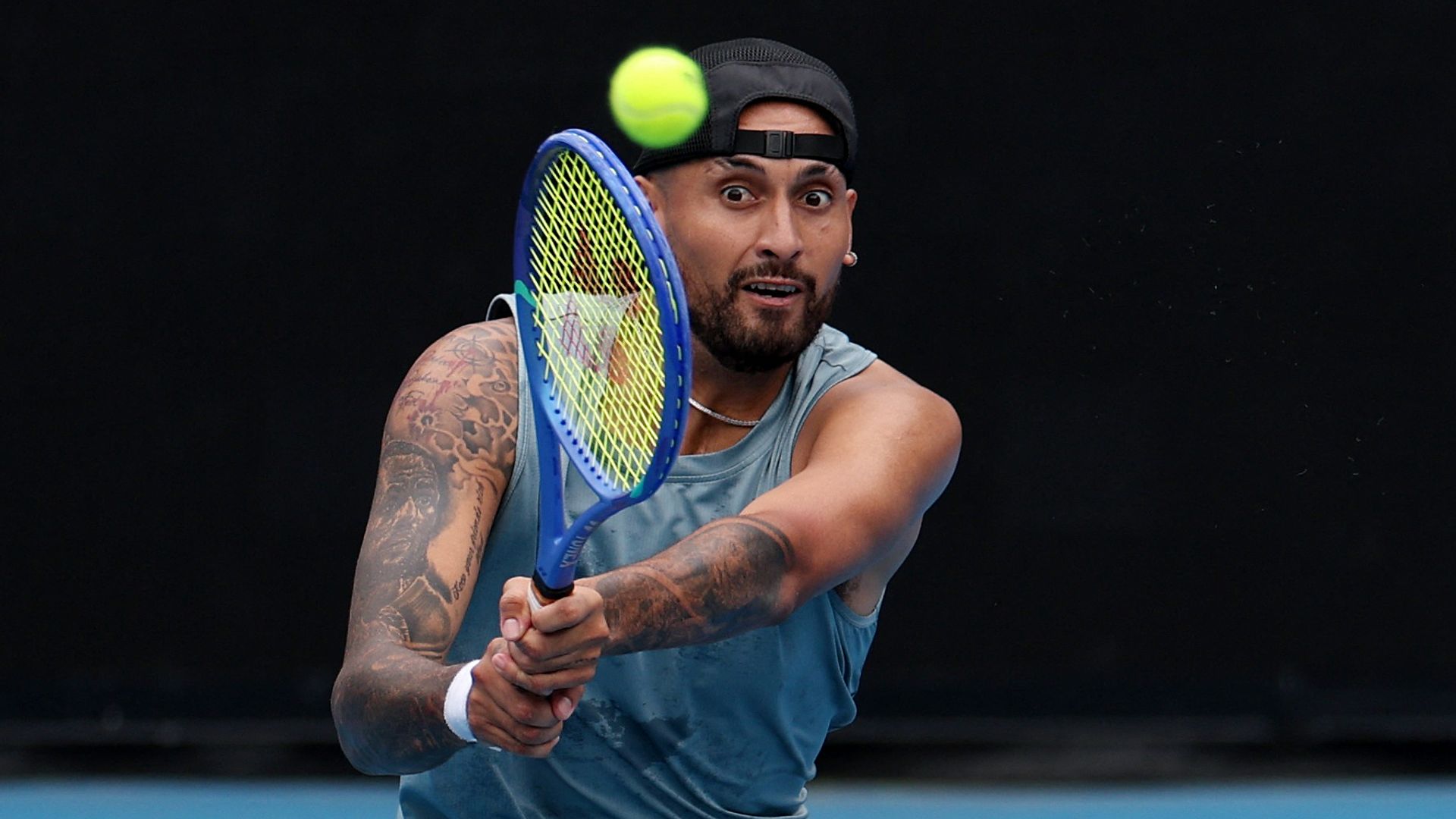
Australian tennis player Nick Kyrgios has been provisionally suspended from professional tennis by the International Tennis Integrity Agency (ITIA) after returning a positive test for benzoylecgonine, a metabolite of cocaine. The sample was collected on June 22 during the Mallorca Open, where Kyrgios competed in the singles draw before a first-round exit. Confirmation from a World Anti-Doping Agency accredited laboratory arrived on July 17, leading to a mandatory provisional suspension enacted on August 4. For a player whose ranking has slipped to 919th amid a grueling multi-year battle with knee and wrist injuries, this regulatory blow hits harder than any baseline winner ever could.
Public reaction split predictably along historical lines. Detractors pointed to a career defined by volatility, fines, and verbal run-ins with officialdom as proof of an inevitable descent. Supporters, meanwhile, fixated on his raw candor. Kyrgios took to social media to own the mistake entirely, bypassing the PR playbook of contamination claims or legal obfuscation. Yet, reducing this incident to a simple morality play misses the structural rot beneath professional sport. Elite athletes do not break down in a vacuum. When a generational talent collapses under the weight of physical decay and existential dread, the governing bodies presiding over the circuit must examine their own role in managing the human cost of modern competition.
The Anatomy of an In-Competition Violation
Under the Tennis Anti-Doping Programme, cocaine is classified as a stimulant and a substance of abuse. The World Anti-Doping Agency distinguishes between performance-enhancing drugs designed to build muscle or alter blood chemistry and social drugs consumed outside the rigorous demands of training. When a substance of abuse is detected out-of-competition and proven to have no connection to sports performance, penalties can be significantly reduced, sometimes dropping to a brief reprimand or a three-month course of treatment.
The trouble for Kyrgios lies in the calendar. Because the sample was provided on June 22 during an active tournament—the Mallorca Open—the infraction is categorized as in-competition. That distinction triggers strict regulatory protocols. Mandatory provisional suspensions do not care about context, intent, or the mental state of the athlete at 2:00 AM in a hotel room far from home. The rules are binary. A positive sample inside a tournament window locks the player out of the sport immediately while an independent tribunal weighs the final sanction.
This rigid framework protects the integrity of the competition brackets, but it offers zero accommodation for the psychological wreckage of professional athletes forced into early retirement. Kyrgios has not appealed the suspension. He recognizes that the sample contained the prohibited metabolite, and his public statements have avoided the courtroom theatrics typical of high-profile doping defenses. He broke the rule. The machinery of sport is now doing what it was engineered to do.
The Physical Prison and the Mental Toll
To understand how a player reaches this juncture, one must look closely at what happens when a brilliant body stops cooperating. Kyrgios reached the Wimbledon singles final in 2022, playing some of the most electric, effortless tennis of the decade. His serve was an unreadable weapon, his hands at the net were sublime, and his tactical intuition baffled traditionalists. That peak lasted just long enough to tease an entire sport about what his ceiling might actually be.
Then came the physical collapse. Wrist reconstructions, chronic knee inflammation, and persistent joint pain turned the tennis tour into a chamber of torture. Over the past two seasons, Kyrgios managed only four official singles matches. A competitor accustomed to dictating terms to the best players in the world found himself relegated to the sidelines, watching younger, healthier bodies sprint past him in the rankings.
In his public statement addressing the ban, Kyrgios offered a rare window into that internal isolation. He noted that his body could no longer execute what his mind demanded, admitting that coming to terms with the end of his career proved harder than anything he had ever faced. Elite athletes build their entire identity around physical dominance. When that instrument fails, the psychological withdrawal can be absolute. The transition from global stadium courts to lonely rehabilitation rooms breeds a unique brand of desperation. Tennis tours offer sports psychologists, but the prevailing culture still treats mental fragility as a competitive disadvantage to be hidden rather than treated.
The Broader Institutional Blind Spot
The tennis ecosystem operates on an unforgiving treadmill. Tournaments require star power, television networks demand inventory, and governing bodies prioritize commercial expansion across a twelve-month calendar. Little institutional infrastructure exists to catch athletes who lose their footing during long-term injury layoffs. When a player cannot compete, their income dips, their relevance fades, and their daily structure vanishes.
The ITIA administers the rules fairly and transparently regarding anti-doping violations, yet the regulatory framework remains entirely punitive rather than preventative. Testing positive for a substance of abuse during a tournament triggers immediate isolation. It removes the athlete from the locker room, cuts them off from their support structures, and places them under a media microscope precisely when intervention and mental health support are most vital.
If professional tennis wants to curb these crises, treating every positive test for a recreational drug as a purely legal infraction is a failing strategy. Substance abuse among elite athletes is almost always a symptom of deeper distress—isolation, career grief, chronic pain management gone wrong, and the crushing anxiety of irrelevance. Punishing the athlete without addressing the environment that pulverized their mental health ensures that identical stories will repeat with future generations.
Looking Past the Headlines
The immediate future for Kyrgios involves twenty-eight days away from public life and social media, followed by a formal hearing before an independent tribunal that will determine the final length of his ban. Given his ranking of 919th and the physical state of his joints, whether he ever returns to an ATP court is secondary to whether he can stabilize his life away from the sport.
Tennis has always struggled to accept its complicated stars. It prefers compliant champions who fit neatly into corporate brochures. Kyrgios was never that player. He challenged conventions, alienated traditionalists, and brought millions of casual viewers to a game that often takes itself far too seriously. His downfall in this instance is entirely of his own making, rooted in a terrible personal choice during a dark personal hour. Yet as the tennis world turns its collective page to the next tournament, the deeper question remains unanswered. The sport extracted every ounce of athletic brilliance it could from his frame, offered zero sanctuary when the frame broke, and now stands ready to lock the gate behind him.