The Silence of Naypyidaw
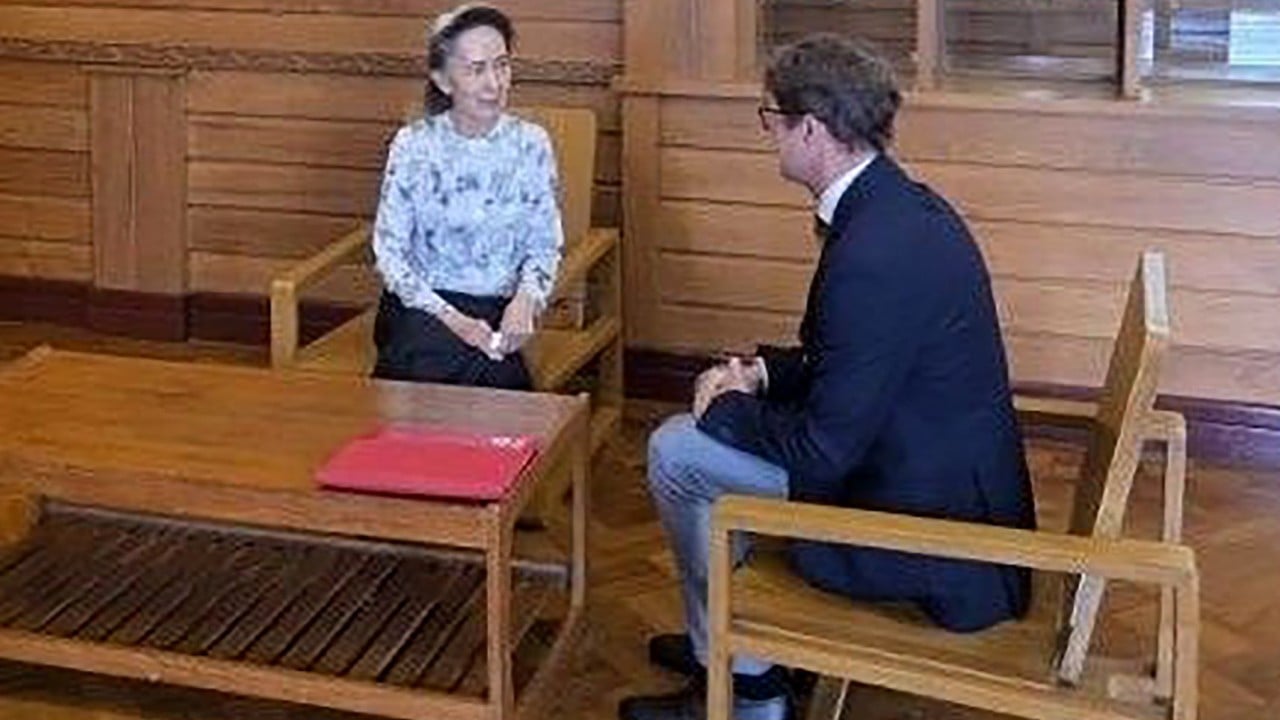
A single meeting behind fortified concrete walls cannot rewrite years of systematic isolation. Aung San Suu Kyi met with a representative of the International Committee of the Red Cross inside a detention facility in Myanmar, a rare acknowledgment from the ruling military junta that the ousted civilian leader is still breathing. For months, rumors of her failing health, transfer to secret house arrest, or worse had circulated through foreign diplomatic channels and fragmented exile networks. The confirmation that she is alive offers a thin thread of verification in a country consumed by a brutal civil war.
Yet, treating this minor concession as a diplomatic breakthrough misunderstands the fundamental mechanics of military rule in Southeast Asia.
The State Administration Council, which seized power in a violent coup, does not make humanitarian gestures without calculated political intent. International pressure regarding the treatment of political prisoners has mounted steadily, coupled with devastating battlefield losses suffered by the Tatmadaw against an alliance of ethnic armed organizations and People's Defense Forces. Opening a window to the Red Cross is a transactional maneuver. It is a tactical play for legitimacy, an attempt to appease international monitors without surrendering an inch of actual power or granting the detained Nobel laureate access to the outside world.
Anatomy of a Controlled Narrative
Information control is the primary weapon of the junta. Since the 2021 coup, Myanmar has transformed into a black hole of journalism and human rights monitoring. Independent reporters are hunted, imprisoned, or forced into exile. Digital surveillance blankets urban centers, while rural areas face scorched-earth military campaigns designed to punish civilian populations suspected of harboring resistance fighters.
Within this architecture of suppression, the Red Cross visit was meticulously choreographed.
The military regime dictates the terms of engagement. International organizations operate under severe constraints, navigating a labyrinth of bureaucratic roadblocks and intimidation designed to limit independent verification. When an official secures access to a high-profile political prisoner in an authoritarian state, that access is rarely unvarnished. The setting is controlled, the duration is monitored, and the psychological impact on the detainee is weighed against the regime's immediate propaganda needs.
Suu Kyi remains the most potent symbol of resistance in Myanmar, despite the complex legacy she left during her years in a fragile power-sharing arrangement with the military. Her physical survival matters to millions who view her as the legitimate anchor of democratic governance. But her prolonged detention serves a dual purpose for the generals. She is kept alive as a potential bargaining chip for a future they can no longer control, yet silenced so completely that she cannot rally the fractured opposition.
The Strategic Calculation Behind Closed Doors
Why now? Why allow an ICRC delegate across the threshold after years of stony silence regarding her exact location and well-being?
The answer lies on the battlefields of Shan State, Sagaing, and Rakhine. The Tatmadaw is bleeding out. Conscription laws, hastily enacted to replenish depleted ranks, have sparked mass draft-dodging and accelerated youth migration across porous borders. Morale among frontline troops has plummeted following coordinated offensives like Operation 1027, which stripped the regime of vital border trade hubs and military outposts.
Faced with existential military pressure, the generals are attempting to soften their international image just enough to avert harsher economic strangulation. They need sanctions relief, or at least a cessation of tightening financial nooses by Western democracies and ASEAN neighbors. Permitting a humanitarian check-in on Aung San Suu Kyi is cheap currency. It costs the junta nothing in terms of operational control, military hardware, or territorial dominance, yet it provides friendly intermediaries with a talking point to argue that engagement is preferable to total isolation.
The Limits of Humanitarian Diplomacy
International bodies walk a treacherous tightrope in Myanmar. To maintain access to vulnerable populations, political prisoners, and conflict zones, they must negotiate with a regime that commits widespread war crimes against its own citizens. This creates an ethical vacuum where minimal compliance is celebrated as diplomatic progress.
When the Red Cross enters a prison camp under military escort, it faces an impossible compromise. Speaking out about systematic torture, denial of medical care, or psychological abuse often results in immediate expulsion, cutting off the last remaining lifeline for thousands of detainees. Remaining silent or issuing carefully sanitized statements preserves access but risks lending a veneer of neutrality to a fundamentally illegitimate system.
The international community must recognize this dynamic for what it is. A brief confirmation of life from Aung San Suu Kyi does not signal a transition toward national reconciliation. It signals a regime under duress, testing the waters to see how little it can offer in exchange for international breathing room.
The Domestic Resistance Factor
While foreign diplomats dissect every syllable of a Red Cross communique, the reality on the ground in Myanmar has evolved far beyond the traditional political paradigm centered on Suu Kyi and the National League for Democracy.
A new generation has shouldered the burden of resistance. Young activists, striking civil servants, ethnic minority militias, and newly minted defense forces have forged a decentralized coalition that operates independently of the old political hierarchy. These groups are fighting not just for the restoration of the pre-coup status quo, but for a complete restructuring of the state into a genuine federal democracy that dismantles military hegemony once and for all.
This shift changes the political calculus surrounding Suu Kyi's detention.
While her moral authority remains a unifying touchstone, her absolute centrality to the opposition narrative has shifted. The federal democratic forces fighting in the jungles and mountains are proving capable of sustained military and administrative resistance without her direct guidance. The generals may believe that keeping her locked away neutralizes the movement, but they are fighting an adversary that has already decentralized its leadership and learned to survive without a single focal point.
Navigating the Gray Areas of Transition
If external pressure and internal insurgency eventually force the military to negotiate, the question of Suu Kyi's role will become the central friction point of any transition process.
A transition managed by the generals will seek to preserve military privileges, immunity from prosecution, and economic dominance behind a civilian facade. A genuine democratic transition requires complete subordination of the armed forces to civilian oversight, accountability for atrocities, and structural reform of the economy. The junta's willingness to grant a single Red Cross visit changes none of these fundamental hurdles.
Analysts who interpret this visit as a harbinger of imminent reform ignore the institutional psychology of the Tatmadaw. The military views itself as the sole guardian of national unity and territorial integrity. Concessions are calculated tactical retreats, not ideological conversions. To mistake a prison visit for an olive branch is to misunderstand the nature of modern authoritarian survival tactics.
The news that Aung San Suu Kyi is alive is a relief to those who feared her quiet elimination in the dark cells of Naypyidaw. But the broader struggle for Myanmar's future remains locked in a violent stalemate, far beyond the reach of humanitarian checklists and diplomatic handshakes.