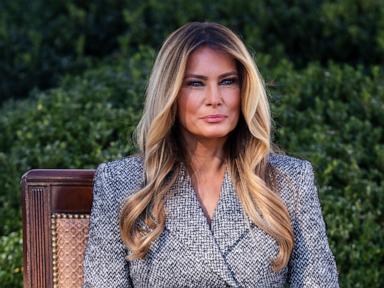
Claims that first lady Melania Trump brokered a temporary ceasefire in a Ukrainian town have ignited fierce debate over how high-level diplomacy actually works when artillery is still firing. In war zones, a pause in shelling rarely comes from a single public announcement. It usually depends on verified field communications, local commanders, and clear terms on the ground.
I have spent decades covering conflict zones, diplomatic backchannels, and political theater from Washington to Eastern Europe. Whenever a sudden claim of a temporary ceasefire surfaces around a specific Ukrainian town, experienced observers look past the press release and straight to the mechanics. Who talked to whom? Was a local truce actually observed by the troops holding the line, or was a brief lull in fighting rebranded as a diplomatic breakthrough?
Public statements from political figures frequently blur the line between humanitarian outreach, informal backchannel messages, and enforceable military agreements. That distinction matters enormously to civilians sheltering in basements and to soldiers watching a tree line for movement. A headline can travel around the world in seconds, while a real truce takes hours of painstaking verification and still collapses if one side doubts the other's intent.
How Truces Actually Happen on a Hot Front
Real pauses in active combat rarely start at a podium. They start on radios, encrypted messaging apps, and local command posts where officers know the exact coordinates of every mortar team and drone unit within range.
When fighting stops for a few hours or a single day in a contested settlement, it is usually driven by immediate, practical pressures. Commanders may need to pull back wounded soldiers, rotate exhausted units, or allow aid workers to reach trapped residents before winter weather or another assault closes the window. Sometimes a local pause happens simply because both sides have expended munitions or are repositioning armor.
High-profile political figures can sometimes help draw attention to humanitarian needs or nudge allies toward action. Yet a first lady does not command battalions, issue binding orders to Russian or Ukrainian field officers, or deploy neutral monitors to verify compliance. Without a chain of command enforcing the quiet, a "ceasefire" is little more than a wish spoken aloud over the noise of war.
In modern war, a quiet sector is only real when both sides stop aiming at the same time and have a reason to stay that way.
To see why outside claims often collide with battlefield reality, consider a hypothetical example. Imagine an artillery battery positioned outside a small town receives word through political channels that a temporary pause has been announced for humanitarian reasons. Unless that message reaches the local battalion commander through trusted military or diplomatic channels—and unless the opposing side confirms it will hold its fire—the battery commander faces an impossible choice between trusting a rumor and protecting his troops from an ambush.
That friction is why seasoned analysts treat sudden diplomatic claims with heavy skepticism. War does not pause on a press schedule. It pauses when incentives align and verification mechanisms exist.
The Soft Power Playbook and Its Blind Spots
Modern political campaigns and administrations increasingly rely on soft power and personal narratives to project influence. Framing a humanitarian gesture or an informal outreach effort as a peace initiative fits neatly into that tradition.
Spouses of presidents have long used humanitarian themes—children's welfare, medical aid, family reunification, and civilian protection—because those issues carry emotional weight across party lines. When an aide or supporter describes such outreach as brokering a ceasefire, it elevates a symbolic or humanitarian angle into a hard security achievement.
There is an obvious appeal to that framing. It makes a brutal, grinding conflict feel more manageable, as if a single forceful personality could cut through years of entrenched hostility. Voters who are tired of endless war news often want to believe someone has found a shortcut.
Yet shortcuts in geopolitical conflicts carry steep risks. If a claimed ceasefire fails to hold—or if residents in the named town report ongoing shelling right after the announcement—credibility takes an immediate hit. Worse, inflated claims can confuse international partners who are trying to track genuine negotiations versus political messaging.
- Symbolic outreach focuses on raising awareness, supporting relief efforts, or opening a conversation without binding commitments.
- Formal ceasefires require defined boundaries, timelines, rules on what counts as a violation, and a mechanism to handle disputes before fighting restarts.
- Tactical lulls happen locally on the ground for operational or humanitarian reasons, often without any grand diplomatic architecture behind them.
Confusing those three categories is one of the easiest traps in conflict reporting. A headline treats them as interchangeable. Reality punishes anyone who does.
Why Information Warfare Clouds Every Claim
Anyone reporting on the war in Ukraine knows that information is a weapon in its own right. Both sides, along with outside commentators and political actors, compete constantly to shape how events are interpreted abroad.
A claim involving a Ukrainian town sits right inside that information crossfire. Local reporting from the ground may be limited by active combat, power outages, or cell network disruptions. Satellite imagery can sometimes show changes in vehicle movement or crater patterns, yet it cannot tell you who picked up a phone or what was promised in a private call.
When hard verification is scarce, narratives rush in to fill the vacuum. Supporters of a political figure may amplify the story as proof of decisive action. Critics may dismiss it out of hand as fabrication or self-promotion. Neither reaction automatically gets closer to the truth.
Good investigative work requires separating three separate questions:
- What was actually said or done? Did the speaker claim to have arranged a pause, pass along a message, or advocate for civilians?
- What happened on the ground? Did shelling decrease, aid enter, or evacuations occur in that specific town around that time?
- Who had the authority to make it happen? Did anyone involved hold command or negotiating authority over the forces doing the shooting?
Answering those questions takes patience, and patience is in short supply during a news cycle. Still, skipping them leaves readers guessing instead of knowing.
What Overlooked Factors Shape Local Standoffs
Most coverage of high-profile diplomatic claims zooms straight in on the celebrity or political figure at the center of the story. That misses the quiet actors who actually determine whether people in a contested town survive the night.
Local military administrations, civil-military cooperation officers, volunteer evacuation drivers, and international humanitarian workers deal with truces in concrete terms. For them, a pause is measured in minutes and meters. Can an ambulance make the round trip without hitting a mine or drawing drone fire? Can elderly residents reach a pickup point before dark?
Verification gaps remain one of the hardest problems in any modern conflict. Even when official negotiators agree to a local pause, communication breakdowns happen. A unit on a flank may not get the word. A reconnaissance drone may spot movement and trigger an automatic strike before anyone checks whether a truce is active.
Geography and weather matter just as much as diplomacy. Muddy roads, fog, river crossings, and damaged bridges dictate when forces can move and when they stay put. Sometimes a quiet day in a town has far more to do with terrain and logistics than with any message sent from thousands of miles away.
Over the years, I have watched countless "breakthroughs" evaporate because they ignored those mundane realities. You cannot negotiate away physics, bad roads, or mutual distrust with a single statement.
Reading Between the Lines of Peace Claims
When you strip away the spin around any claim of a brokered ceasefire, you are left with a simple test of accountability. Did the claim produce measurable calm on the ground, or did it mostly produce attention?
Skepticism does not mean assuming bad faith in every case. Backchannels do exist in international affairs, and unexpected intermediaries occasionally pass messages that official channels cannot. Sometimes a humanitarian appeal really does prompt a brief pause so civilians can be moved out of harm's way.
At the same time, public claims deserve strict scrutiny whenever the evidence on the ground is thin or contradictory. Families living under threat do not benefit from exaggerated promises that raise false hopes or obscure who actually holds power in a given sector.
The real measure of any truce is not how loudly it is announced in a capital city, but whether the people in the town can step outside without ducking.