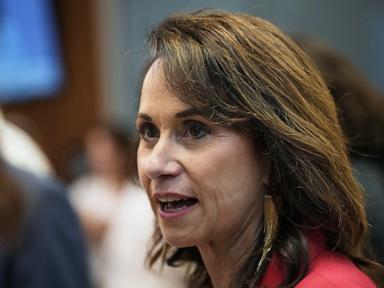
The extraordinary criminal indictment against Louisiana Attorney General Liz Murrill lasted less than twenty-four hours before the state Supreme Court stepped in to freeze it. On July 3, 2026, the state's highest judicial body granted an emergency stay, bringing a chaotic halt to a 16-count indictment returned just one day earlier by a New Orleans grand jury. The charges of public intimidation and malfeasance targeted Murrill for her warnings to local New Orleans officials who opposed a sweeping state law to restructure the city’s judiciary.
The battle lines are drawn between a deeply conservative state apparatus and the progressive enclave of Orleans Parish. The sudden intervention by the Supreme Court highlighted severe procedural irregularities inside the New Orleans courthouse, where a local judge went so far as to clear reporters from the room to keep the grand jury's actions hidden until the last second.
The Secretive Return and the Handcuffed Reporter
The legal machinery ground to a sudden halt because of what the Supreme Court called disturbing defects in how Orleans Parish Criminal District Court Judge Leon Roche handled the proceedings. Louisiana law explicitly demands that grand jury indictments be returned in open court, fully visible to the public eye. Instead, media members waiting to witness the historic return were ordered out, and the courtroom doors were locked. During the clearing of the room, a local television reporter was briefly handcuffed by deputies, sparking immediate First Amendment outrage.
Judge Roche defended his actions in a subsequent filing, asserting that clearing the room was entirely necessary to protect the anonymity of the grand jurors. He denied ordering any journalists to be detained. The local sheriff’s office stated its deputies merely followed court directives. However, the state’s high court found that the blatant disregard for open-court mandates tainted the validity of the indictment from its inception.
A Scorched Earth Fight Over a Single Clerk Office
The root of this systemic collapse rests on a bitter partisan struggle over an elected position that no longer exists. Late last year, Calvin Duncan won an election to become the Orleans Parish Criminal District Court Clerk with an overwhelming 68 percent of the vote. Duncan is a prominent criminal justice advocate who spent nearly three decades in prison before being fully exonerated of a murder conviction. State Republican leaders, including Murrill and Governor Jeff Landry, refused to recognize his exoneration, pointing to a past technical plea deal from 2011.
State legislators quickly passed a measure completely abolishing Duncan's newly won office, merging its responsibilities into the civil court clerk's domain under the banner of administrative efficiency. Local New Orleans leaders viewed the law as blatant political retaliation against an exonerated Black man who defied the state’s tough-on-crime narrative. New Orleans officials held a defiant swearing-in ceremony for Duncan on the courthouse steps while the legislature was still debating the bill.
Murrill struck back hard. She fired off sharp legal warnings to eight prominent New Orleans Democrats, including Mayor Helena Moreno and District Attorney Jason Williams. The letters warned that if local officials recognized Duncan or actively resisted the state consolidation law, they would be prosecuted under the state’s ancient usurper statutes, which allow for the forced removal of local officials who support unauthorized officeholders.
Deep Conflicts of Interest on Both Sides
The political theater grew more tangled when special prosecutor Laurie White entered the frame. White, a former judge who secured the 16-count indictment against Murrill, previously served as Calvin Duncan’s personal attorney during his long fight for freedom. This direct tie immediate raised alarms about an institutional vendetta.
To complicate matters further, Murrill’s office had previously represented White in an entirely separate, highly embarrassing state lawsuit involving workplace misconduct allegations. That past case was dismissed, but it created an inescapable web of personal and professional friction between the prosecutor and the target of the indictment.
Governor Jeff Landry wasted no time backing his attorney general, branding the Orleans Parish legal system a circus and a kangaroo court. Landry publicly promised an immediate executive pardon the second a conviction landed. White dismissed the governor's rhetoric, stating that the state should let the prosecution proceed to a conviction first before handing out political favors.
The Supreme Court stay does not kill the case permanently, but it provides Murrill room to file motions to quash the indictment and demand the total recusal of both White and Judge Roche. The high court left the door open for the special prosecutor to respond, but the momentum has shifted entirely back to Baton Rouge. Power in Louisiana flows from the state capital, and New Orleans' attempt to indict its way out of state control has run straight into a brick wall of judicial authority.