The high-profile legal battle surrounding allegations of sexual assault at Cornell University has expanded far beyond the campus boundaries into a complex jurisdictional chess match. Five of the seven male students accused in a civil lawsuit have formally petitioned to remove New York Attorney General Letitia James as special prosecutor, arguing that prior public statements compromise her office's impartiality. This legal maneuvers mark the latest flashpoint in an investigation that has exposed deep fractures between local prosecutorial discretion, state-level intervention, and institutional accountability.
The controversy erupted following a civil complaint filed by an individual identified as Jane Doe, detailing a 2024 incident at the Chi Phi fraternity house. Initially, the Tompkins County District Attorney’s Office declined to bring criminal charges, citing the evidentiary thresholds required under New York penal law regarding consent and forcible compulsion based on the initial police interviews. When public outcry followed the filing of the civil suit, New York Governor Kathy Hochul utilized executive authority under Executive Order No. 64 to appoint the Attorney General's office as a special prosecutor to reexamine the matter and present evidence to a grand jury if warranted. Don't forget to check out our previous post on this related article.
The defense petitioners seized upon social media statements made by Attorney General James shortly after the civil lawsuit became public. In those posts, James expressed solidarity with survivors and referenced the emotional toll of the ordeal. Attorneys for the accused students argue these remarks constitute pre-judgment of the facts, violating constitutional due process guarantees and rendering an objective state-led inquiry impossible.
In response, representatives for the Attorney General's office filed memorandum arguments in Albany Supreme Court pushing back against the petition's legal standing and procedural validity. State lawyers pointed out technical flaws in the petition's roster of signatories and questioned why the challenge was brought in Albany rather than locally in Tompkins County, where the underlying events occurred. Furthermore, to insulate the day-to-day investigative work from claims of political or personal bias, James appointed high-profile outside counsel Jacqueline Kelly—a former federal prosecutor and civil rights unit chief—to direct the inquiry. To read more about the background here, The New York Times provides an informative summary.
Yet, the disqualification effort highlights a recurring friction point in modern high-stakes litigation where public relations and criminal procedure collide. When political figures step directly into active legal controversies via executive order, they invite procedural challenges regarding structural neutrality. The defense strategy relies heavily on establishing an appearance of partiality, turning the prosecutor's own public expressions of empathy into a primary line of defense.
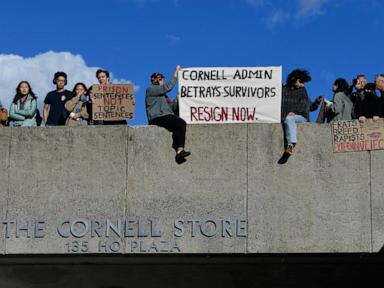
At the same time, the institutional fallout for Cornell University continues to intensify. Beyond the criminal and civil components of the case, the university faces sweeping internal reviews of Greek life led by external legal experts, alongside campus-wide walkouts and mounting scrutiny over how administrative Title IX mechanisms process reports of campus violence. The appointment of former U.S. Deputy Attorney General Sally Yates to audit Cornell’s policies underscores the heavy pressure on institutions to prove their disciplinary apparatuses can function transparently.
As the Albany court weighs the arguments to disqualify the state prosecutor, the broader trajectory of the case hangs in the balance. The outcome of this preliminary procedural battle will dictate not only who controls the grand jury presentation but also set a vital precedent for how executive-ordered special prosecutors navigate the thin line between public advocacy and investigative neutrality.