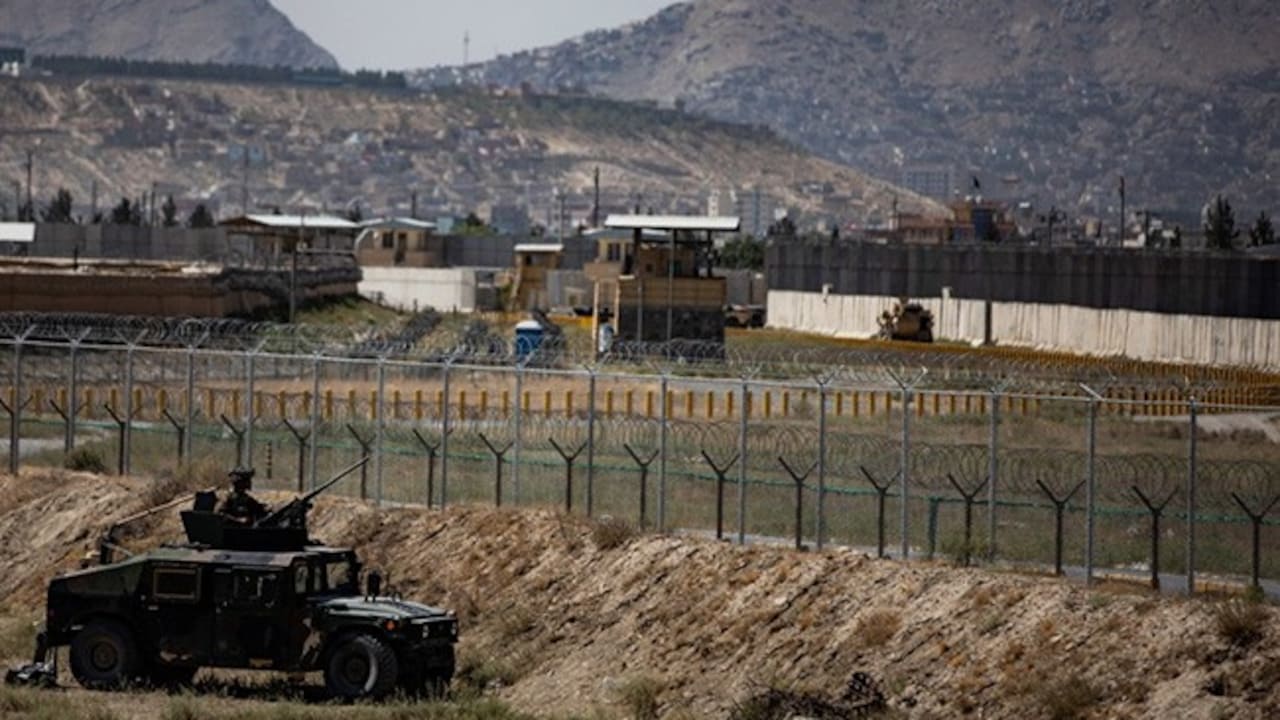
The federal courtroom in Alexandria, Virginia, smelled of stale coffee and bureaucratic exhaustion when the gavel finally dropped on Mohammad Sharifullah. Twenty years behind bars. That was the maximum sentence a federal judge could hand down for material support to terrorism, closing a chapter on one of the most agonizing episodes of the twenty-year American war in Afghanistan: the Abbey Gate suicide bombing at Hamid Karzai International Airport on August 26, 2021.
For the families of the thirteen U.S. service members and the estimated 170 Afghan civilians slaughtered in that chaotic evacuation crush, the number felt small. Mathematical symbols of accountability rarely match the scale of carnage. Sharifullah was convicted by a federal jury of conspiring to provide material support to the Islamic State’s Khorasan province, known widely as ISIS-K. Yet, the jury deadlocked on whether the deaths at the airport directly resulted from that specific conspiracy. That legal nuance matters. It separates the mechanics of logistics from the detonator itself, laying bare the clumsy reality of trying foreign asymmetric warfare within the rigid confines of Article III civilian courts.
To understand how a logistical facilitator from a fractured state ends up in a Virginia dock, one has to look past the headlines and examine the skeletal anatomy of modern counter-terrorism investigations. Sharifullah did not press the button at Abbey Gate. According to federal court records and investigative testimony, his role was operational scaffolding. He scouted routes, tracked movement amid the human tsunami of desperate evacuees, and greased the wheels for a cell operating under the banner of a group that viewed both the retreating Western coalition and the newly ascendant Taliban as mortal enemies.
The trial revealed a grim operational continuity. Prosecutors did not merely tie Sharifullah to the Kabul carnage; they introduced evidence linking his network to broader plots, including instruction lines directed toward the perpetrators of the horrific March 2024 attack at Crocus City Hall near Moscow. ISIS-K had transformed from a localized insurgency in the rugged mountains of Nangarhar into an international franchise capable of projecting terror across continents. Sharifullah was a mid-level cog in that machinery—disposable enough to be utilized, yet connected enough to leave a digital and physical trail that intelligence agencies could eventually vacuum up.
The courtroom drama itself offered a study in contrasting grief. Paula Knauss-Selph, mother of Army Staff Sgt. Ryan Knauss, told the court that no judicial outcome could mend a broken heart. Alicia Lopez spoke of the permanent absence left by her son, Marine Cpl. Hunter Lopez. These statements carried the heavy, unyielding grief of parents whose sons were deployed as part of an abrupt, mismanaged endgame.
Then came Mark Schmitz, father of Marine Lance Cpl. Jared Schmitz. In an extraordinary moment that cut against the grain of typical courtroom vengeance, Schmitz asked the defendant to look at him. He spoke of a legacy that a bomb could not erase, and then offered something rarer than a prison sentence: forgiveness. It was a deeply personal rejection of the cyclical hatred that fuels organizations like ISIS-K in the first place. Sharifullah, sitting beside his defense attorneys through an interpreter, showed no visible reaction. He declined to address the court.
The twenty-year sentence closes the docket on this specific prosecution, but it leaves larger questions hanging over the architecture of global security. The withdrawal from Afghanistan was framed by its architects as the definitive end of an era of endless war. Yet, the legal fallout demonstrates that the connective tissue of transnational terrorism did not dissolve when the last C-17 lifted off from Kabul. It mutated.
Intelligence sharing, cross-border financial tracking, and federal prosecutions are the tools left to manage a threat that has gone underground. They are imperfect tools. They rely on cooperating witnesses, classified intelligence summaries translated into unclassified evidence, and juries trying to comprehend the tribal politics of Central Asia from the suburbs of Washington.
As the guards led Sharifullah away to begin serving a term that will consume the remainder of his prime years, the airport at Kabul is managed by a regime the international community refuses to formally recognize, and ISIS-K continues to plot in the shadows. The law has rendered its verdict, but the landscape that birthed the catastrophe remains largely unchanged.
Afghan man gets 20 years in airport attack case
This video provides local news coverage and courtroom context regarding the sentencing of the Afghan national linked to the Kabul airport attack.


