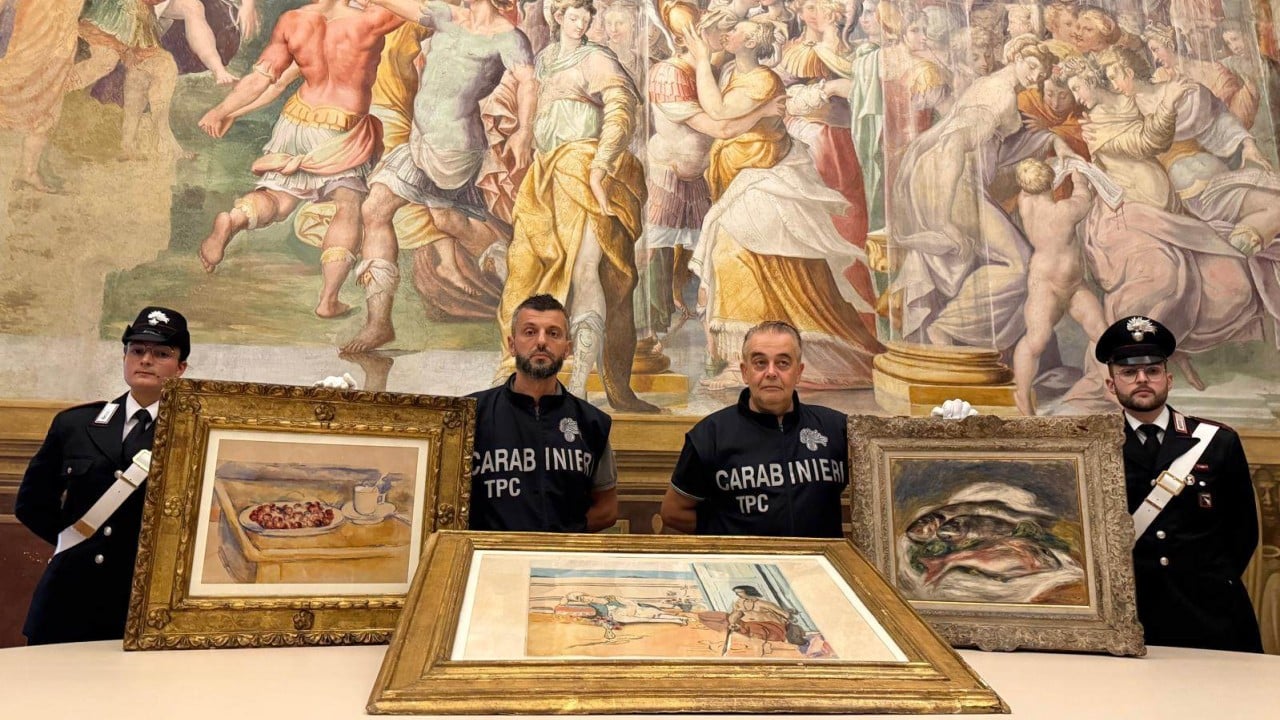
Italian Carabinieri art squad operatives do not work in the cinematic glitz of a high-ceilinged Roman palazzo. They work in damp basements, quiet rural archives, and cramped wiretap vans. When Italian police successfully recovered stolen masterpieces by Pierre-Auguste Renoir, Paul Cezanne, and Henri Matisse worth millions of euros, the headlines celebrated a clean victory for cultural heritage.
The public saw a triumphant recovery of stolen Renoir Cezanne and Matisse artworks.
The reality of illicit art trafficking tells a much darker, more complicated story. The black market for stolen high-end culture operates not through James Bond jewel thieves in black turtlenecks, but through a sluggish, transactional syndicate of organized crime, corrupt estate executors, and unwitting or complicit private collectors.
The Anatomy of a High-Value Art Recovery
Masterpieces do not vanish into thin air. When a multi-million-dollar canvas disappears from a private villa or regional museum, the logistics of hiding it dwarf the logistics of stealing it.
You cannot walk into an open-market auction house with a Cézanne that has an international police alert attached to its provenance. You cannot hang a stolen Matisse in your living room without risking discovery by a disgruntled maid, a curious insurance investigator, or a rival criminal looking for leverage.
Police forces tracking these illicit goods rely on a specialized asset: the Comando Carabinieri Tutela Patrimonio Culturale. Established decades before modern cybercrime or contemporary financial tracking existed, this elite Italian police unit maintains the world's most comprehensive database of illicit cultural property.
Recovering these works requires patience that defies standard policing models. Investigators must monitor closed-circuit encrypted chats, listen to intercepted phone calls between low-level fences, and wait for a desperate intermediary to test the waters of the black market.
When the stolen Renoir, Cezanne, and Matisse pieces surfaced, they did so because the holding syndicate faced a classic criminal dilemma. They had a multi-million-dollar asset they could not monetize.
Why Masterpieces Become Toxic Assets
The amateur assumption about art theft is that criminals steal because they love beauty. They steal because art serves as an alternative currency.
In the calculus of international organized crime, paintings act as bearer bonds. They can be used as collateral for drug shipments, hidden in offshore trust structures, or traded quietly between criminal syndicates across international borders.
Yet, a fundamental paradox plagues the modern art thief. The more famous the painting, the harder it is to sell.
A lesser-known seventeenth-century landscape can be shaved down, reframed, and sold to a private buyer in a remote province with relative ease. A globally recognized Renoir or Matisse carries too much baggage. Every museum curator, every legitimate gallery owner, and every serious collector knows the inventory numbers by heart.
Consequently, stolen blue-chip art often enters a purgatory known as the shadow inventory. It sits wrapped in bubble wrap behind a false wall in a suburban garage, or beneath floorboards in a rural farmhouse, rotting slowly from humidity while its nominal value exists only on paper.
The Blind Spots of Private Collection Security
The recent recovery operation in Italy exposed critical vulnerabilities in how private collectors protect their investments. Too many wealthy owners treat security as an afterthought, relying on basic alarm systems while neglecting the human element.
Art theft is rarely a random crime of opportunity. It requires insider knowledge.
Someone needs to know the exact dimensions of the security gaps, the habits of the household staff, and the precise moments when the local alarm systems undergo maintenance. In many high-profile thefts investigated by Italian authorities, the trail leads directly back to former employees, disgruntled family members fighting over inheritance, or corrupt security consultants.
Wealthy collectors often prioritize privacy over security. They resist installing robust camera networks or registering their collections with international registries because they fear tax audits or public exposure of their wealth.
This obsession with discretion creates an ideal ecosystem for thieves. When a painting disappears from a poorly documented private estate, the owners often hesitate to call the police immediately. They attempt private negotiations through shadowy intermediaries, burning precious weeks during which the artwork could be smuggled across borders into nations with lax extradition laws.
The Myth of the Anonymous Buyer
Hollywood loves the trope of the eccentric billionaire who commissions a heist, hangs the stolen treasure in a private bunker, and stares at it alone with a glass of scotch.
Real life is far more mundane and far more corporate.
When stolen masterpieces move, they typically move through a chain of intermediaries who are professional con artists rather than criminal masterminds. These brokers convince naive criminals that they have a buyer lined up in Switzerland, Dubai, or South America.
In reality, the broker is often looking for a way to turn informant to cut a deal with prosecutors, or they are simply stringing along desperate criminals while attempting to ransom the artwork back to the original insurance company.
The Italian police operation succeeded not because of a sudden stroke of cinematic luck, but because investigators mapped this exact chain of deception. They watched the brokers circle the artwork, identified the weak links in the communication chain, and moved in precisely when the criminals attempted to broker a below-market-value sale to a pseudo-legitimate front company.
What Happens to Recovered Culture
Returning a recovered painting to its rightful owner sounds straightforward. It is a legal and logistical nightmare.
Insurance companies often hold the ultimate title to recovered artworks if they have already paid out multi-million-dollar payouts to the original owners. Protracted legal battles between descendants, insurance syndicates, and the Italian state frequently follow high-profile recoveries.
Furthermore, conservation assessments often reveal heartbreaking damage. Canvases stored in damp basements suffer from mold growth, flaking paint, and structural warping.
A Matisse retrieved from a criminal hideout may look fine from a distance, but microscopic examination often reveals that fluctuations in temperature and humidity have compromised the integrity of the canvas fibers. Restoring these pieces requires months of painstaking chemical analysis and delicate handiwork by museum conservators who must undo the damage wrought by criminal neglect.
The recovered Renoir, Cezanne, and Matisse works heading back to secure institutional custody represent a triumph of specialized law enforcement over the global black market.
Yet, the recovery is merely a temporary bandage on a systemic wound. As long as private wealth demands absolute secrecy, and as long as criminal syndicates view culture as portable currency, the shadow inventory will continue to hum quietly beneath the floorboards of the global illicit economy.