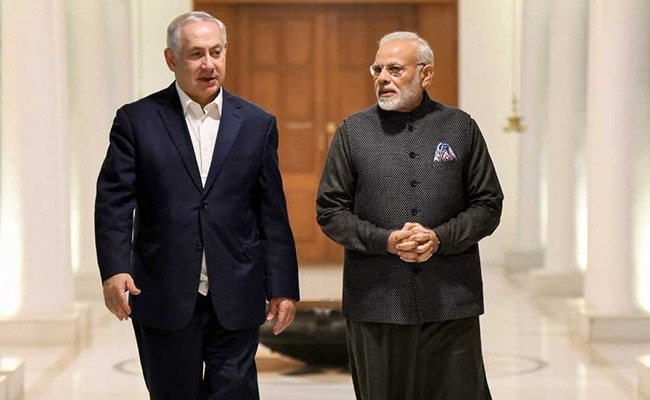
Benjamin Netanyahu is pushing stronger India ties because he sees a real danger that the next White House occupant could turn openly hostile toward Jerusalem. That warning—delivered during high-stakes political maneuvering in October 2026 as Israel faced coalition deadlock and electoral uncertainty—captures a shift that many observers still treat as campaign theater. Look closer at the defense contracts, supply chains, and polling numbers, and the calculation stops sounding like mere rhetoric. Netanyahu is trying to hedge against a thinning American cushion by locking in strategic partners outside Washington, with New Delhi sitting at the center of that effort.
Surface-level coverage treats this pitch as a simple pivot from one superpower to another. It isn't. Washington remains the irreplaceable anchor of Israeli airpower, munitions, and diplomatic cover at the United Nations. What is changing is the political durability of that support inside the United States, alongside the quiet transformation of India from a lucrative weapons buyer into a co-production partner embedded inside Israeli defense supply chains.
Why Netanyahu Fears a Hostile Turn in Washington
Warnings about American fickleness are nothing new in Israeli politics. Netanyahu has spent decades reminding voters that domestic American shifts can squeeze Jerusalem's room to maneuver. Yet his October 2026 warning—"In two years, a President, man or woman, could come to power who is very hostile to Israel"—landed amid unmistakable fractures in American public and political opinion.
Polling from 2026 underscores why veteran strategists in Jerusalem are nervous. A February 2026 Gallup poll found that for the first time since Gallup began asking the question in 2001, Americans no longer sympathized more with Israelis than with Palestinians. Eight months later, an October 2026 Chicago Council on Global Affairs survey showed that 56 percent of Americans wanted U.S. military aid to Israel either decreased (21 percent) or stopped altogether (35 percent).
Numbers like those don't stay confined to pollster memos. They bleed into congressional races, party platforms, and executive branch bargaining. Even when President Donald Trump publicly backed Netanyahu's political standing and offered a friendly reception in the White House, Netanyahu framed the remaining years of that administration as a window to bank gains before the political weather in Washington potentially turned icy.
Bipartisanship Fractures on Both Sides
For years, Jerusalem relied on a sturdy bipartisan consensus in Congress to protect multi-year military assistance packages and smooth over friction with individual presidents. That consensus has grown noticeably thinner.
On the left, progressives and Democratic lawmakers have increasingly challenged unconditional military aid, arguing that billions of dollars in foreign security assistance belong on domestic priorities. With Democrats taking control of both chambers of Congress in the 2026 midterms, debates over conditioning weapons transfers or trimming aid packages carry more legislative teeth than they did in years past.
On the right, a vocal populist and non-interventionist wing has also questioned open-ended overseas commitments. Skepticism toward foreign aid among younger conservative voters and prominent media figures complicates any assumption that Republican leadership will always guarantee friction-free backing.
A security relationship built on annual political goodwill is far more vulnerable than one wired into industrial supply chains and mutual military necessity.
Still, critics inside Israel have every reason to question Netanyahu's framing. Former senior officials and opposition figures, including Gadi Eisenkot, dismissed Netanyahu's outward pitch as election-season posturing that masks deeper strategic vulnerability. A political leader who leans on alarmism about a future U.S. president is also trying to deflect attention from domestic criticism over his own governing record and coalition fragility. Both things can be true at once: the political headwinds in Washington are real, and Netanyahu knows how to weaponize fear at home.
How Stronger India Ties Reshape Defense and Industry
If Netanyahu wants stronger India ties to serve as more than a diplomatic talking point, the real test lies in hardware, manufacturing, and technology. Over the past decade, ties between Netanyahu and Indian Prime Minister Narendra Modi moved out of the shadows into overt strategic alignment. Modi's February 2026 visit to Jerusalem formalized an upgrade to a "Special Strategic Partnership," explicitly linking Israeli technology and defense know-how with India's industrial scale and "Atmanirbhar Bharat" push for domestic self-reliance.
The defense arithmetic is concrete. India has long been one of the largest buyers of Israeli radar systems, drones, missiles, and electronic warfare gear. In November 2026, India signed a 19.76 billion rupee (roughly $220 million) contract with Israel Aerospace Industries to modernize Barak-1 naval missile defense systems aboard Indian Navy vessels—building on years of joint work such as the Barak-8 air and missile defense family.
What has shifted most sharply is the direction of the industrial flow. Historically, Israel sold finished systems and subsystems while New Delhi bought them. More recently, Indian defense firms and state-linked manufacturers have become suppliers of components, munition parts, and assemblies that feed into broader defense supply chains.
From Buyer-Seller to Supply-Chain Entanglement
That shift carries real strategic weight for both capitals. For Israel, tapping into India's manufacturing base offers scale and alternative sourcing at a moment when wartime demand strains production lines and when external arms embargoes or political delays pose recurring risks.
For India, co-production and joint development accelerate domestic aerospace, drone, and missile capabilities while reducing sole dependence on legacy suppliers. Consider a hypothetical scenario in which a future conflict requires rapid replenishment of precision munitions or unmanned systems: a partner already integrated into your component supply chain is far more useful than a distant country that merely signs communiques.
| Dimension | Traditional U.S.-Israel Security Tie | Emerging Israel-India Defense & Tech Tie |
|---|---|---|
| Core Mechanism | Multi-year security aid, joint exercises, deep Pentagon interoperability | Bilateral procurement, joint R&D, co-production, component supply chains |
| Primary Strength | Unmatched airpower, heavy munitions, intelligence, diplomatic veto power | Massive manufacturing scale, engineering talent, growing naval & missile cooperation |
| Main Vulnerability | Exposed to shifting U.S. domestic politics, congressional aid fights, public opinion | Cannot replace U.S. scale or diplomatic weight; tests New Delhi's non-aligned balancing act |
| Strategic Horizon | Anchored for decades, though facing friction over terms and conditions | Accelerating fast, yet constrained by geography and broader regional interests |
The Limits of Hedging Against America
No serious defense analyst in Tel Aviv or New Delhi believes stronger India ties can simply replace the United States. That idea is a fantasy. The U.S. military-industrial complex operates on a scale no bilateral arrangement with India can match in the near term, and Washington's diplomatic clout in global institutions remains unmatched.
Even proponents of winding down American aid—including voices across the Israeli political spectrum who argue that dependence on U.S. grants distorts Israeli defense planning—usually favor a gradual, negotiated transition rather than a sudden rupture. Abruptly losing American diplomatic shielding or spare-parts pipelines would create immediate operational headaches that India is neither positioned nor inclined to absorb.
New Delhi's Tightrope and Regional Reach
India has its own strategic ledger, and it does not revolve around Israel's domestic politics. New Delhi maintains deep economic, energy, and diaspora ties across the Middle East and the Gulf, alongside longstanding sensitivities regarding its own domestic politics and international standing.
The deeper India's factories and defense programs intertwine with Israeli military supply chains, the harder it becomes for New Delhi to project effortless diplomatic detachment during Middle Eastern crises. Analysts have already pointed out that tight integration into wartime supply chains complicates India's traditional posture of strategic autonomy. India will cooperate where its security and industrial goals align—counter-terrorism, maritime security, semiconductors, AI, and defense manufacturing—not to underwrite every Israeli political gamble.
Netanyahu also pointed toward Latin America alongside India when arguing for broader international alliances. Yet Latin American governments swing sharply from election to election, making the region an uneven counterweight to Washington. India is a far sturdier bet, precisely because its security concerns regarding terrorism, maritime lanes, and technological self-reliance are structural rather than cyclical.
What Smart Observers Should Watch Next
Anyone tracking whether Netanyahu's pitch produces durable realignment or fades once domestic political dust settles should watch three concrete markers rather than speeches.
First, watch joint manufacturing and technology transfers under the 2025 defense cooperation framework and 2026 bilateral agreements. Announcements are cheap; binding co-production lines, semiconductor and AI joint ventures, and repeat naval and missile modernization contracts show whether both sides are committing real capital.
Second, watch how Jerusalem manages bipartisan outreach in Washington regardless of who sits in the White House or leads Congress. Treating American politics as a zero-sum battleground between rival camps carries steep long-term costs if support erodes across generational and partisan lines.
Third, watch whether Israeli leaders treat stronger India ties as an honest pillar of a diversified foreign policy or as a convenient prop whenever domestic pressure mounts at home. Real strategic insurance is built quietly through steady execution, not loud warnings about what might happen two years down the road.