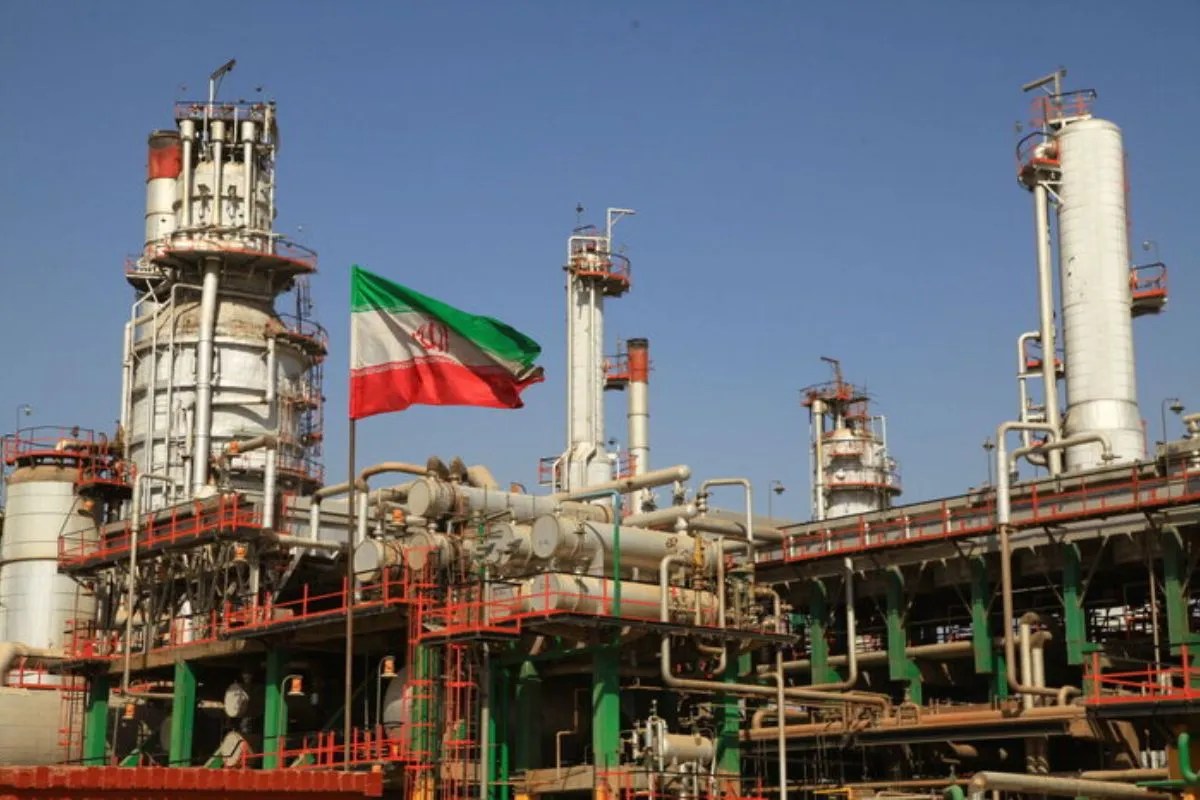
Tehran is moving with calculated urgency to bring its battered energy infrastructure back online. Iranian officials claim that restoration work on at least one major oil refinery damaged during recent military strikes has already reached the seventy percent completion mark, with three additional facilities slated for operational recovery in the near future. This announcement comes amid persistent regional tensions and tight international monitoring of energy markets. Analysts who track Middle Eastern petroleum logistics understand that official claims from state ministries often require heavy discounting. Yet the physical reality on the ground demands close observation. Energy supplies across West Asia hang in a delicate balance. When a major state producer reports rapid reconstruction milestones on strategic assets, global commodity desks take notice.
Rebuilding a modern industrial processing plant under active security threats is no ordinary construction project. Specialized metallurgy, proprietary control systems, and heavy turbomachinery cannot simply be ordered off a shelf, especially for a nation operating under decades of comprehensive economic sanctions. Tehran has long relied on domestic engineering consortiums and specialized workshops to circumvent foreign equipment embargoes. This home-grown capability explains how repairs proceed even when traditional Western or Asian original equipment manufacturers refuse to supply replacement parts. Still, patching up twisted steel and scorched catalytic crackers requires immense precision. A hasty patch job invites catastrophic secondary failures once the units resume high-pressure operations.
The Engineering Reality Behind State Claims
To understand what a seventy percent recovery metric actually means, one must look closely at the anatomy of a petroleum processing complex. A refinery is not a single monolithic structure. It functions as an interconnected chain of thermal crackers, distillation columns, hydrotreaters, and vast tank farms.
When a facility sustains kinetic damage, the most vulnerable components are rarely the thick-walled steel vessels themselves. Those massive fractionating towers can often withstand significant concussive force, suffering primarily cosmetic or localized shrapnel punctures. The true bottleneck lies in the digital nervous system. Distributed control systems, high-voltage substation switchgear, intricate instrument air lines, and specialized control valves represent the Achilles' heel of any modern industrial site.
- Control Systems: Replacing blown logic cards and burned fiber-optic networks demands micro-electronics that are notoriously difficult to source secretly.
- Piping Metallurgy: High-temperature alloy pipes carrying volatile hydrocarbons at extreme pressures cannot tolerate substandard welds or inferior metal grades.
- Pumps and Compressors: Heavy turbomachinery must be balanced to microscopic tolerances. Improvised repairs here lead directly to catastrophic vibration failures.
When Iranian technocrats report that heavy work is nearing completion, they are likely referring to the structural rebuilding of piperacks, the replacement of damaged storage tanks, and the initial cold commissioning of non-critical utility units. The final thirty percent of any refinery overhaul is invariably the hardest. That phase involves hot commissioning, calibration under live hydrocarbon loads, and rigorous safety system audits. Skipping those steps invites disaster.
Sanctions, Smuggling, and Substitution
Operating an isolated energy sector forces a nation into creative industrial gymnastics. Without direct access to multinational oilfield service giants like Schlumberger or Halliburton, Iranian state firms have cultivated a shadow network of domestic suppliers, academic research institutes, and regional front companies.
Reverse engineering has become an art form in Tehran's industrial belt. If a proprietary pump seal fails and the original European manufacturer refuses export licenses, local machinists will scan the broken component, analyze the material composition via spectrometry, and forge a functional equivalent in a domestic foundry. This process works well for mechanical hardware, but it hits a hard wall when advanced digital automation is involved. Modern distributed control systems rely on proprietary firmware and secure microprocessors that defy easy replication.
This technological friction explains why state timelines often slip. A refinery might look ninety percent complete from a satellite photograph showing patched roofs and cleared debris, yet remain weeks away from producing marketable gasoline if the central safety interlocks refuse to sync. The Islamic Republic has managed to keep its domestic fuel distribution network functioning through severe disruptions by rerouting crude to undamaged regional topping plants and leaning heavily on smaller condensate splitters. However, maximizing export capacity and supplying high-octane motor fuel to major metropolitan centers requires these primary damaged complexes to return to full throttle.
Geopolitical Fallout and Market Calculations
Global crude markets have grown frustratingly accustomed to Middle Eastern supply shocks, yet every localized conflict adds a permanent risk premium to tanker freight rates and insurance premiums. When refineries are targeted, the nature of the crisis shifts from crude availability to product scarcity. A country can be sitting on billions of barrels of subterranean reserves, but if its domestic refining capacity is crippled, it must import refined gasoline to keep its economy moving.
Tehran's public messaging regarding these rapid repair timelines serves a dual purpose. Domestically, projecting industrial resilience reassures a weary populace that the state can absorb heavy blows without collapsing into economic paralysis. Externally, signaling a swift return to operational capacity attempts to deter speculators from driving up regional risk premiums.
Observers monitoring these developments should watch physical export terminals rather than official state communiques. When product loading manifests show a steady resumption of heavy fuel oil and gasoil shipments from the affected coastal hubs, the reconstruction will have moved from political rhetoric to industrial fact. Until then, the silent race inside these fortified industrial zones continues behind closed gates.