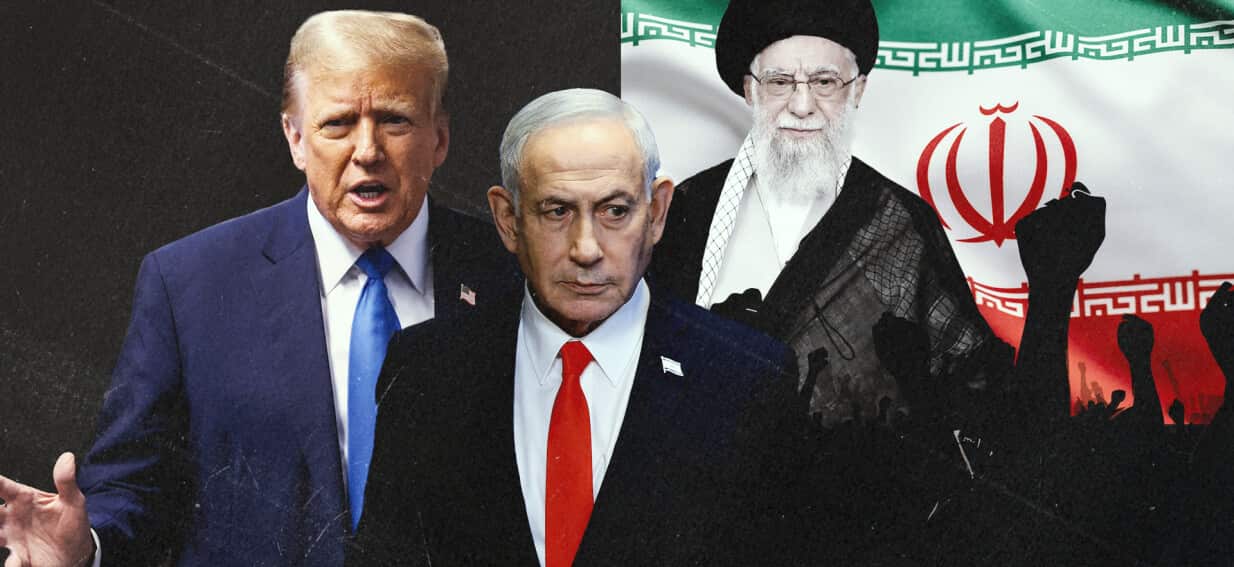
The Islamabad Memorandum, signed remotely by Donald Trump from the Palace of Versailles and Masoud Pezeshkian in Tehran, was sold to the public as the definitive conclusion to the 2026 Iran War. It is not. Instead, the agreement exposes the deep miscalculations of the joint Washington-Jerusalem objective to force a regime collapse in Tehran. While Operation Epic Fury successfully eliminated Supreme Leader Ali Khamenei and severely degraded Iran's conventional military infrastructure, the core strategic objective has failed. The Islamic Republic has not collapsed; it has dug in, using its control over global energy bottlenecks to dictate terms to a United States administration desperate to avoid an economic meltdown.
The Western assumption that maximum military and economic pressure would automatically trigger a domestic democratic transition has proven hollow. Decades of observing regional interventions show that decapitation strikes rarely yield stable, pro-Western democracies. By examining the current tactical stalemate, the fractures within Iran’s leadership, and the economic leverage Tehran still commands, it becomes clear that the push for regime change has not neutralized the Iranian threat. It has merely altered its geometry.
The Mirage of Total Victory
When nearly 900 joint U.S. and Israeli airstrikes hit Iranian targets on February 28, 2026, the initial operational results suggested a flawless victory. The elimination of Khamenei and his immediate inner circle shattered the traditional command structure of the Islamic Revolutionary Guard Corps (IRGC). Coupled with the prior collapse of Bashar al-Assad's regime in Syria and the heavy degradation of Hezbollah and Hamas, Jerusalem and Washington calculated that the Islamic Republic was too weak to survive.
This assessment ignored the regime's structural resilience. Instead of fracturing into a pro-Western democratic movement, the internal vacuum accelerated a consolidation of power around Mojtaba Khamenei and the pragmatist-security faction led by President Pezeshkian and Parliament Speaker Mohammad Bagher Ghalibaf. The widespread domestic protests that sparked across 31 provinces in January 2026 did not coalesce into a revolution. Historically, nationalistic sentiment in Iran spikes during external aggression. Trump’s consideration of officially renaming the Persian Gulf to the "Arabian Gulf" during his Middle East tour unified Iranians across the political spectrum against what they perceived as an existential assault on their national identity.
The state's security apparatus remained fiercely loyal. Without a unified, armed domestic opposition capable of seizing territory, the military strikes left a heavily armed, deeply embittered police state rather than a vacuum ready for democratic transition.
The Strait of Hormuz Leverage Point
The ultimate failure of the regime-change strategy lies in the global economic landscape. The United States entered the 2026 war under a president who campaigned heavily on maintaining low domestic fuel prices and avoiding protracted foreign engagements. Tehran understood this vulnerability perfectly.
Despite losing much of its conventional navy and air defense networks during the initial weeks of the war, Iran deployed its "mosaic defense" strategy. Operating from heavily fortified coastal positions, the IRGC Navy used low-cost drones, anti-ship missiles, and sea mines to throttle transit through the Strait of Hormuz. The results were immediate and devastating for the global economy:
- Global oil prices rapidly escalated toward $100 per barrel.
- Shippers faced prohibitive insurance premiums, effectively shutting down standard maritime transit.
- Severe fuel shortages rippled across Asian and European markets.
To prevent a catastrophic global recession, the Trump administration was forced into an extraordinary policy reversal. Washington quietly eased enforcement of secondary sanctions on Iranian oil, allowing the regime’s "shadow fleet" to keep crude flowing into global markets to stabilize prices. By using its geographic position to hold the global energy supply hostage, a battered Iranian regime forced the world's most sophisticated military power to negotiate.
Fissures inside the Bürgenstock Negotiations
The diplomatic reality playing out in Bürgenstock, Switzerland, completely contradicts the public narrative of an unconditional Iranian surrender. Assisted by Qatari and Pakistani mediators, the current quadrilateral talks have revealed that Iran is negotiating from a position of unexpected diplomatic leverage.
+-------------------------------------------------------------------------+
|                  THE CURRENT STALEMATE IN SWITZERLAND                  |
+-------------------------------------------------------------------------+
|  IRANIAN DEMANDS (Phase 1)          |  U.S. / ISRAELI STRATEGY          |
|  • Immediate release of $12B assets |  • Postpone economic relief       |
|  • Total ceasefire in Lebanon       |  • Demand uranium transfer first  |
|  • Permanent end to naval blockades |  • Support ongoing IDF buffer zone|
+-------------------------------------------------------------------------+
The IRGC-affiliated media outlets, such as Tasnim and Fars News, have openly laid out Tehran’s strategy. They are using the first clause of the Islamabad Memorandum—which mandates a comprehensive ceasefire—to force the United States to halt Israeli Defense Forces (IDF) operations against Hezbollah in southern Lebanon. For Tehran, preserving Hezbollah's residual presence is a non-negotiable component of its long-term deterrence.
Furthermore, Iranian negotiators have successfully separated the stabilization of maritime traffic from talks regarding their nuclear program. Tehran has flatly denied Western reports that it agreed to immediately surrender its highly enriched uranium stockpile. Instead, the regime is demanding the upfront release of $12 billion in frozen assets and full sanctions relief before any technical discussions regarding its nuclear centrifuge infrastructure even begin. If Washington refuses, Iran retains the capability to close the Strait of Hormuz again, restarting the inflationary spiral that the White House is desperate to avoid.
The Collapse of Containment
The joint military campaign has fundamentally broken the old system of dual containment without creating a viable replacement. Prior to 2026, a predictable system of regional deterrence existed. Iran operated through its "Axis of Resistance" proxies to hit Western interests, while the U.S. and Israel used targeted economic sanctions and cyber operations to keep the regime contained.
Now, with the regime's primary regional proxies gutted and its central leadership permanently altered, the old rules are gone. A deeply wounded, highly isolated Iranian state with an intact nuclear enrichment capability possesses fewer incentives to exercise strategic restraint. If the current 60-day window established by the Islamabad Memorandum collapses without a broader economic settlement, Washington faces a bleak trilemma:
- Accept a permanently adversarial, nuclear-capable Iran that controls the world's primary energy choke point.
- Embark on a massive, long-term war of attrition involving ground forces to forcibly dismantle the clerical apparatus.
- Offer extensive sanctions relief that will ultimately provide an economic lifeline to the very regime Washington sought to destroy.
The illusion that short, high-intensity military campaigns can easily reshape the political realities of the Middle East has fractured against the geography of the Persian Gulf and the economic realities of global energy markets. The Islamabad Memorandum is not a victory march. It is an expensive insurance policy against an economic crisis that Washington and Jerusalem brought upon themselves.