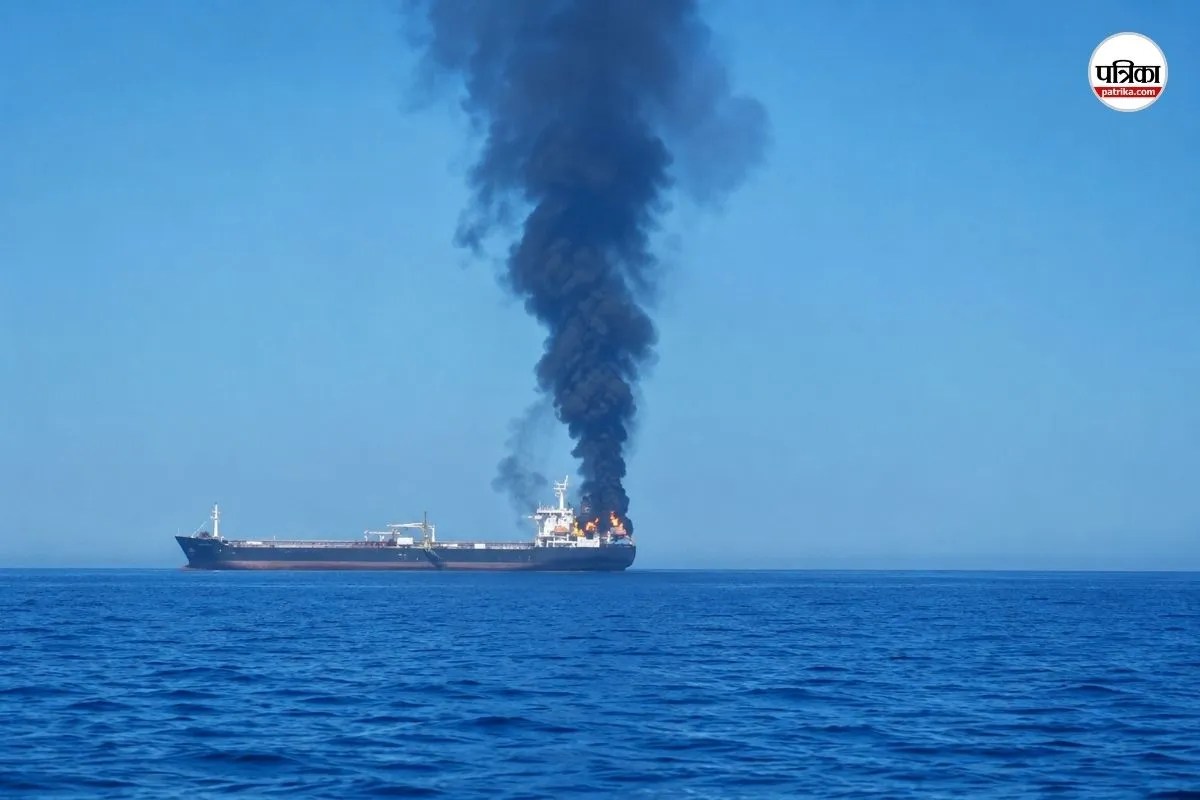
Commercial shipping lines are rewriting their transit blueprints as a fresh wave of maritime instability hits the Gulf of Oman. A recent security incident targeting a merchant vessel near the Omani port of Shinas has pushed insurance premiums to unsustainable highs and forced a reassessment of regional trade chokepoints. While initial reports focused strictly on the immediate tactical disruption near the Strait of Hormuz, the underlying reality points to a calculated shift in how state and non-state actors intercept global supply chains. This is no longer just about regional friction. It is a direct challenge to the legal architecture of international waters.
The incident near Shinas emphasizes a critical vulnerability. Tankers and cargo carriers are being targeted further outside the traditional Persian Gulf chokepoints, forcing security teams to expand their high-risk transit zones.
The Shinas Incident Expands the Danger Zone
For years, international security agencies treated the Strait of Hormuz as the primary geographic bottleneck. If a vessel cleared the narrow strait and entered the open waters of the Gulf of Oman, operators assumed the immediate danger had passed. The confrontation near Shinas disrupts this assumption entirely.
Shinas sits roughly 70 nautical miles south of the strait. By striking or harassing vessels in this region, legacy containment strategies become obsolete. Private maritime security companies now have to extend their peak-readiness protocols over hundreds of additional miles of open water. This extension strains onboard security teams and drains ship resources.
The economic fallout was instantaneous. Maritime insurance syndicates in London responded by reassessing the Hull War Risk premiums for any vessel routing through the Gulf of Oman. Shipowners are facing additional premiums that can add tens of thousands of dollars to a single voyage.
These costs do not disappear into corporate ledgers. They trickle down to the consumer, manifest as fuel surcharges, and inflate the landing cost of energy products worldwide.
Weaponized Drones and the Asymmetry of Modern Sea Warfare
The methods used in these recent disruptions reveal a stark reality about modern naval warfare. Expensive defense systems are being tested by cheap, expendable technology. A state-of-the-art guided-missile destroyer or a heavily armored commercial tanker can be neutralized, or at least severely delayed, by a loitering munition that costs less than a mid-sized sedan.
Traditional Escort Cost: High (Destroyers, Logistics, Personnel)
vs.
Asymmetric Threat Cost: Low (Commercial Drones, Fast Attack Craft)
This asymmetry skews the logistics of maritime defense. Commercial operators cannot afford to mount active defense systems like jamming arrays or automated kinetic weapons due to strict international maritime laws regarding civilian vessels. Consequently, they remain entirely dependent on state navies to clear the lanes.
Naval coalitions face a math problem. They have a finite number of hulls to patrol an expanding theater of risk. When an incident occurs near Shinas, it pulls assets away from the Red Sea or the central Persian Gulf, leaving those sectors vulnerable to secondary operations.
The Problem with Flag of Convenience Protection
Many disrupted vessels operate under flags of convenience, registered in nations like Panama, Liberia, or the Marshall Islands. These nations possess virtually no naval power to protect the ships flying their colors. When a crisis occurs near Omani waters, the legal responsibility for intervention becomes murky.
The United Kingdom's Maritime Trade Operations and the United States Fifth Fleet frequently fill the void, but their intervention is governed by political calculations rather than automatic treaty obligations. This creates a gray zone that bad actors exploit with precision.
Why Oman Is Forced into a Diplomatic Tightrope
Oman has long maintained a reputation as the Switzerland of the Middle East. Muscat routinely brokers quiet backchannel deals between Western powers, regional heavyweights, and dissident factions. This neutrality is now under direct pressure.
Oman's Strategic Position:
* Borders the critical Strait of Hormuz
* Maintains open diplomatic channels with all regional powers
* Relies heavily on maritime stability for its domestic port expansion
If the waters off Shinas become a permanent combat theater, Oman’s ambitious economic plans for its port infrastructure face severe headwinds. The country has spent billions developing logistics hubs outside the Persian Gulf to offer shipping lines a safe alternative to interior ports. Security incidents directly undermine that value proposition.
Muscat cannot simply choose a side or deploy aggressive military force without breaking its diplomatic leverage. The Omani navy is structured for coastal patrol, not prolonged fleet actions against sophisticated proxy forces. Therefore, the sultanate must rely on quiet diplomacy to de-escalate tensions, even as foreign warships multiply just outside its territorial waters.
The Failure of Current Deterrence Models
The international community's response to maritime harassment has relied on a reactive framework. Warships arrive after a distress call is broadcast. This approach fails to alter the risk calculus for attackers.
Reactive Security Loop:
Threat Identified -> Incident Occurs -> Distress Call -> Naval Response -> Attacker Departs
This cycle ensures that the initiator retains the strategic initiative. They choose the time, the place, and the target, while global trade remains on the defensive.
True deterrence requires persistent, preemptive reconnaissance and an explicit international consensus on prosecuting those who disrupt commercial lanes. Currently, that consensus does not exist. Geopolitical divisions within the United Nations Security Council prevent unified legal action, leaving shipping companies to navigate a fragmented regulatory and security environment.
The Long Term Shift in Global Trade Routes
The shipping industry is notoriously conservative, changing routes only when forced by sheer economic necessity or physical destruction. The persistent instability around Hormuz and the Gulf of Oman is forcing a structural shift that will outlast the current political friction.
- Route Diversion: High-value cargo is increasingly diverted around the Cape of Good Hope, bypassing the Middle East entirely despite the added weeks of transit time.
- Rail Alternatives: Eurasian rail networks are seeing increased inquiries, despite their capacity limitations compared to mega-container ships.
- Pipeline Utilization: Continental energy companies are exploring land-based pipeline alternatives that bypass the maritime chokepoints, shifting geopolitics toward land-based transit states.
These shifts come with a massive carbon and financial penalty. Longer voyages burn more fuel, accelerating maritime emissions and tying up global container capacity. A ship stuck on a two-week detour around Africa is a ship that cannot be loaded with new goods in Asia, triggering a localized shortage of empty containers that disrupts factories worldwide.
The incident near Shinas is a symptom of a systemic breakdown in ocean governance. The assumption that international waters are a global commons protected by shared economic self-interest is unraveling, replaced by a reality where maritime trade is an easily targeted leverage point in broader geopolitical standoffs. Commercial operators must prepare for a future where high-risk transits are the baseline norm, rather than a temporary anomaly.