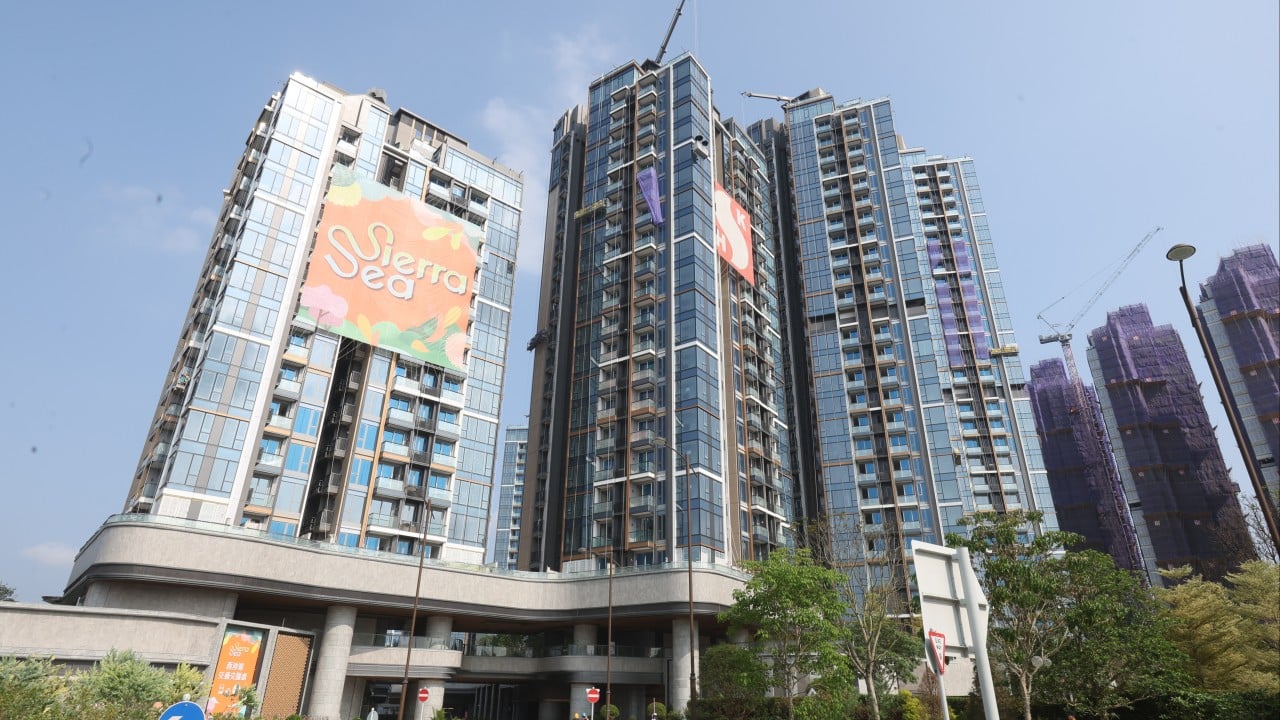
Headline numbers point to a resurgent Hong Kong primary residential market, with first-hand sales climbing toward 20,000 units for 2026 after a seven-year high in first-half deal volume. Yet that wave of launches and brisk absorption masks a rougher reality underneath: developers are trading price discipline for volume, discounting off-plan inventory below nearby secondary flats while Hong Kong home prices still sit roughly 19% to 20% below their September 2021 peak.
Anyone who has watched Victoria Harbour cycles for thirty years knows a launch queue does not automatically equal a broad-based wealth rebound. Buyers are lining up at sales galleries in Tseung Kwan O, Hung Hom, and To Kwa Wan because pricing has been engineered to clear stock, not to restore old peak valuations. First-half primary transactions surged to 12,549 units, averaging 2,092 deals a month before cooling to an average of 1,172 units per month from July through October as summer fatigue, higher-for-longer rate expectations, and mainland outbound investment scrutiny weighed on sentiment.
Why Developers Keep Discounting to Move Stock
Developers are not cutting corners or slashing prices out of charity. They are running a balance-sheet math problem.
When borrowing costs stay stubbornly elevated and buyers remain selective, sitting on unsold inventory eats into capital and delays project cash collection. Launching fresh batches at a discount to nearby second-hand apartments forces liquidity back into the system. If a buyer can walk into a newly marketed phase priced below an aging resale flat down the street, the secondary owner is forced to either match the price or wait.
That dynamic explains why primary residential sales have outperformed broader price indices in sheer turnover. Volume has been the primary engine of recovery since 2025, even when monthly price growth stalls or dips. In July 2026, overall residential transactions dropped sharply from June and price indices saw a monthly pullback before flattening in August, proving how sensitive buyer urgency remains to pricing and macro headlines.
Consider a hypothetical developer launching a 400-unit mass-market project in the New Territories. If the firm prices initial tranches aggressively—say, 10% to 15% below comparable resale stock—and sells 250 units on opening weekend, it locks in early cash flow and creates social proof for the next batch. If it holds out for peak-era margins instead, units sit unsold while carrying costs accumulate. Most major builders have chosen speed over ego.
The Rent Yield Shift Behind Buyer Demand
For years after the 2022–2023 rate shock, buying a flat in Hong Kong meant enduring a painful negative carry—paying more in mortgage interest than a unit could earn in rent. That math has shifted in ways that quietly support mass-market demand.
Rents have climbed to historic highs on the back of corporate relocations, student arrivals, and talent inflows. Meanwhile, effective floating mortgage rates in Hong Kong have hovered near 3.25% even after U.S. rate moves, while gross rental yields on compact mass-market flats under 40 square meters have reached around 3.5%. A slight positive carry does not trigger a speculative frenzy. It does, however, give end-users and yield-conscious buyers a concrete reason to rent-versus-buy without bleeding cash every month.
Borrowers have also changed how they take on debt. Fixed-rate mortgages surged from under 10% of new mortgage approvals at the start of 2026 to more than 40% by September 2026, with multi-year initial fixed options helping households cap near-term payment shock. After watching floating rates punish leveraged buyers in prior cycles, more households are buying predictability rather than gambling on rapid rate cuts.
| Market Dimension | Recent 2026 Reality | What It Means for Buyers and Builders |
|---|---|---|
| Primary Sales Pace | Strong H1 surge (12,549 units) followed by cooler Jul–Oct pace (~1,172/mo) | Launch waves succeed when priced to move, not when pushed aggressively |
| Price Trajectory | Up from 2024 lows, still nearly 20% below Sept 2021 peak | Consolidation limits runaway capital gains in the near term |
| Rental vs. Mortgage Math | Record rents; compact flat yields (~3.5%) edge above ~3.25% floating rates | Carrying costs are far less punishing than during the 2022–2024 squeeze |
| Mortgage Structure | Fixed-rate share above 40% of new approvals by Sept 2026 | Buyers prioritize payment certainty over aggressive rate-cut bets |
| Housing Supply Pipeline | Private completions projected near ~16,700–17,000 units/yr; ~104,000 over 3–4 yrs | Multi-year pipeline keeps builders competitive even as near-term completions dip |
Policy Tailwinds and the Mainland Capital Question
Stamp duty relief—including the HK$100 stamp duty threshold on homes priced up to HK$4 million—has lowered entry friction for smaller units and first-time buyers. Scrapping punitive extra stamp duties earlier also removed a major barrier for non-local buyers and multi-property purchasers.
Yet mainland capital is not a one-way tap. Regulatory tightening on outbound investments, including the State Council's outbound investment rules introduced in 2026, has added friction and compliance scrutiny for mainland entities and individuals. Whenever cross-border capital faces tighter oversight, developers cannot rely blindly on outside buyers to bail out high-priced launches.
Where Affordability Still Bites
Even after years of price corrections and rising household incomes, Hong Kong remains brutally expensive by global standards. Data from international affordability surveys and economic research still places the city at the top of global price-to-income strain, requiring roughly a decade and a half of average income to purchase a mid-sized flat near the urban core.
Lower stamp duty on entry-level flats helps a buyer clear the upfront hurdle on a compact unit. It does not magically expand a young family's borrowing ceiling when bank stress tests, down-payment rules, and interest rate realities still govern loan size.
Supply Overhangs and the Myth of Instant Scarcity
One of the easiest traps in Hong Kong real estate is confusing a brisk weekend sales tally with a sudden shortage of flats. Official projections point to roughly 104,000 first-hand private residential units over the coming three to four years, with annual completions hovering around 17,000 units over the five-year horizon even as near-term completions dip.
That is a substantial pipeline. Because builders face ongoing supply over the medium term and uneven quarterly sentiment, any developer that gets greedy on pricing risks watching buyer queues evaporate overnight.
Secondary Market Pressure Is Real
Every discounted primary launch puts a ceiling on what secondary sellers can demand. Homeowners in older estates who anchor their asking prices to 2019 or 2021 valuations often find their listings sitting stale while buyers gravitate toward newer developments with flexible payment plans and competitive entry prices.
This split creates a two-speed market. Primary launches capture headline excitement and bulk turnover, while secondary sellers must price realistically—or rent out their units into a firm leasing market—if they want an exit.
What Actually Separates Winners From Bag-Holders
A wave of successful primary launches tells you the market has a floor and a pulse. It does not guarantee a straight line back to historic highs.
Watch three practical signals before committing capital to any new project in Hong Kong:
- True price gap to resale: Compare the net effective price per square foot against recent transactions in comparable neighboring buildings, not against the developer's own inflated initial price list.
- Payment plan rebates: Strip out cash rebates, stamp duty subsidies, and deferred payment perks to see what the flat actually costs if you pay cash or take a standard bank mortgage.
- Exit liquidity and unit size: Micro-flats and awkward layouts may move fast during a launch promotion, yet struggle for resale liquidity later compared with practical, well-located layouts near transit.
Strong launch numbers reward disciplined buyers who treat primary sales as a buyer's negotiation rather than a fear-of-missing-out rush—and force sellers on both sides of the market to price for today's reality rather than yesterday's peak.


