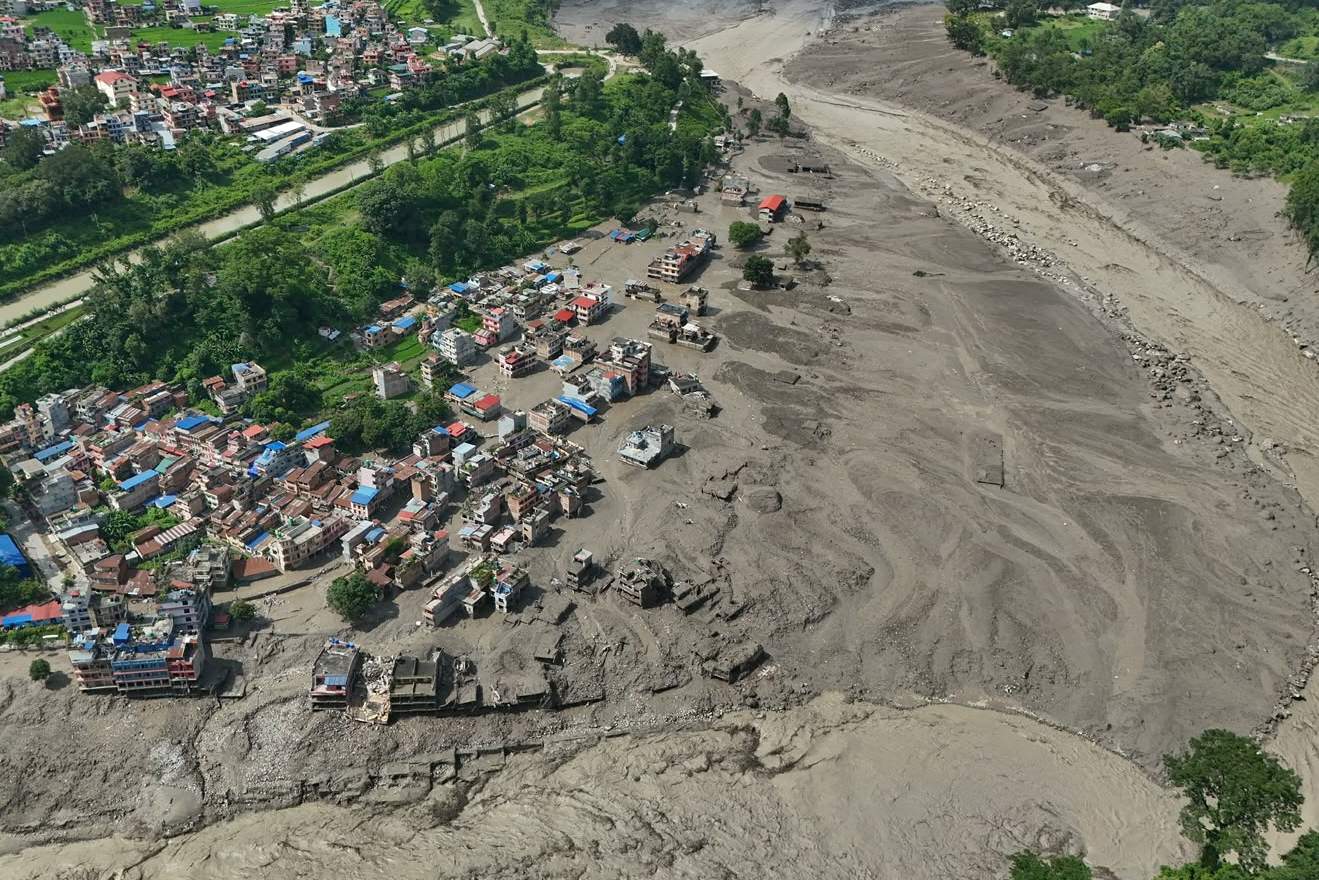
Massive flash floods along the Nepal-Tibet border have left at least 24 Canadians among the hundreds of unaccounted-for tourists and local residents, following a catastrophic surge of water, mud, and ice that obliterated mountain infrastructure. Official tallies confirm that at least 157 people have died in the disaster, with hundreds more missing as search and rescue teams struggle to access remote valleys choked by debris. The tragedy, centered around the Bhotekoshi and Trishuli river corridors, underscores a terrifying reality of high-altitude travel. Climate volatility in the Himalayas is rewriting the rules of survival, turning popular trekking routes into death traps without warning.
The Anatomy of a Mountain Catastrophe
Water levels in the Trishuli River rose by an astonishing nine meters within a thirty-minute window. That staggering metric defines the nature of an ice-rock avalanche, which disaster risk reduction specialists attribute to a destabilized glacier in the upper reaches of the border region. When millions of tons of frozen debris collapse into narrow mountain tributaries like the Lhende Khola, natural dams form temporarily. The subsequent rupture releases a vertical wall of water capable of erasing multi-story buildings, highways, and hydro-electric stations in seconds.
Tourists often perceive the Himalayas through the romantic lens of ancient pilgrimage trails and majestic peaks. They rarely see them as active geological hazard zones. The timing of this disaster coincided with peak travel seasons and local celebrations, putting thousands of foreign nationals and local porters directly in the path of destruction. Security footage from the border region captured scenes of sheer panic as a wall of gray sludge swallowed vehicles and pedestrians before they could take more than a few steps.
Why Modern Infrastructure Fails the Mountains
Engineering standards in steep Himalayan valleys are perpetually outpaced by the accelerating speed of environmental change. Hydropower projects and access roads are built to historical water flow maximums that no longer apply in a warming atmosphere. When an ice-rock avalanche triggers a flash flood of this magnitude, standard embankments act less like barriers and more like funnels, accelerating the destructive force of the current directly into populated river towns like Trishuli Bazar.
Governments are scrambling to respond. Prime Minister Mark Carney urged all Canadians stranded or traveling in the region to register through official channels immediately, while diplomatic missions coordinate with local authorities for updates. Yet, the fundamental problem remains structural. Early warning systems in high-altitude transboundary watersheds are sparse, underfunded, and poorly integrated between neighboring nations. By the time a sensor detects a sudden drop in upstream flow or an abnormal surge, the water has already breached human settlements.
The Blind Spots of High-Altitude Tourism
Thousands of international travelers head to Nepal and Tibet every year without realizing the fragility of the supply and rescue chains supporting them. Mountain rescue in these conditions requires heavy air support and stable ground infrastructure, both of which are frequently wiped out by the initial wave of a disaster. Helicopters cannot fly in zero-visibility storm debris, and roads carved into sheer cliff faces become impassable mudfields.
Foreign ministries issue travel advisories routinely, but they rarely capture the hyper-localized danger of glacial lake outbursts and secondary avalanches. Travelers register for treks focusing on physical endurance, altitude sickness, and gear weight. They rarely weigh the probability of a transboundary torrent born from a collapsing glacier miles away in an autonomous region of China.
Search operations continue along the swollen banks of the Bhotekoshi and Narayani rivers, though hopes of finding survivors grow dimmer with each passing hour. Mud blankets entire communities, hiding the scale of the loss beneath layers of silt and wreckage.
The mountains are no longer keeping time by the ancient rhythms travelers have trusted for generations.