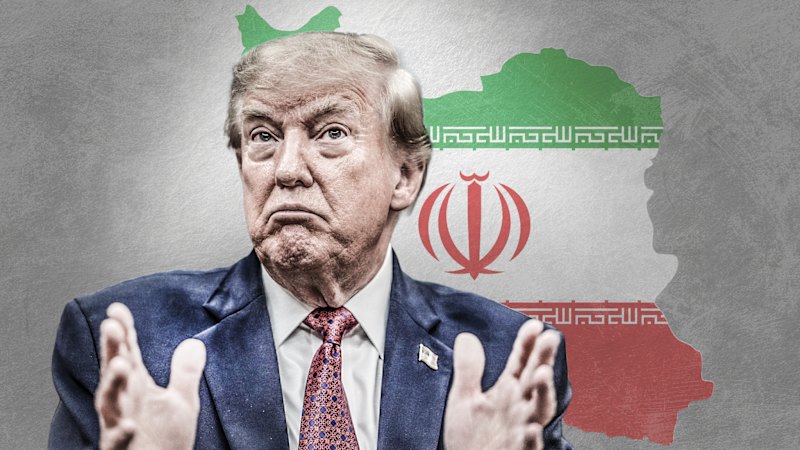
Resolving the war in Iran requires Donald Trump to choose between four unforgiving strategic paths: negotiating a transactional grand bargain, imposing a crippling naval blockade to force economic capitulation, executing targeted decapitation strikes against leadership and nuclear infrastructure, or pivoting toward a regional containment architecture led by Gulf allies. Every single option carries severe military, economic, and political costs that standard Washington policy briefs routinely gloss over.
Foreign policy pundits love neat, numbered lists. They lay out diplomatic off-ramps and military escalations as if the Oval Office were a clean boardroom where rational actors trade predictable concessions. That is rarely how Middle Eastern conflicts actually grind to a halt. When you look closely at the realities on the ground—the entrenched survival instincts of the Islamic Revolutionary Guard Corps (IRGC), the fragility of global energy markets, and the domestic political constraints facing the White House—the options Trump could take to resolve the war in Iran look less like clean policy choices and more like a series of high-wire acts without a net. Don't miss our recent coverage on this related article.
The Myth of the Easy Exit
To understand why ending this conflict is so brutally difficult, you first have to discard the idea that Tehran operates like a conventional nation-state seeking standard diplomatic normalization. For the clerical establishment and the military commanders who actually hold the levers of power, the survival of the regime is the only metric that matters. External conflict is not merely a threat to be resolved; it has historically functioned as a domestic control mechanism to justify internal repression and rally nationalist sentiment.
At the same time, the White House faces its own rigid boundaries. Donald Trump built his political brand on two seemingly contradictory pillars: projecting overwhelming, unpredictable American strength while simultaneously promising to extricate the United States from endless foreign entanglements. Any resolution to the war in Iran must satisfy both impulses. If an agreement looks like appeasement, domestic hawks and regional partners will revolt. If an escalation drags American ground troops into another multi-year quagmire, the political coalition that sent him back to Washington fractures overnight. To read more about the background here, TIME offers an excellent summary.
Option One The Transactional Grand Bargain
Trump has never hidden his preference for the dramatic, leader-to-leader deal. On paper, a comprehensive diplomatic settlement remains the cleanest way out. In this scenario, Washington offers massive sanctions relief, unfreezes billions in overseas assets, and halts offensive military operations. In exchange, Tehran agrees to verifiable, permanent dismantlement of its nuclear weapons capability, halts ballistic missile proliferation, and ceases material support for regional proxy networks across Lebanon, Iraq, Syria, and Yemen.
It sounds straightforward. It is anything but.
The fatal flaw in any transactional grand bargain is verification and enforcement. Past diplomatic frameworks failed largely because they relied on sunset clauses and limited inspection regimes that allowed Tehran to bide its time while keeping its foundational nuclear knowledge intact. For Trump to sell a deal that surpasses previous agreements, he would have to demand intrusive, anytime-anywhere inspections and irreversible destruction of centrifuge cascades and enriched uranium stockpiles.
Why Tehran Resists Total Capitulation
From the perspective of Iranian leadership, surrendering both nuclear latency and regional proxy deterrence leaves the regime completely naked. Look at what happened to Muammar Gaddafi in Libya after he voluntarily gave up his weapons programs in 2003; less than a decade later, Western airpower helped topple his regime, and he died in a drainage ditch. That historical precedent is etched into the collective memory of Tehran's security apparatus.
Furthermore, even if Supreme Leader Ali Khamenei or his successors wanted to sign a sweeping accord, the IRGC operates as a parallel state with massive economic holdings. A genuine opening to Western markets and international transparency would dismantle the smuggling networks and state monopolies that fund the Guard's elite. Consequently, a diplomatic resolution is only viable if the administration is willing to accept a narrower, uglier compromise—one that freezes nuclear development and stops direct attacks on American and allied assets, while quietly tolerating a diminished, though still active, Iranian regional footprint.
Option Two Economic Strangulation and Naval Blockade
If diplomacy hits a wall, the administration can double down on the strategy it knows best: absolute economic asphyxiation, elevated from financial sanctions to physical interdiction. This path involves enforcing a strict naval and aerial quarantine on Iranian oil exports and critical imports, effectively severing Tehran from the global economy until internal economic collapse forces the regime to accept American terms.
Sanctions alone have limits because illicit networks always find buyers willing to take discounted crude, particularly among Asian refiners operating outside the Western financial system. A physical blockade changes the math entirely. By utilizing the U.S. Navy and allied maritime forces to intercept tankers leaving the Persian Gulf, Washington could reduce Iranian oil revenue to near zero within weeks.
The Strait of Hormuz Problem
The immediate counter-argument to a blockade is written in the geography of the Persian Gulf. Roughly a fifth of the world's petroleum passes through the Strait of Hormuz, a narrow chokepoint that Iran has spent decades preparing to mine, swarm with fast-attack craft, and target with coastal anti-ship missiles.
Forcing an economic collapse in Tehran almost guarantees an asymmetric response in the Strait. Even if the U.S. Navy can clear mines and destroy Iranian naval assets within days, the mere threat of conflict causes maritime insurance rates to skyrocket and global crude prices to spike violently. A sudden surge in gasoline prices at American pumps is political poison for any president. To execute this option without triggering a global recession, Washington would first need ironclad commitments from Saudi Arabia and the United Arab Emirates to pump at maximum surge capacity, alongside utilizing alternative overland pipelines that bypass the Gulf entirely. Even then, the market shock would be severe.
Option Three Escalate to De-Escalate Through Decapitation Strikes
There is a school of thought within national security circles that wars only end when one side's capacity and will to fight are shattered decisively. Under this doctrine, Trump abandons incremental deterrence—the tit-for-tat strikes that rarely alter strategic behavior—and authorizes a massive, concentrated air and cyber campaign aimed at destroying Iran's critical infrastructure, nuclear facilities buried deep underground, and the command-and-control nodes of the IRGC.
This is the classic escalate to de-escalate gambit. By demonstrating that no bunker is deep enough and no commander is safe, the White House aims to shock the Iranian leadership into immediate compliance, or trigger a fissure within the regime where pragmatic factions overthrow hardliners to save the country from total ruin.
The Fog of Regime Collapse
Military planners know how to destroy targets; they are notoriously bad at predicting what happens the morning after. Deeply buried nuclear sites like Fordow require specialized bunker-busting munitions and sustained bombing runs to neutralize completely. Even if the physical infrastructure is reduced to rubble, the scientific expertise remains, pushing the program covertly underground where international monitors can no longer track it.
More dangerous is the unpredictability of internal political fracture. Hypothetically, if a coordinated strike eliminates top IRGC generals and cripples the national power grid, the streets of Tehran might erupt in anti-regime protests. Yet chaos in a nation of nearly 90 million people does not automatically produce a Jeffersonian democracy. It can just as easily produce a fractured state awash in loose weaponry, sectarian insurgency along ethnic borders, and a radicalized military junta that views acquiring a nuclear weapon as its sole remaining lifeline. Once you break a state, you own the fallout.
Option Four Offshore Balancing and Regional Containment
The fourth path rejects both the pursuit of a grand diplomatic treaty and the gamble of an all-out military knockout. Instead, it relies on offshore balancing—a cold-blooded geopolitical strategy where the United States steps back from the front lines and empowers a coalition of regional rivals to keep Iran boxed in permanently.
In practice, this means accelerating intelligence sharing, integrated air and missile defense networks, and advanced weapons transfers to Israel, Saudi Arabia, the UAE, and Bahrain. Washington provides the logistical backbone, naval deterrence, and nuclear umbrella, while regional partners bear the primary burden of containing Iranian proxies and countering Tehran's influence on the ground.
The Cost of Passing the Buck
This approach aligns closely with Trump's longstanding demand that wealthy allies pay for their own defense rather than relying on American blood and treasure. It lowers the immediate risk of U.S. casualties and avoids the domestic backlash of another Middle Eastern intervention.
However, containment is a management strategy, not a resolution. It accepts a state of permanent, low-grade friction across the Middle East. Furthermore, Gulf states are acutely aware of their own vulnerability; their desalination plants, oil terminals, and gleaming financial hubs sit minutes away from Iranian missile batteries. Without an explicit, ironclad American security guarantee—which often requires formal Senate ratification and deep U.S. troop commitments—Arab capitals may hedge their bets, quietly cutting side deals with Tehran rather than risking devastating retaliation on Washington's behalf.
The Variables Washington Cannot Control
When analysts map out these four options, they often treat them as mutually exclusive boxes. In reality, high-stakes statecraft rarely follows a neat flowchart. A president might launch devastating strikes on Monday to soften up the adversary for a backchannel diplomatic offer on Thursday, all while tightening naval interdictions in the background.
What complicates every calculation is the friction of the real world. Miscommunication happens in the heat of conflict. A rogue proxy commander in Iraq or Yemen can fire a rocket that kills American personnel, instantly blowing up a delicate diplomatic backchannel and forcing the White House into retaliatory strikes it did not want to make. Domestic politics in both Washington and Tehran also operate on different clocks; an election cycle in the United States or a succession crisis in Iran can suddenly make compromise impossible for leaders who fear looking weak in front of their own hardliners.
Ultimately, resolving the war in Iran comes down to which set of risks the White House is willing to absorb. Diplomacy demands swallowing an imperfect deal that leaves adversaries standing; economic blockade risks a global energy shock; military escalation invites unpredictable regional chaos; and containment settles for a long, expensive stalemate. Until the administration decides which of those consequences it can live with, the conflict will continue to dictate the terms, rather than the other way around.