Hezbollah claimed ownership of hundreds of kilograms of confiscated explosives seized by Lebanese security forces in October 2026, insisting the cargo was meant to fight Israeli forces rather than carry out domestic political assassinations.
That single admission upended a fragile standoff in Beirut. For decades, Hezbollah operated inside Lebanon through studied ambiguity, rarely putting its signature on illicit transport routes when state authorities intervened. Claiming the seized shipment—and demanding both the return of the material and the release of detained operatives—turned a routine law enforcement interception into an open test of state authority.
In the aftermath of the 2026 war and subsequent ceasefire agreements with Israel, Lebanon's government under Prime Minister Nawaf Salam has pressed to reassert its monopoly on weapons and advance disarmament commitments. When Internal Security Forces intercepted a truck moving from the Bekaa Valley toward Greater Beirut at Dahr al-Baidar, the cargo included high-grade material such as C-4. To Lebanese officials and scarred residents alike, C-4 carries a grim history tied to past political assassinations inside the country. Hezbollah lawmaker Hassan Fadlallah publicly acknowledged the shipment belonged to the group, framed its purpose as resistance against Israeli occupation in southern Lebanon, and accused the government of stoking internal division.
What the Dahr al-Baidar Interception Actually Revealed
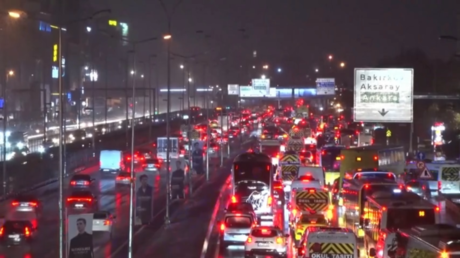
Intercepting a truck on the Damascus-Beirut highway is not an accident of geography. Dahr al-Baidar sits high on Mount Lebanon, acting as a natural chokepoint linking the Bekaa interior to the capital and coastal corridors.
Security forces have long known how smugglers and armed actors move sensitive materiel across Lebanon's porous eastern border and through the Bekaa. What changed in October 2026 was the political willingness to act, detain suspects, and bring charges rather than quietly burying the file. Judicial authorities subsequently moved to charge individuals tied to the case and issue arrest warrants for detained Hezbollah members.
A shipment of military-grade explosives intercepted on a major national highway is never just a logistics problem. It is a measure of who believes they still own the road.
Fadlallah's public claim served two immediate purposes. First, it sought to strip away domestic suspicion that the explosives were bound for political targets inside Beirut. Second, it reasserted Hezbollah's core ideological premise: as long as Israeli troops remain on Lebanese soil and strikes continue, the group views its arsenal as legitimate defense rather than illegal contraband.
Yet claiming ownership creates a trap of its own. Once a non-state actor admits in open view that it moved hundreds of kilograms of C-4 through state checkpoints, plausible deniability evaporates. The Lebanese state no longer has to guess whether illicit arms transit is happening; the group has put its name on the manifest.
Why the Anti-Israel Framing Meets Domestic Skepticism
On paper, Hezbollah's explanation has a clear strategic logic. Fighting an entrenched military force across rugged border terrain requires breaching charges, demolitions, and specialized ordnance. Given ongoing Israeli military presence in parts of southern Lebanon and continued strikes, Hezbollah has every incentive to argue that its operational readiness remains aimed outward.
Still, intent and route do not always align neatly in Lebanese politics. Critics and political rivals inside Lebanon have questioned why heavy explosives were moving along a route connecting the Bekaa toward the Beirut area rather than remaining strictly confined to southern staging zones. Even if Hezbollah's leadership insists no domestic assassination plot existed, Lebanon's modern memory is saturated with high-profile bombings that fractured national cohesion.
Prime Minister Salam leaned directly into that anxiety. By highlighting the presence of C-4 and its history in Lebanese political violence, the premiership framed the seizure not as a border dispute, but as a question of civic survival and constitutional law.
The Battle Over Sovereignty in a Battered State
Disarmament in Lebanon has never been a simple technical exercise. The Lebanese Armed Forces operate under severe financial strain, economic headwinds, and intense external scrutiny from Washington, regional capitals, and international mediators. Asking a cash-strapped institution to confront a heavily armed, politically entrenched faction carries real risks of street unrest and institutional paralysis.
- State credibility: Every unpunished weapons transfer weakens the government's claim to sole authority over security and law enforcement.
- Ceasefire mechanics: International agreements and border arrangements depend on visible movement toward curbing unauthorized armed activity.
- Street leverage: Protests and motorcycle convoys following arrests show how quickly a judicial investigation can turn into a street pressure campaign.
Consider a hypothetical scenario where security forces quietly release detained couriers to calm street tensions after a major seizure. The immediate crisis might cool for a week, yet the underlying message to every smuggling network and armed faction would be unmistakable: state enforcement has a ceiling. Conversely, if prosecutors push forward with charges and warrants without broad backing, the state risks triggering a constitutional and security confrontation it lacks the fiscal cushion to absorb.
What Competitors Miss About the Regional Backdrop
Surface coverage often treats an explosives seizure as a standalone incident between a militia and a domestic cabinet. That misses the wider regional pressure cooker around Lebanon.
Throughout 2026, hostilities involving Israel, Hezbollah, and Iran reshaped calculations across the Levant. Ceasefire frameworks, partial Israeli withdrawals and continued deployments, displacement crises, and diplomatic talks have collided with Hezbollah's refusal to surrender its arms while Israeli forces remain on Lebanese territory.
| Factor | Hezbollah Position | Lebanese Government Stance | Practical Consequence |
|---|---|---|---|
| Seized Explosives | Belong to the group; meant for fighting Israeli forces. | Illegal weapons outside state authority; C-4 raises grave domestic alarm. | Deepens public clash over law enforcement and judicial independence. |
| Detained Operatives | Demands release; warns against inflaming internal tensions. | Moves forward with investigations, charges, and arrest warrants. | Sparks street protests and heightened security patrols in urban areas. |
| Disarmament Pressure | Rejects disarmament while Israeli forces occupy land and strike. | Faces domestic and international pressure to enforce state monopoly on arms. | Keeps ceasefire implementation fragile and contentious. |
There is also a quiet irony in how both sides talk about stability. Hezbollah warns that state pressure on the group threatens civil peace, while state officials argue that tolerating armed networks outside the law is what keeps Lebanon unstable and vulnerable to external escalation. Neither side is arguing for chaos in public; both are fighting over who defines the rules of order.
The Real Stakes Behind the Confiscated Cargo
No single truck seizure resolves Lebanon's sovereignty question. One intercepted shipment does not erase years of entrenched logistics, nor does a defiant parliamentary speech settle how judicial cases will play out in courtrooms.
What the October seizure actually tests is institutional endurance. Can Lebanon's security forces and judiciary follow a high-stakes weapons case through to legal resolution without buckling under political intimidation?
Watch the courts and the checkpoints over the coming months, not just the podiums in Beirut.
Lebanon vows firm response after explosives seized
This video adds visual reporting and context on the explosives seizure and the surrounding tensions involving Hezbollah, Lebanese authorities, and Israel.