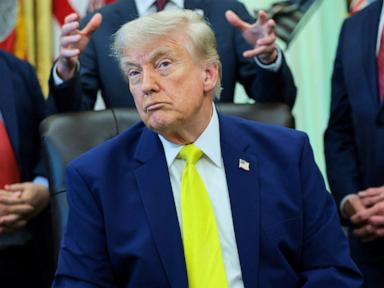
A federal judge in Boston dismantled a core pillar of the White House immigration policy on Monday, striking down a $100,000 fee on new H-1B visas. US District Judge Leo Sorokin ruled that the dramatic six-figure fee, enacted via presidential proclamation last September, amounted to an unconstitutional tax levied without congressional approval. The decision ends a chaotic nine-month experiment that effectively froze high-skilled immigration from abroad. Data disclosed during the litigation revealed that the astronomical price tag brought applications to a near-total halt, with the government processing just 85 payments over a five-month span.
The ruling represents a massive win for Silicon Valley tech giants, healthcare networks, and research universities that rely heavily on specialized foreign talent. It also exposes a deeper, long-standing struggle over executive overreach and the economic mechanics of the American tech sector.
The Hidden Mechanics of an Executive Lockout
When the administration introduced the $100,000 fee, officials framed it as a measure to protect American workers from foreign displacement. Commerce Secretary Howard Lutnick claimed that major tech corporations were supportive and urged businesses to prioritize local hiring.
The policy was structured not as a standard regulatory update, but as an entry restriction under Section 212(f) of the Immigration and Nationality Act. This specific legal mechanism grants the president broad authority to suspend the entry of foreign nationals deemed detrimental to US interests. By attaching a massive financial condition to that entry, the administration attempted to circumvent the traditional rule-making process.
The practical impact was immediate. For decades, employers sponsoring an H-1B worker paid between $2,000 and $5,000 in government filing fees. Raising that cost by 2,000% transformed a routine administrative process into a major board-room budget crisis.
While corporate giants like Amazon, Microsoft, and Meta—which collectively secure tens of thousands of H-1B approvals annually—possess the capital to absorb such costs, smaller enterprises and public institutions were immediately priced out.
The Collateral Damage Beyond Tech
The legal challenge that brought down the fee was not led by tech executives, but by a coalition of 20 state attorneys general. The states argued that the policy directly crippled public services, particularly in rural and underserved communities.
- Public Education: School districts and state universities use the H-1B program to recruit specialized math and science teachers, as well as world-class academic researchers. Operating on rigid public budgets, these institutions could not legally or financially justify a $100,000 surcharge per staff member.
- Healthcare Systems: Rural hospitals routinely face severe shortages of specialized physicians and surgeons. Sponsoring international medical graduates through the H-1B program is often the only viable way to staff these facilities.
- The Waiver Confusion: Just days before the ruling, Department of Homeland Security Secretary Markwayne Mullin signaled to a Senate panel that the agency might offer case-by-case fee waivers. He cited a specific case raised by Senator Susan Collins regarding a rural hospital that paid the $100,000 fee to hire a foreign surgeon after a failed domestic search. This admission highlighted the ad-hoc nature of the policy's implementation.
Why the Court Classified a Fee as a Tax
The administration’s defense rested entirely on the idea that the $100,000 requirement was a regulatory penalty designed to discourage the exploitation of foreign labor.
Judge Sorokin rejected this argument. In his 42-page opinion, he noted that the substance and application of the payment revealed it to be a tax, regardless of the terminology used by the executive branch. Under the US Constitution, the power to levy taxes belongs exclusively to Congress.
+--------------------------+----------------------------+----------------------------+
| Feature                  | Regulatory Fee / Penalty   | Unlawful Executive Tax     |
+--------------------------+----------------------------+----------------------------+
| Primary Purpose          | Covers administrative cost | Discourages participation  |
|                          | or punishes specific viola-| by creating an impossible  |
|                          | tions.                     | financial barrier.         |
+--------------------------+----------------------------+----------------------------+
| Authority Source         | Delegated agency powers    | Unilaterally imposed via   |
|                          | under existing statutes.   | presidential proclamation. |
+--------------------------+----------------------------+----------------------------+
| Economic Impact          | Predictable overhead cost  | Total suppression of       |
|                          | for program maintenance.   | market demand (85 paid).   |
+--------------------------+----------------------------+----------------------------+
The ruling drew heavily on recent judicial precedent, specifically the 2026 Supreme Court decision in Learning Resources v. Trump. That case invalidated a series of aggressive executive tariffs on the grounds that they overstepped the boundaries of executive authority to impose financial burdens. By applying that same logic to the immigration system, the court established a clear boundary: the executive branch cannot use financial penalties to bypass immigration caps set by lawmakers.
The Fragmented Legal Landscape
While the Boston ruling invalidates the fee on a nationwide scale, the underlying legal battle remains far from resolved. The administration faces a split judicial landscape that will likely require resolution by higher appellate courts.
Late last year, a federal judge in Washington, D.C., sided with the administration in a separate lawsuit brought by the U.S. Chamber of Commerce. That court ruled that the executive branch held wide discretion to restrict entry via financial conditions under its national security mandates. That decision is currently under appeal.
With two federal courts offering contradictory interpretations of the administration's authority, the immigration system remains in a state of suspended animation. White House spokesperson Taylor Rogers confirmed that the administration is confident the Boston order will be reversed on appeal, asserting that the H-1B program has been abused for decades.
For now, corporate immigration attorneys are advising clients to proceed with pending applications while the window remains open. The Department of Homeland Security must revert to the baseline fee structure, but a fast-tracked appeal in the First Circuit Court of Appeals could reinstate the restriction with little warning.
The Real Numbers Behind the H-1B Marketplace
The H-1B visa program capped annual selections at 65,000 visas, alongside an additional 20,000 slots reserved for candidates holding advanced degrees from American universities. The vast majority of these positions are concentrated in computer-related fields, with Indian nationals accounting for nearly 70% of all beneficiaries.
The administration’s core thesis was that an steep fee would force corporations to redirect their resources toward training and hiring American workers. The reality on the ground was far different. Instead of shifting hiring patterns, the policy simply froze international recruitment entirely.
The fact that only 85 payments were made out of hundreds of thousands of historical applicants demonstrates that the market viewed the fee not as a cost of doing business, but as a hard shutdown.
Companies did not replace these positions with domestic workers overnight. Instead, specialized roles remained vacant, projects stalled, or multi-national corporations quietly shifted the work to offshore engineering centers in Vancouver, Bangalore, and Dublin.
By treating high-skilled immigration as a revenue lever rather than a talent pipeline, the policy underestimated the global mobility of modern corporate operations. Capital and projects move to where the talent is permitted to work. If the talent cannot enter the United States, the work simply leaves.
The administration’s hardline policy achieved its goal of stopping foreign entry, but it did so by short-circuiting the administrative machinery of the American knowledge economy. Squeezing the tech sector with executive orders cannot manufacture local software engineers or rural surgeons where they do not exist. It merely forces the market to look elsewhere.

:max_bytes(150000):strip_icc():focal(665x0:667x2)/gettyimages-50733149-2000-8b129a2475974982a915418ce92a73d8.jpg)

