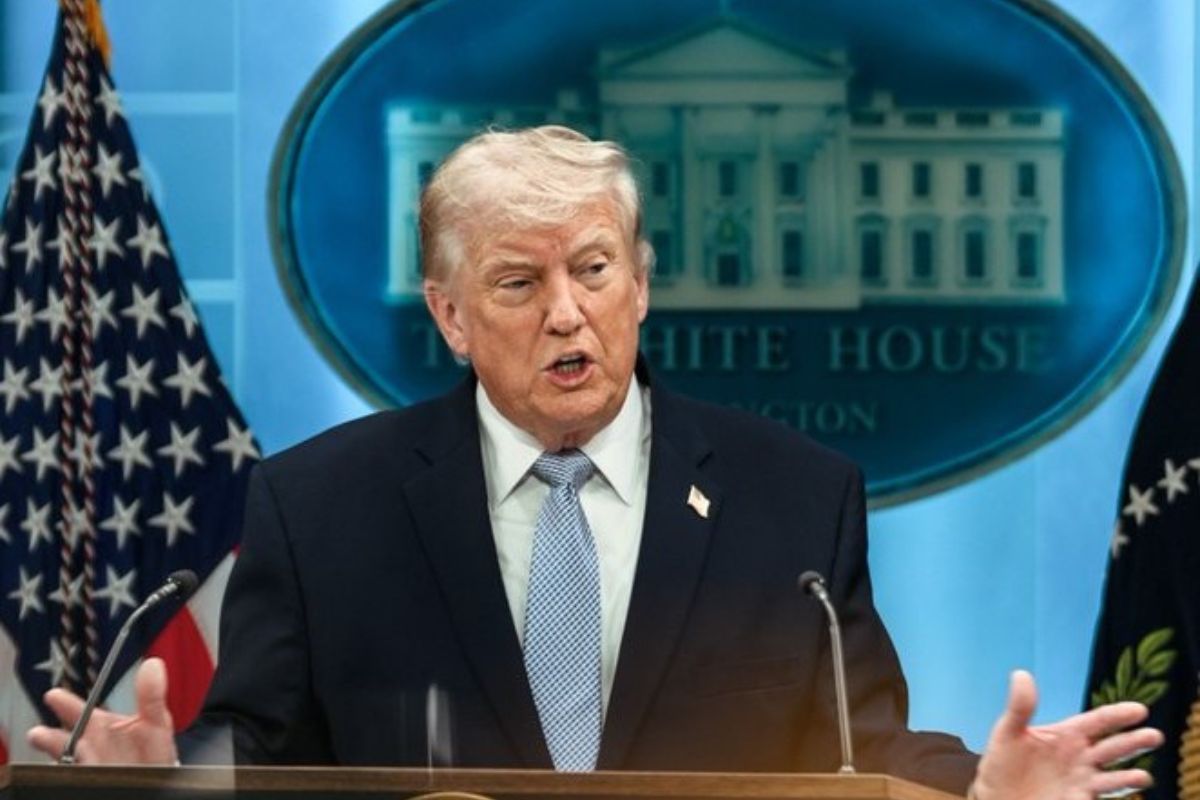
A federal judge in Boston just dismantled the White House's most aggressive attempt to date to choke off high-skilled immigration. By invalidating the controversial $100,000 fee on new H-1B visas, U.S. District Judge Leo Sorokin handed a massive, if temporary, sigh of relief to Silicon Valley and the Indian IT sector. The administration pitched the eye-watering surcharge as a necessary measure to protect American jobs. But the court saw through the rhetoric, ruling that the fee was actually an unlawful tax levied without congressional approval.
This isn’t just a story about technical court filings or corporate cost-cutting. It exposes a deeper, structural war over global tech talent that a single judicial ruling cannot resolve.
The Executive Overreach That Backfired
The executive branch tried to change immigration economics by fiat. Last September, a presidential proclamation blindsided corporate America by tacking a $100,000 fee onto every new H-1B visa petition. The goal was transparent. By making foreign professionals cost-prohibitive, the administration hoped to force a massive domestic hiring wave.
Instead, it triggered a multi-state revolt. A coalition of 20 Democratic state attorneys general sued, demonstrating that the massive price hike would paralyze critical public infrastructure.
H-1B Baseline Cost Comparison
--------------------------------------------------
Standard Historical Fees:   $2,500 - $5,000
Trump Proclamation Fee:     $100,000
--------------------------------------------------
Net Increase Factor:        20x to 50x
The legal undoing of the fee hinged on a fundamental constitutional principle. The administration argued the $100,000 demand was merely a regulatory payment to manage immigration entry. Judge Sorokin flatly rejected this. In his 42-page ruling, he clarified that when an agency charges an amount dozens of times higher than the actual cost of administration, it is no longer a fee. It is a tax.
Because the U.S. Constitution explicitly grants the power to tax to Congress, the White House simply did not have the authority to implement it. The judge drew heavily on recent Supreme Court precedent that had already weakened the administration's sweeping tariff strategies.
The Invisible Toll on Public Infrastructure
Mainstream coverage has framed this battle as a rescue mission for deep-pocketed tech giants. While it is true that massive tech firms depend heavily on the H-1B lottery, the most severe collateral damage was actually heading straight for America’s public institutions.
Universities, public school districts, and rural hospital networks do not possess the capital to shell out six-figure sums for essential personnel. The coalition of states proved that the financial barrier would trigger immediate staffing crises in areas already suffering from severe labor shortages.
- Rural Healthcare Collapse: Many remote medical centers rely almost entirely on international medical graduates to fill residency slots and specialized surgeon roles.
- Academic Stagnation: Public research universities use H-1B visas to source world-class faculty and specialized lab researchers who drive high-level scientific innovation.
- K-12 Deficits: Public school systems routinely leverage the program to hire math and science educators that the domestic labor pool currently fails to supply.
When a rural hospital cannot find an American surgeon, its options under the proclamation were grim: pay a $100,000 penalty or leave the operating room empty. Department of Homeland Security Secretary Markwayne Mullin tried to project flexibility last week by suggesting the agency could waive the fee on a case-by-case basis. But relying on the whims of a federal agency for case-by-case survival is a terrible way to run a hospital or a school district.
The Shifting Battleground of the H-1B Lottery
Corporate legal departments should hold off on celebrating. The death of the $100,000 fee does not mean a return to the old status quo. The administration is already moving to appeal the Boston ruling, and a separate federal court in Washington, D.C. previously upheld the fee, setting up a fractured appellate landscape that will likely escalate rapidly.
More importantly, the administration has already deployed other, quieter regulatory mechanisms designed to achieve the exact same restrictive results.
The Department of Homeland Security is currently implementing a strict wage-weighted selection process for the visa lottery. Under this model, the traditional random lottery is effectively replaced by a system that prioritizes applications tied to higher salary tiers. The goal is identical to the flat fee: make lower-tier, entry-level foreign tech talent unviable.
The Regulatory Reality: A wage-weighted system heavily penalizes startups, smaller regional firms, and foreign graduates from American universities who are just beginning their careers.
Indian IT and the New Compliance Trap
For decades, major Indian IT service providers operated on a high-volume model. They secured large blocks of H-1B visas to place engineering talent at American client sites. That era is dead. Even with the $100,000 fee blocked, a combination of new rules has turned the visa process into a compliance minefield.
A major modernization package enacted over the last year has caused a surge in Requests for Evidence for basic visa extensions and job transfers.
| Trigger Event for Government Scrutiny | Expected Operational Impact |
|---|---|
| Long-term remote work relocation | Requires formal visa amendments and localized wage recalculations. |
| Minor updates to day-to-day duties | Flags the petition for potential mismatch with initial labor certifications. |
| Shifts in corporate reporting structure | Prompts intense reviews regarding whether the role remains a true "specialty occupation." |
The strategy has shifted from a frontal financial assault to death by a thousand bureaucratic cuts. Companies are forced to exhaust immense legal resources just to keep their existing workforce compliant.
The Talent Flight to Friendlier Borders
The relentless volatility of the American immigration system is producing an predictable side effect. Global talent is looking elsewhere. Engineers who once viewed Silicon Valley as the ultimate career destination are actively pivoting to countries with predictable, merit-based immigration pathways.
Canada, the United Kingdom, and Australia have spent the last few years aggressively tailoring their immigration policies to capture the exact demographic the United States is actively repelling. Canada's streamlined tech visas, for instance, process applications in weeks rather than months or years, offering clear paths to permanent residency.
The ongoing legal warfare over fees and lottery structures ignores a basic economic reality. Highly skilled human capital is mobile. By treating foreign professionals as a political football, the American economic apparatus risks permanently damaging its reputation as the world's premier incubator for technological breakthroughs.
Unpredictability is the ultimate enemy of corporate planning. When an executive cannot guarantee whether an essential engineer will be allowed into the country next month, the rational choice isn't to hire an American who may not exist. The rational choice is to move the entire project, and the accompanying tax revenue, offshore.