The ideological fault lines splitting the American right are no longer theoretical. They are playing out in real time across hotel ballrooms, donor networks, and closed-door political summits.
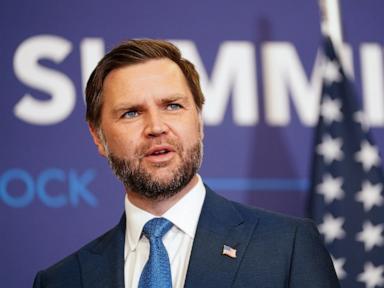
At the center of this friction is Vice President JD Vance. His blunt assessments of foreign entanglements and his distinct brand of national conservatism have alienated a influential faction of Jewish conservatives and major Republican donors. When Vance steps up to address groups like the Republican Jewish Coalition, he does not encounter uniform applause. Instead, he faces a party grappling with a generational shift in foreign policy, lingering anxieties over fringe elements within the populist movement, and an administration worldview that treats international alliances as transactional rather than sacrosanct. Learn more on a similar issue: this related article.
To understand why a portion of the pro-Israel right views the vice president with deep unease, one must look past standard partisan talking points. The friction stems from a fundamental clash between traditional Republican interventionism and the emergent "America First" doctrine.
The Anatomy of a Donor Revolt
For decades, the mainstream Republican coalition rested on a sturdy three-legged stool: free-market economics, social conservatism, and a muscular, unyielding foreign policy. Within this framework, unwavering support for the Israeli government was treated as a foundational axiom. Donors who poured millions into party coffers expected ideological alignment on international security. Further analysis by The Washington Post highlights similar views on the subject.
Vance has systematically challenged that consensus.
His public commentary regarding Israeli leadership and strategy has broken decades of bipartisan diplomatic taboos. When Vance argued that certain members of the Israeli cabinet were attacking their single most powerful ally, or suggested that elements within the Israeli political establishment attempted to manipulate American public sentiment to prolong regional conflicts, he struck a nerve.
To traditional hawks and pro-Israel activists, these remarks crossed a line from legitimate policy critique into dangerous skepticism. Major donors have made little secret of their reservations, quietly signaling that a future presidential primary featuring Vance as the heir apparent to the MAGA movement would trigger a profound realignment of financial support toward alternative figures, such as Senator Marco Rubio.
Yet dismissing this friction as a simple diplomatic disagreement misses the deeper structural transformation underway within the conservative ecosystem.
The Generational and Ideological Chasm
The discomfort among Jewish conservatives is compounded by domestic anxieties. The modern populist movement, while heavily populated by staunch defenders of Israel, also plays host to an aggressive anti-interventionist flank and darker fringe elements that traditional leaders have occasionally struggled to purge effectively.
Vance's complex relationship with polarizing media figures—most notably his reluctance to aggressively disavow commentators who have platformed explicit antisemites—has left a mark. Activists point out that symbolic condemnations cost nothing, yet hesitation breeds distrust. When a potential future leader of the free world refuses to draw hard boundaries against toxic fringe actors, the psychological safety of minority communities within the coalition frays.
Simultaneously, a demographic shift is quietly eroding old certainties. Younger conservative voters, shaped by the post-9/11 wars and economic nationalism, view foreign aid and military alliances through a colder, cost-benefit lens. They are markedly less sentimental about traditional partnerships than their older counterparts.
Vance speaks directly to this constituency. His foreign policy framework posits that American power is finite and must be husbanded strictly for core domestic interests. In this worldview, alliances are tools, not moral crusades.
The Transactional Reality of Modern Power
This brings the debate to its core operational truth. The administration's willingness to apply diplomatic leverage against foreign allies—including Israel—is framed by its proponents as strength, not hostility.
When Vance defends trade-offs or insists that Washington must prioritize its own citizens above all else, he is outlining a coherent realpolitik. But realpolitik is inherently cold. For a community whose historical trauma demands absolute solidarity and moral clarity, a transactional approach to survival feels less like strategy and more like abandonment.
The Republican Party is attempting to hold together two distinct political coalitions under a single banner: the legacy internationalists who view security through a global moral lens, and the nationalist populists who view the world as a chessboard of competing economic interests.
These two philosophies cannot occupy the same space indefinitely without friction. As the 2028 horizon approaches, the debate over JD Vance's rhetoric is merely the opening skirmish in a much larger war over the soul of American conservatism.
Vance who's drawn ire of Jewish conservatives will speak at Republican Jewish confab
This video provides additional context regarding the specific rhetorical clashes and political pressure points surrounding the vice president's relationship with conservative Jewish organizations.
http://googleusercontent.com/youtube_content/1