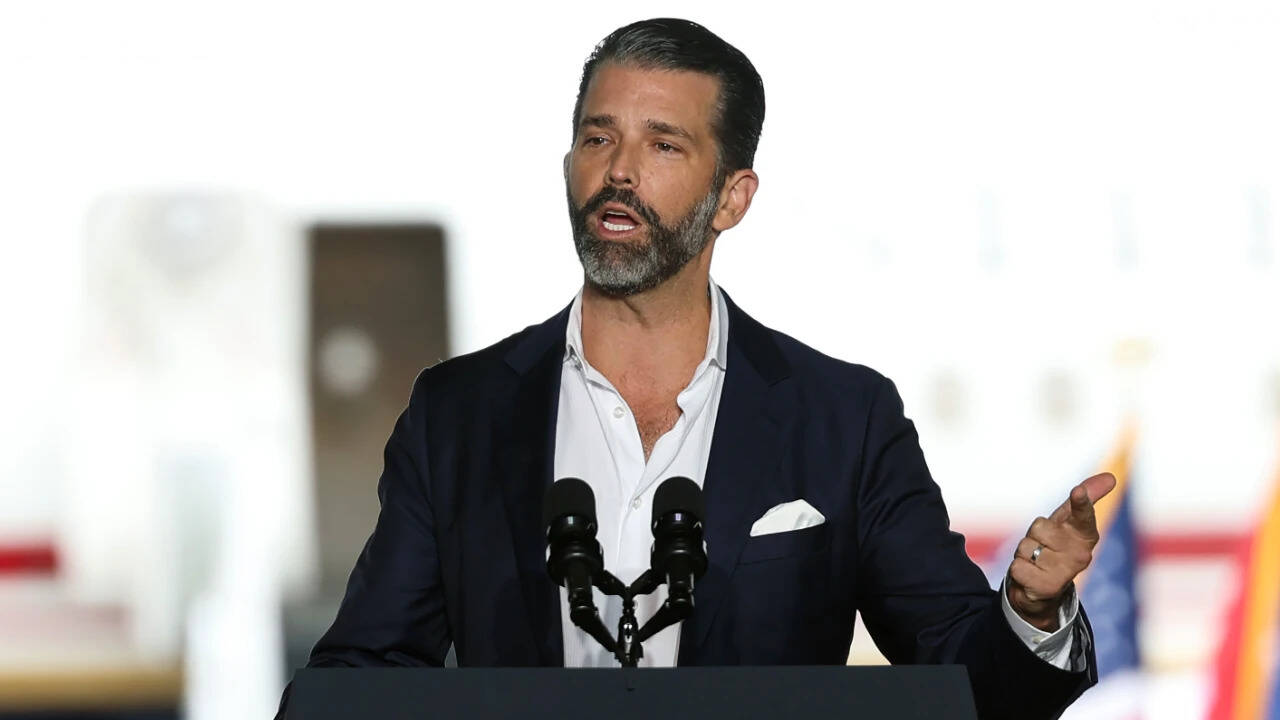
Vice President JD Vance and Donald Trump Jr. pointed to the 2026 war with Iran as a central driver of the Republican midterm defeat in November, breaking public ranks just as Democrats retook congressional control. Voters punished the GOP at the ballot box over an unresolved conflict that started in late February alongside Israel, snarled trade through the Strait of Hormuz, drove up gasoline prices, and pushed war costs to an estimated $47.1 billion. Yet blaming a single military campaign tells only half the story.
Watch the mechanics of that post-election blame game closely. Both Vance and Trump Jr. used the Iran war as an immediate autopsy for losing control of Congress, while President Donald Trump pushed back by framing the voter backlash around high fuel prices and insisting the strikes were the right call. In Washington, nobody admits to a strategic miscalculation without trying to steer the fallout toward someone else's ledger. You might also find this similar article insightful: The Smear Campaign Against Abdul El-Sayed Reveals a Deeper Panic in American Politics.
The Post-Mortem Blame Game Inside the GOP
Vance went first in a lengthy post on X right after the vote. He argued that the war was the real reason Republicans lost, bluntly asking whether losing the Senate for the next six years had been worth the price. Trump Jr. quickly echoed that diagnosis, agreeing that the conflict with Iran cost Republicans their congressional majority and drove former 2024 Trump voters to switch to Democrats.
Two men who often share the same populist instincts converged on the same scapegoat within hours. That alignment matters because Vance had long carried the banner of restraint on foreign interventions, whereas Trump Jr. has spent years policing MAGA orthodoxy on loyalty and border enforcement. When both say the war broke the coalition, they are signaling that foreign entanglements collided with the core promise of putting domestic priorities first. As highlighted in latest reports by The Guardian, the implications are notable.
Trump offered a sharper distinction. In interviews after the election, he conceded that Iran played a part, yet argued that voters reacted more to expensive gasoline than to the military operation itself. He stood by launching the campaign and said he would do it again.
A president can defend a military strike as a necessary show of strength while voters experience the exact same decision as a higher bill at the pump.
That split is real, even when both sides claim there is no daylight between them. For a sitting vice president eyeing a potential 2028 run, drawing a line between an unpopular war and his own brand is basic political self-preservation. Still, distance is hard to maintain when you sit a heartbeat from the Oval Office and your name is tied to the administration's record.
How the Strait of Hormuz Hit Kitchen Tables
Politics rarely punishes foreign policy in the abstract. It punishes foreign policy when a missile or naval standoff in the Persian Gulf raises the cost of filling a tank in Ohio or shipping groceries across the Midwest.
Once strikes began in late February, retaliation in the region and disruptions around the Strait of Hormuz sent shockwaves through global energy markets. Higher oil and diesel prices ripple outward fast. Trucking costs rise, manufacturing inputs get pricier, and household budgets feel squeezed long before a voter reads a briefing on regional deterrence.
Consider a simple hypothetical example to see how a supply choke point turns into a midterm vote. Suppose a small-business owner in a swing district runs a regional delivery van and commutes forty miles each way. When fuel jumps and stays elevated for months, that extra cost shows up every single week on a credit card statement. Even if the business owner likes tough talk against Tehran, paying more at the station creates immediate irritation toward the party in charge.
Trump's focus on gasoline prices was not a dodge so much as a recognition of how voters keep score. Voters do not need to debate naval doctrine to feel an energy squeeze. Rising living costs and inflation were already heavy weights in exit polling alongside the war itself, turning a foreign crisis into a domestic pocketbook test.
What the Numbers Actually Show About Voter Rebuke
Exit and voter polling from the 2026 midterms points to a sharp divide over the conflict rather than a single monolithic mood. Roughly eight in ten Republican voters backed the decision to go to war with Iran, while nearly all Democratic voters called it the wrong move. That kind of split looks like standard partisan polarization on paper.
Elections, however, are decided at the margins and in turnout. When swing voters and disillusioned 2024 supporters stay home or cross over over cost of living, foreign entanglement, and doubts about Washington's alignment with Israel, a strong base among loyalists is not enough to hold both chambers.
| Factor | Political Effect in 2026 Midterms | Strategic Catch for Republicans |
|---|---|---|
| Iran War | Fueled backlash among swing voters and some 2024 Trump backers | Hard to disown while defending administration record |
| Gas & Living Costs | Turned global Strait of Hormuz turmoil into daily household pain | Blaming prices still points back to macro policy and instability |
| GOP Base Support | Roughly 8 in 10 GOP voters still backed the war decision | Pleasing hawks or loyalists risks alienating cost-sensitive voters |
| 2028 Positioning | Vance and Trump Jr. signaled war skepticism or voter frustration | Criticizing the war risks irritating Trump and hawkish donors |
Look closely at that fourth row. Blaming the war is politically convenient for figures looking past the midterms, yet it carries a trap. If Vance leans too hard into criticizing a conflict Trump launched and defended, he risks alienating the president and backers who view open second-guessing as disloyalty. If he stays too quiet, he owns the fallout of a defeat he argued was obvious.
Overlooked Forces Behind the Defeat
Anyone covering Washington for long knows that when politicians agree on a simple explanation right after a wave election, they are usually leaving out awkward pieces. The Iran war gave both Vance and Trump Jr. a clean, shared story to tell. It let them point outward at a foreign crisis and economic shockwaves rather than inward at candidate quality, ground game, or campaign messaging.
Trump himself hinted at that other side when he praised Democrats for running a strong race and faulted some Republican candidates for their losses. A president rarely blames himself when a single explanation—or a convenient list of candidate flaws—can share the weight.
There is also a deeper tension inside the modern GOP that the midterms exposed rather than created. For years, populism promised skepticism toward foreign wars, protection for American workers, and lower costs at home. Launching a major regional conflict alongside Israel, watching price tags climb, and seeing congressional majorities slip away forced an uncomfortable reckoning over what that promise actually means in practice.
The Gray Areas Neither Side Wants to Own
Even with Democrats taking power in Congress, the midterm results do not automatically end the conflict or freeze executive authority. A president still holds major levers over military operations and retains veto power unless opponents clear high legislative thresholds. Oversight hearings, funding fights, and political pressure will intensify, yet power in Washington does not flip like a light switch.
Nor is the voter verdict a neat endorsement of every alternative. Voters who dislike an open-ended war and expensive fuel do not automatically agree on what comes next in the Middle East or how to keep energy markets calm without risking further escalation. Foreign policy trade-offs rarely come with painless options, no matter which party holds the gavel.
What the 2026 midterms proved is simpler and harder to spin away. Voters will tolerate bold rhetoric right up until the bill arrives at the gas pump, the grocery aisle, and the ballot box.


