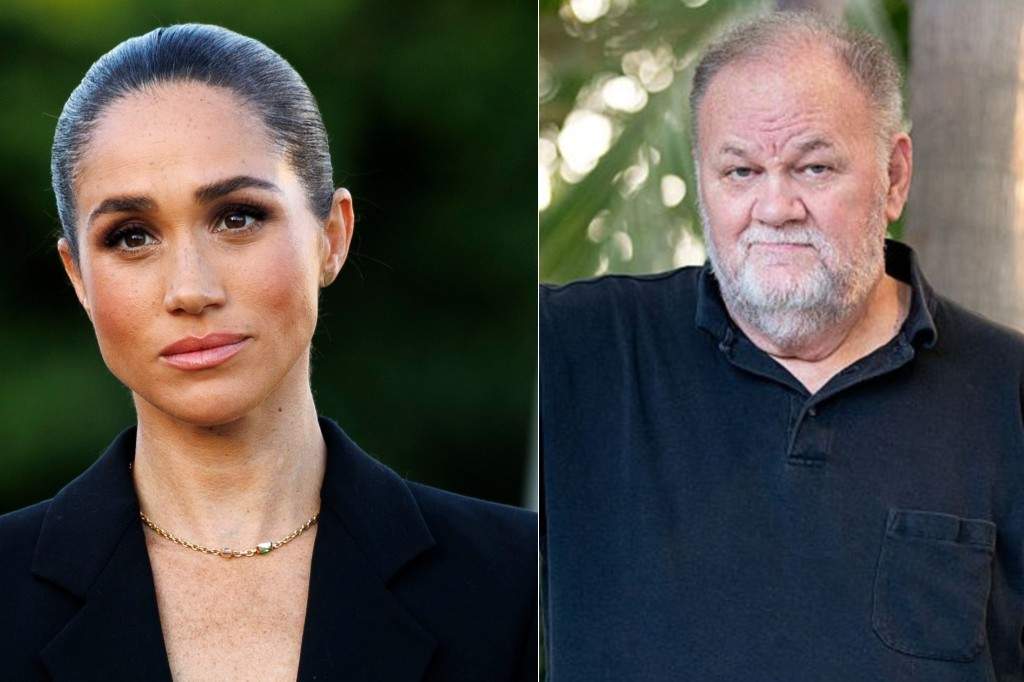
Federal agents arrested Thomas Markle, the 82-year-old estranged father of Meghan, the Duchess of Sussex, at a senior care facility in Lakeland, Florida, on November 6, 2026. The arrest stemmed from a federal criminal complaint filed in the Central District of California accusing him of possessing child sexual abuse material. After a brief release on conditional bond, authorities jailed him again four days later when he cut off his electronic ankle monitor. On November 24, 2026, a federal grand jury in Los Angeles formally indicted Markle on two felony counts of possessing child pornography, doubling the initial charge and setting the stage for his extradition to Southern California.
Most coverage of the Markle family has spent the last eight years stuck in a predictable loop of tabloid grievance, leaked letters, and televised estrangement. That era ended the moment FBI agents executed search warrants on two Los Angeles-area storage facilities. What began as an international tip from the Philippines has transformed a long-running royal family spectacle into a severe federal prosecution carrying a statutory maximum of 20 years in prison. Discover more on a similar issue: this related article.
How a Tip in Cebu City Triggered a Federal Raid in California
Federal investigations rarely start with a dramatic arrest at a Florida care home. They build backward through paper trails, jurisdictional handoffs, and corroborating witnesses.
In October 2026, the investigation ignited thousands of miles from Florida in Cebu City, Philippines, where Thomas Markle had relocated before severe health complications forced him back to the United States. Following a stroke earlier in the year that required the amputation of his left leg, Markle returned stateside and settled into assisted living in Lakeland. While sorting through his father's belongings in Cebu City, Markle's son, Thomas Markle Jr., reported finding illicit photographs and alerted both local Philippine authorities and the FBI. Additional journalism by The New York Times delves into comparable perspectives on the subject.
That single tip set two parallel legal tracks in motion. In the Philippines, the Women and Children Protection Center of the Philippine National Police seized digital devices from Markle's former Cebu City residence and filed formal criminal complaints with local prosecutors over alleged violations of laws against the sexual abuse and exploitation of children. Simultaneously, Thomas Markle Jr. pointed federal investigators toward storage units his father had maintained in Southern California for nearly two decades.
FBI agents moved quickly to verify the California footprint. Subpoenaed records revealed that Markle had continuously rented two separate storage units in the Central District of California since June and July of 2008. Crucially, billing logs showed that both units remained active, with automated payments clearing as recently as October 14 and October 20, 2026. Armed with federal search warrants signed by U.S. Magistrate Judges Daniel S. Roberts and Oliver at the end of October, agents entered both facilities.
Inside, investigators did not find modern encrypted hard drives. They found analog media. Agents seized 27 items from the first unit and 51 items from the second—78 items in total, consisting of photographic slides, film negatives, and printed books. According to the unsealed FBI affidavit, the seized material included explicit photographs depicting an adult male posed with underage girls. To confirm identity, an FBI special agent interviewed a witness on November 5 who had known Thomas Markle since the 1970s; that witness positively identified Markle in two of the photographs.
Why the Case Is Prosecuted in Los Angeles Instead of Florida
Jurisdiction confuses casual observers whenever a suspect is arrested in one state for crimes tied to another. Markle lives in Florida, was arrested in Polk County, and appeared in federal court in Tampa. Yet his indictment comes out of Los Angeles.
Under federal law, specifically 18 U.S.C. § 2252A(a)(5)(B), venue lies in the judicial district where the contraband is knowingly possessed. Because the 78 physical items were stored inside facilities located within the Central District of California, federal prosecutors in Los Angeles—including attorneys from the Transnational Organized Crime Section and Major Crimes Section—hold primary authority over the case.
Markle's arrest in Lakeland was executed via a federal warrant issued out of California. Following his initial appearance in the Middle District of Florida, standard federal procedure requires a Rule 5 identity and removal hearing to transfer custody across state lines to the prosecuting district.
The Ankle Monitor Breach and the Competency Battle
Between his initial arrest on November 6 and his grand jury indictment on November 24, Markle's defense strategy collided with his own actions in custody.
At his initial hearing in Tampa, a federal judge granted Markle conditional release on bond. Given his advanced age, his recent stroke, and his leg amputation, the court permitted him to remain out of jail under strict electronic location monitoring. That arrangement lasted four days. On November 10, federal authorities re-arrested Markle after he allegedly cut off his electronic ankle monitor in the middle of the night.
The violation stripped him of any presumption of compliance and landed him directly in the Pinellas County Jail in Clearwater, Florida. It also sharpened focus on a secondary question surrounding the case: whether an 82-year-old man recently placed in a senior care facility was mentally fit to stand trial.
In late October, tabloid reports had circulated claiming Markle had been moved into a memory-care unit due to cognitive decline. Following his arrest, the federal court ordered a formal psychiatric evaluation to determine legal competency. On November 19 and 20, forensic psychiatrist Dr. Amie Gerodimos submitted a 15-page report to the court after conducting a 90-minute clinical interview with Markle.
During the evaluation, Markle denied the charges, telling the doctor he possessed no illegal photographs and blaming his son for orchestrating his legal troubles. Dr. Gerodimos concluded not only that Markle understood the nature of the proceedings against him, but that he was actively malingering—exaggerating memory loss and confusion to evade criminal prosecution. Markle's defense counsel declined to contest the psychiatric findings, clearing the legal hurdle for the grand jury indictment that followed days later.
Legal Hurdles Prosecutors and Defense Attorneys Face
A grand jury indictment establishes probable cause, not a conviction. As the case shifts to Los Angeles, both sides face distinct evidentiary realities governed by federal statute.
First, time does not protect the defendant. While the seized slides and film negatives may date back decades, 18 U.S.C. § 3299 eliminates the statute of limitations for federal child exploitation and pornography offenses. Moreover, federal courts treat possession as a continuing offense. By documenting automatic monthly payments on the storage units through October 2026, prosecutors intend to argue that Markle maintained ongoing dominion and control over the contents right up until the FBI broke the locks.
Second, physical storage cases invite aggressive chain-of-custody and access challenges. Unlike a password-protected personal laptop carried in a briefcase, a commercial storage unit rented since 2008 raises questions about third-party access. To secure a conviction at trial, the government must prove beyond a reasonable doubt that Markle knew the specific boxes contained illegal depictions of minors, rather than merely owning the locker where the boxes sat.
Defense attorneys routinely scrutinize who held keys to the facility, whether family members or associates packed or moved items during Markle's years living in Mexico and the Philippines, and whether the tipster's personal motives taint the initial probable cause affidavit. In this case, however, prosecutors hold a significant counterweight to any claim of ignorance—allegations in the federal affidavit that the defendant himself appears inside two of the seized photographs.
The Collapse of the Tabloid Narrative
For years, British and American tabloids treated Thomas Markle as a sympathetic, if erratic, bystander caught in the machinery of modern royalty. Media outlets paid for staged paparazzi shoots, published his private correspondence, and framed his public pleas to Meghan and Prince Harry as the heartbreak of an aging father shut out by his famous daughter.
The federal indictment dismantles that framing entirely. Public records and news reports from late October 2026 revealed that Meghan had previously confronted her father in writing over abuse allegations and that U.K. police had received correspondence regarding claims against him. When the Duchess of Sussex and Prince Harry appeared at a European Union event focused on online child safety on November 10—four days after her father's arrest—neither addressed the criminal case publicly. They did not need to. The unsealed federal court filings in California and the ongoing police investigation in Cebu City have permanently replaced a celebrity family feud with a criminal docket.
Thomas Markle remains detained without bond in Florida while U.S. Marshals arrange his transport to Los Angeles for arraignment on the two-count indictment. Once he enters a plea in the Central District of California, the case will move into federal discovery, forcing the defense to confront 78 seized items, 18 years of storage billing records, and a forensic psychiatric report already on the court record.