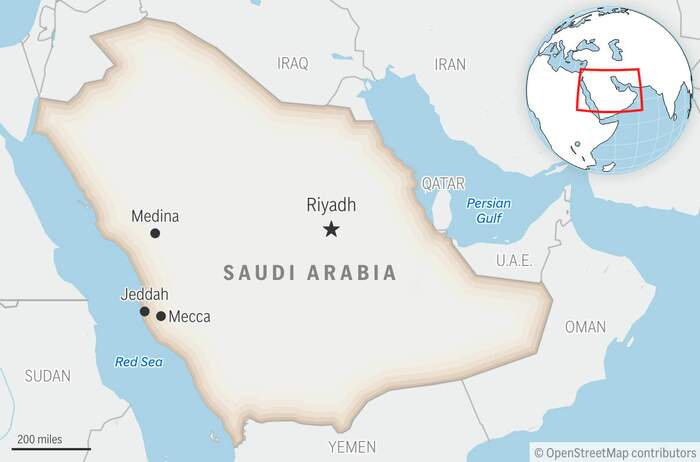
The siren does not sound like a warning. It sounds like an industrial saw cutting through concrete, sudden and flat against the quiet air of an administrative district. When a Houthi ballistic missile or an armed drone breaches the airspace above Riyadh, the reaction on the ground is no longer panic, but a grim, practiced calculus. Witnesses near major transport hubs report emergency evacuations and the distinct, double-thump concussions of interceptor batteries firing from the perimeter of the capital.
These events are no longer isolated anomalies. They represent a fundamental test of the security architecture protecting the political and economic core of Saudi Arabia. The Houthi movement, operating from the rugged highlands of Yemen, has steadily expanded the range, payload capacity, and guidance sophistication of its aerial arsenal. What began as crude, Iranian-supplied rockets cobbled together from disparate parts has evolved into sophisticated delta-wing drones and guided cruise missiles capable of navigating electronic countermeasures. If you enjoyed this piece, you might want to look at: this related article.
Understanding why these strikes continue to penetrate heavily defended perimeters requires looking past official military communiqués. It demands an examination of the geometry of modern missile defense, the economics of asymmetric warfare, and the geopolitical pressures shaping the Arabian Peninsula.
The Asymmetric Math of Air Defense
To grasp the scale of the challenge facing Riyadh, one must look at the ledger. A single interceptor missile fired from an advanced air defense battery costs millions of dollars. Conversely, a long-range loitering munition powered by a commercial engine and guided by off-the-shelf commercial GPS hardware can be manufactured for a fraction of that cost. For another look on this event, see the recent coverage from The Guardian.
This financial imbalance tilts heavily in favor of the attacker. When multiple drones and missiles are launched simultaneously in a composite attack wave, defenders face a brutal triage problem. Radar operators must calculate trajectory, velocity, and projected impact points in seconds. Every battery has a finite magazine depth. If an attacker deploys low-cost decoys alongside armed platforms, the defense system risks expending critical inventory on non-threats, leaving windows of vulnerability for the actual payload carriers.
The capital of Saudi Arabia spans a vast, sprawling urban footprint. Protecting every critical asset, from petroleum infrastructure to international airports and government ministries, requires an overlapping umbrella of sensors and interceptors. Yet, no shield is absolute. The curvature of the Earth, terrain masking, and radar horizon limitations mean that low-flying cruise missiles and small drones can sometimes slip underneath the detection cone until they are dangerously close to their targets.
Evolution of the Houthi Strike Capability
Years of conflict have transformed the tactical posture of the Ansar Allah movement, commonly known as the Houthis. Observers who remember the early days of the intervention in Yemen often mischaracterize the current threat as low-tech or improvised. That assessment is dangerously outdated.
Technical analysis of captured hardware and remnants recovered from impact sites reveals a steady march toward self-sufficiency in assembly and adaptation. While core components such as guidance chips, turbojet engines, and communication modules frequently originate via illicit supply networks, the integration and deployment strategies have grown increasingly sophisticated.
Operators utilize pre-programmed waypoint navigation, allowing drones to fly erratic, circuitous routes that avoid known radar installations or exploit gaps in coverage. Some variants are equipped with terminal infrared or optical guidance, rendering them immune to electronic jamming during the final phase of their attack run.
This technological maturation changes the strategic equation. A strike against a major airport in the Saudi capital is not merely a tactical maneuver designed to cause physical damage. It is an act of psychological and economic warfare. International aviation hubs are symbols of connectivity, investment, and national prestige. When witness reports describe sudden ground stops, terminal evacuations, and diversions, the ripple effects hit global markets, insurance premiums, and investor confidence instantly.
The Regional Spillover and Diplomatic Stalemate
The attacks on Riyadh do not occur in a vacuum. They are deeply intertwined with the stalled political process in Yemen and the broader regional competition between Riyadh and Tehran. Despite various ceasefires, back-channel talks, and diplomatic engagements, the underlying drivers of the conflict remain unresolved.
For the leadership in Sanaa, maintaining pressure on the Saudi heartland serves as leverage at the negotiating table. By demonstrating that the capital itself is within striking distance, the movement seeks to extract concessions regarding economic blockages, public sector salary disbursements, and the permanent lifting of restrictions on ports and airports under their control.
For Riyadh, the imperative is twofold: protect national security and population centers while finding a sustainable exit ramp from a costly military entanglement. The Kingdom has invested heavily in modernizing its armed forces and diversifying its alliances, seeking security guarantees from multiple global powers. Yet, hardware purchases alone cannot substitute for a comprehensive political settlement inside Yemen. As long as the border remains a front line and the factories producing these weapons continue to function, defensive measures remain a temporary tourniquet rather than a permanent cure.
The air over the Saudi capital remains tense. Every interception overhead is a reminder that distance is no longer an absolute shield, and that modern war is defined not by the size of armies, but by the asymmetric reach of technology in the hands of determined adversaries.