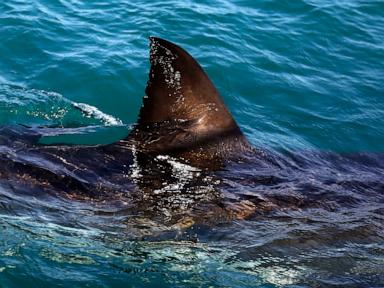
A fatal shark attack off South Africa's Eastern Cape in October 2026 killed 65-year-old swimmer Janine Lochrenberg at Orient Beach in KuGompo City and forced municipal officials to shut down Orient Beach and nearby Eastern Beach. Within days, authorities also posted warnings and temporary closures at other local stretches, including Nahoon Beach after a subsequent shark sighting, before moving to reopen the initially closed beaches later that week following safety reviews.
Basic wire reports stop at the headline facts. Victim age, beach name, police inquest, temporary shutdowns, national bite averages. That surface-level framing misses the deeper tension underneath. Along this stretch of coast, ocean safety is not a single fixed policy. It is a constant negotiation between open-water athletes, local municipalities, marine biologists, tourism operators, and predators whose movements do not care about municipal boundaries.
What Really Happens When a Beach Closes
Shutting down a stretch of shoreline feels decisive. A sign goes up, lifeguards or officers warn bathers out of the surf, and officials promise an assessment before reopening.
In practice, a beach closure is rarely a guarantee that dangerous marine life has moved on. Sharks patrol open coastal water continuously, guided by currents, water temperature, prey distribution, and visibility rather than municipal notices. A closure acts primarily as a legal and operational pause. It gives authorities breathing room to gather facts, consult specialists, let emotions cool, and shift liability away from the city while the immediate shock hangs over the community.
There is a real catch with abrupt closures, especially in places with an active open-water swimming culture. Swimmers who train year-round rarely stop entering the ocean simply because one bay is shut. Many relocate to adjacent coves or head out at dawn when patrols are thin or absent. Instead of eliminating risk, a blanket closure can scatter swimmers into less monitored water.
When officials close a beach after a tragedy, they are managing public fear and institutional risk as much as actual ocean conditions.
The Policy Divide Along the South African Coast
Anyone trying to make sense of shark safety in South Africa has to look at how wildly approaches differ depending on where you stand on the map.
Roughly 150 miles north of KuGompo City lies the border with KwaZulu-Natal, the only province in the country that uses lethal shark nets and drumlines managed by the KwaZulu-Natal Sharks Board. Down in the Eastern Cape, management relies on non-lethal measures, spotters, public advisories, and reactionary closures rather than culling programs.
Neither model settles the argument. Lethal gear has long drawn fierce pushback from conservationists and marine scientists because nets and drumlines trap non-target marine life, including dolphins, rays, turtles, and smaller sharks, while still failing to make the ocean risk-free. Yet non-lethal approaches also face hard limits. Spotters cannot see through turbid water, heavy swell, or glare, and a warning sign cannot stop a large predator already cruising beneath the surface.
| Approach | How It Works | Practical Limitation |
|---|---|---|
| Beach closures | Temporarily bans water access after an incident or sighting | Does not contain sharks; can push swimmers to other spots |
| Visual spotters | Observers watch from high points for fins or shadows | Struggles with glare, swell, deep water, and poor visibility |
| Lethal nets and drumlines | Uses barriers or baited hooks in targeted coastal zones | Harms bycatch species; still cannot guarantee zero risk |
Experts who examine incidents along the Eastern Cape often point to ecological complexity rather than simple villains. A large shark—such as a great white estimated around 3.5 meters in the KuGompo attack, according to museum scientific assessment cited in local reporting—operates inside a dynamic coastal system shaped by seasonal shifts, baitfish movement, and river outflows. Even when statistical odds of an unprovoked bite remain low compared to everyday hazards like road travel, low probability means nothing to the family mourning a swimmer who never came back in.
Open Water Culture Meets Unpredictable Risk
Open-water swimming brings tight-knit camaraderie. Regulars know each other's paces, share tide updates, and treat the sea as part of their identity.
Reports following the Orient Beach tragedy noted that Lochrenberg was a 65-year-old retired nuclear radiographer and musician who loved the ocean and often swam solo or alongside fellow enthusiasts. Colleagues and community members remembered her courage and how central the water was to her life.
That detail exposes a quiet truth that polite coverage tends to gloss over. Experienced ocean swimmers often understand shark presence far better than casual visitors do. Many accept a baseline of uncertainty because the alternative—staying out of the water indefinitely—feels like surrendering something essential.
Still, acceptance is not the same as immunity. Swimming alone or farther offshore reduces immediate eyes on a swimmer if something goes wrong, even when nearby group members try to respond quickly to a distress call. After a fatal encounter, communities inevitably argue over personal responsibility versus municipal duty. Should cities keep beaches closed longer? Should swimmers stick strictly to patrolled zones and group swims?
A hypothetical example shows how fast those tensions collide. Imagine a coastal town reopens a popular bay four days after a fatal attack because no new sightings were logged during a calm morning patrol. A local club returns to the water, a tourist family watches from the promenade, and a marine ecologist warns that calm water proves nothing about what moved through at dusk. Everyone is acting on partial information.
Why Headlines Skew Risk Perception
Coverage of a fatal shark attack almost always triggers a spike in anxiety far out of proportion to statistical frequency. Global and national bite tallies consistently show that fatal shark incidents are rare events, even in countries with rich marine biodiversity and heavy coastal recreation.
Rarity makes the story bigger, not smaller. A calm Tuesday morning turning into a tragedy on a familiar city beach breaks our sense of routine. Readers click because the contrast is stark: everyday exercise on a municipal beach colliding with an apex predator.
Over decades of covering coastal stories and policy battles, one pattern repeats itself whenever a fatality hits the news. Public debate swings wildly between demands for aggressive intervention and calls to leave nature untouched, while everyday safety habits get buried under noise.
Municipalities cannot sterilize the Indian Ocean. Swimmers cannot eliminate every hazard beyond the surf zone. Honest ocean safety starts with treating advisories as real signals rather than background noise, swimming with others in visible areas where lifeguards operate, and respecting that wild water never belongs entirely to us.