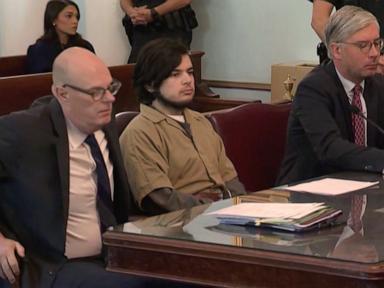
When a teenager enters a not guilty plea in a fatal hit-and-run involving two 17-year-old girls on an electric bicycle, the immediate reaction is predictable. Outrage. Grief. A sharp demand for maximum sentencing and courtroom accountability. Yet treating these cases solely as isolated moments of juvenile recklessness misses the deeper structural failure happening on American asphalt every single night.
The courtroom arraignment is just the opening procedural step in a much larger collision between outdated traffic infrastructure, unregulated micro-mobility speeds, and young drivers operating heavy machinery with underdeveloped risk assessment. When a suspect pleads not guilty in a vehicular homicide or felony hit-and-run case, it rarely signals a denial that a tragedy occurred. In criminal defense, an initial not guilty plea is standard mechanics. It preserves constitutional rights, forces prosecutors to hand over discovery, and buys time to examine toxicology reports, crash reconstruction data, and street lighting conditions. Building on this theme, you can also read: What Most People Miss During a Tennessee Prison Escape Manhunt.
Meanwhile, the broader crisis remains buried beneath the crime blotter. Two teenagers riding a single e-bike, struck by a teenage driver who fled the scene, represents a convergence of three distinct public safety failures that municipalities have spent the last five years ignoring.
The Physics Problem on Suburban Streets
Suburban roads were never engineered for the silent, high-speed overlap of two-ton passenger vehicles and throttle-powered bicycles. Experts at The Washington Post have provided expertise on this trend.
Traditional road design assumes a predictable speed differential. Pedestrians move at three miles per hour on sidewalks. Conventional cyclists pedal at twelve to fifteen miles per hour along painted shoulder stripes. Cars travel at thirty-five to forty-five miles per hour in the main lanes. Everyone occupies a distinct visual and kinetic tier.
Electric bicycles shattered that equilibrium almost overnight. Modern Class 2 and Class 3 e-bikes easily sustain speeds between twenty and twenty-eight miles per hour without the rider breaking a sweat. Many aftermarket models and modified rigs push well past thirty-five miles per hour, effectively operating as unlicensed electric mopeds.
To an oncoming or overtaking motorist—especially a teenager with less than two years behind the wheel—the visual cues are dangerously misleading. A driver glances into a rearview mirror or scans an intersection at dusk. Their brain registers the silhouette of a bicycle and subconsciously assigns it a slow, predictable closing speed. By the time the driver realizes the e-bike is moving at thirty miles per hour, the stopping distance has evaporated.
Add a second rider to the frame, and the physics deteriorate further. Most e-bikes sold to teenagers are not built to carry two passengers safely. Adding a second 130-pound teenager alters the bike's center of gravity, extends its braking distance, and compromises steering stability during sudden evasive maneuvers.
When impact occurs at those combined velocities, the kinetic energy transferred to unprotected riders is catastrophic. A standard bicycle helmet, certified for impacts around fifteen miles per hour, offers minimal protection against a high-speed rear-end collision with a modern SUV or sedan.
Why Teenage Drivers Flee the Scene
The flight response after a fatal crash is one of the most misunderstood behaviors in criminal justice. To the public, driving away from dying teenagers looks like pure, calculated malice. In the interrogation room and the crash reconstruction lab, the reality is often more chaotic, though no less legally devastating.
Adolescent brain development plays a documented role in how young drivers process sudden catastrophic trauma. The prefrontal cortex—the region responsible for impulse control, long-term consequence evaluation, and executive decision-making under extreme stress—does not fully mature until a person reaches their mid-twenties.
When a teenager strikes a pedestrian or cyclist, the immediate physiological reaction is an overwhelming surge of adrenaline and cortisol. Cognitive tunneling sets in. The young driver experiences acute panic, terrified of parental wrath, arrest, and the sudden ruin of their life. In that fraction of a second, the primitive fight-or-flight mechanism overrides basic human decency and legal duty.
They hit the gas instead of the brake.
The Legal Escalation of Panic
From a strictly legal standpoint, fleeing the scene transforms a potential civil tragedy or misdemeanor traffic infraction into a severe felony. Consider a hypothetical scenario to illustrate how the criminal justice system weighs these actions. Suppose a sober, licensed 18-year-old driver strikes an unlit e-bike at night because the riders swerved unexpectedly into a travel lane. If that driver stops immediately, calls 911, and renders aid, prosecutors might determine the crash was an unavoidable accident, resulting in zero criminal charges.
Now change one variable. The driver panics and leaves.
By fleeing, the driver forfeits every mitigating factor the law provides. Prosecutors no longer view the incident as a tragic lapse in attention; they prosecute it as an intentional obstruction of justice and a callous abandonment of human life. Furthermore, leaving the scene immediately raises the suspicion of impairment. Law enforcement and prosecutors routinely operate under the assumption that a driver who runs is hiding alcohol, cannabis, or distraction via a smartphone—evidence that disappears once the suspect sobers up or deletes their call logs hours later.
The Not Guilty Plea and Courtroom Reality
When headlines announce that a suspect has pleaded not guilty to charges stemming from a double fatality, community anger spikes. Families grieving the loss of two 17-year-old girls hear those two words as an insult to their children's memories.
Understanding the mechanics of arraignment helps separate legal procedure from personal remorse. In almost every jurisdiction in the United States, a defense attorney will advise a client to enter a not guilty plea at their initial court appearance, regardless of the weight of the evidence.
- Access to Discovery: A not guilty plea triggers the formal discovery process, compelling the district attorney to turn over dashcam footage, surveillance video, vehicle event data recorders (black boxes), and witness statements.
- Independent Reconstruction: Defense teams hire independent accident reconstructionists to verify whether the e-bike had functioning lights, whether the riders wore helmets, and whether road visibility made the collision unavoidable prior to the flight.
- Plea Negotiation Leverage: Pleading guilty at arraignment leaves a defendant entirely at the mercy of the court without any negotiated sentencing caps. Entering a not guilty plea opens the door to eventual plea agreements, potentially reducing vehicular manslaughter charges in exchange for a guaranteed prison term.
A not guilty plea is rarely the end of the story. More often, it is the mandatory starting line for a protracted legal battle over causation, intent, and accountability.
The Regulatory Vacuum Around Youth E-Bikes
While the criminal courts focus on the driver, an entire industry continues to market high-powered electric vehicles to minors with virtually zero friction.
Walk into any sporting goods store or browse online marketplaces, and a parent can purchase a 750-watt e-bike capable of hitting twenty-eight miles per hour for under fifteen hundred dollars. No driver's license is required. No learner's permit. No written test on right-of-way laws. No registration or license plate.
In many states, a 15-year-old who is legally barred from driving a car on public roads can legally pilot a fifty-pound motorized vehicle alongside rush-hour traffic. They often do so without understanding basic rules of the road, such as riding with the flow of traffic rather than against it, yielding at four-way stops, or signaling lane changes.
The Illusion of the Toy
Parents frequently buy e-bikes under the false impression that they are purchasing an upgraded bicycle. Manufacturers reinforce this perception through marketing that emphasizes outdoor fun, eco-friendly commuting, and neighborhood freedom.
The reality on the street looks very different. In suburban communities from California to New Jersey, emergency room physicians and local police departments have reported steep increases in adolescent e-bike trauma over the past several years. Kids ride double or triple on rear cargo racks not rated for passenger weight. They ride at night in dark clothing without factory-installed brake lights. They weave between bike lanes and main vehicular arteries because neither space truly accommodates their speed.
When local governments finally react to a fatal crash, their responses tend to be clumsy and purely punitive. City councils pass sweeping bans on e-bikes in parks or downtown corridors, or police conduct temporary enforcement blitzes writing tickets to middle schoolers. None of those measures address the core engineering failure: putting high-speed electric vehicles into the hands of unlicensed minors without protected bike lanes or mandatory safety certification.
What Crash Data Actually Reveals About Dusk and Darkness
If you look closely at fatal collisions involving young riders on e-bikes, a distinct environmental pattern emerges. A disproportionate number of these tragedies occur during twilight hours and full darkness, particularly on weekend evenings.
Visibility is the silent killer on suburban arterials. Unlike motorcycles, which are legally required to have high-lumen headlights, running lights, brake lights, and turn signals, many entry-level e-bikes come equipped with rudimentary LED battery lights that barely illuminate ten feet of pavement. From a distance of two hundred yards, an e-bike approaching or traveling ahead of a car blends effortlessly into the visual clutter of streetlights, storefront signs, and oncoming headlights.
Teenage drivers, already struggling with glare sensitivity and night depth perception, are uniquely vulnerable to missing low-profile two-wheeled vehicles in the dark.
| Risk Factor | Traditional Bicycle | Class 2/3 E-Bike | Impact on Crash Severity |
|---|---|---|---|
| Average Speed | 10–15 mph | 20–28+ mph | Doubles kinetic energy upon impact |
| Vehicle Weight | 20–30 lbs | 50–80 lbs | Increases stopping distance and crush force |
| Rider Age/Training | Varies; low speed limits risk | Often under 18; zero traffic training | High rate of right-of-way errors |
| Lighting Standards | Basic reflectors | Minimal LEDs; rarely includes brake lights | Severe invisibility during dusk/night |
When a teenage driver hits an unlit e-bike at forty miles per hour, the physical destruction is instantaneous. The car's event data recorder will capture the exact millisecond the brakes were applied—or if they were applied at all. Modern vehicles record speed, throttle position, steering angle, and seatbelt usage in the five seconds leading up to airbag deployment. In hit-and-run prosecutions, that tiny black box beneath the center console frequently becomes the state's star witness, stripping away any claim that the driver did not realize they had struck something substantial.
The Infrastructure Debt We Refuse to Pay
Every fatal e-bike crash exposes an uncomfortable truth about how cities allocate road space. For decades, American traffic engineering prioritized throughput—moving the maximum number of cars through an intersection in the shortest possible time. Wide lanes, sweeping turning radii, and high speed limits became the default standard for suburban corridors.
Painted bike lanes were added later as an afterthought. A four-inch strip of white thermoplastic paint does nothing to stop a distracted teenager in a three-thousand-pound sedan from drifting three feet to the right. Without physical separation—concrete curbs, steel bollards, or grade-separated paths—mixed-speed traffic relies entirely on continuous, flawless human attention.
Human attention is never flawless, especially among teenagers on both sides of the windshield.
Until municipalities separate micro-mobility traffic with physical barriers, enforce strict lighting and passenger limits on electric bikes, and require basic road-rules certification for young riders, the cycle will repeat itself. Another set of grieving families will sit in the front row of a courtroom, listening to a young defendant enter a not guilty plea while the streets outside remain unchanged.