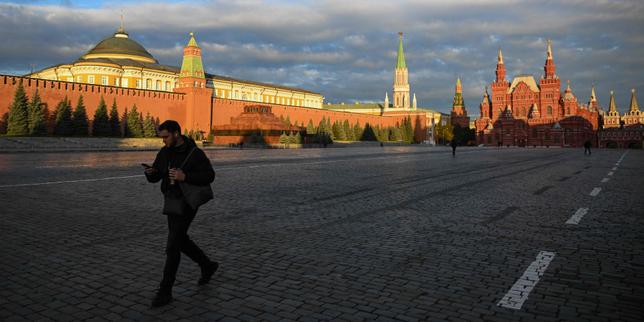
The overnight air raid that saw nearly twelve hundred long-range unmanned aerial vehicles swarm across Russian airspace marked a profound shift in military technology, transforming distant capital targets into vulnerable zones. This unprecedented saturation strike, which targeted the Moscow region alongside vital industrial hubs in Volgograd and Samara, exposed the limits of modern air defense networks when confronted with low-cost mass production. Rather than relying on sporadic, token strikes, Kyiv has engineered a doctrinal pivot toward high-volume attrition.
Military analysts watching the telemetry unfold noted a clear tactical evolution. Defending a vast perimeter against swarms carrying explosives drains interceptor missiles faster than factories can replenish them. Each wave forces military planners in Moscow to make stark choices about which industrial zones or population centers receive surface-to-air cover.
Airspace restrictions at major aviation hubs like Sheremetyevo and Domodedovo tell only part of the story. Beneath the immediate disruptions to civilian transit lies a colder calculus of industrial endurance. When production lines in central Russia, including chemical and petroleum facilities, absorb direct impacts, the economic friction accumulates steadily.
Consider a hypothetical scenario illustrating this math. If a nation manufactures inexpensive long-range airframes at a fraction of the cost of a sophisticated interceptor missile, economic attrition sets in rapidly. Defenders are forced to spend premium defensive assets to neutralize cheap, disposable threats.
This asymmetry sits at the heart of modern asymmetric warfare. For months, strategists debated whether remote strikes could alter strategic momentum or if they served merely as psychological theater. The recent scale of operations suggests an answer. By forcing air defense batteries to disperse across multiple time zones, these coordinated waves stretch radar coverage thin, creating temporary corridors for heavier ordnance.
Yet, this escalation carries reciprocal costs. Strategic retaliation against energy grids and urban centers inside Ukraine continues unabated, ensuring civilian populations bear the brunt of the technological deadlock. Diplomatic channels under international mediation flicker and stall as both capitals calculate that the next military shock might shift the diplomatic baseline.
As winter deepens over Eastern Europe, the skies above the Russian capital remain an active combat zone. The era of localized regional skirmishes has given way to an automated war of attrition, where the factory floor matters just as much as the front-line trench.