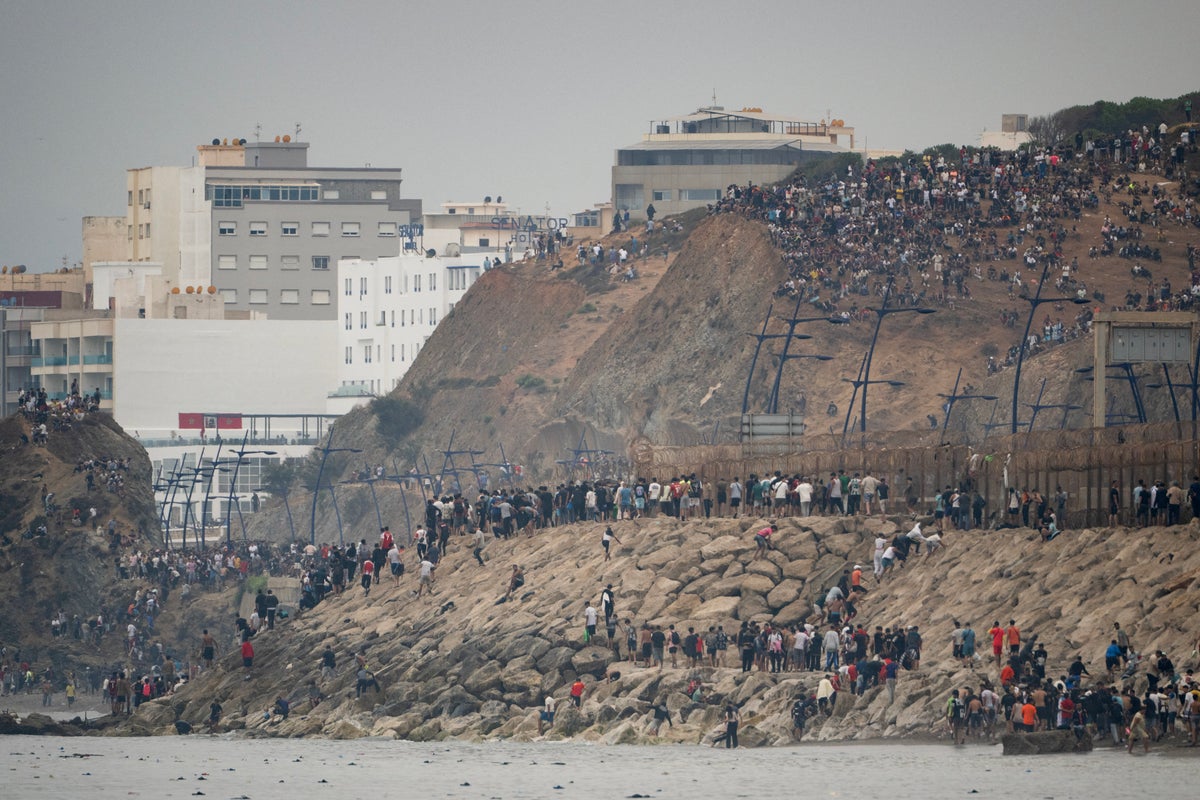
Tens of thousands of people crossed from Morocco into the tiny Spanish enclave of Ceuta in a single day, overwhelming local authorities and creating an immediate humanitarian emergency.
Picture a city of roughly 80,000 residents suddenly absorbing nearly 60,000 new arrivals within twenty-four hours. That is exactly what happened on the northern coast of Africa, turning a quiet stretch of the Mediterranean into the epicenter of a massive European border standoff. Streets filled with exhausted travelers, public parks turned into makeshift campsites, and security forces rushed to contain the chaos.
Why did this happen, and what does it mean for migration policy moving forward? Let's break down the reality behind the headlines.
The Anatomy of an Unprecedented Surge
The numbers involved defy ordinary migration patterns. While hundreds of people typically attempt the crossing weekly, this event saw tens of thousands arrive almost simultaneously. Many swam around the breakwaters from nearby Moroccan towns like Fnideq, while others rushed coastal checkpoints.
Tragically, the rush came at a severe human cost. Dozens of people died during the chaotic attempts to reach land, succumbing to dangerous waters or crush incidents near the barriers.
Spanish Prime Minister Pedro Sánchez flew to Ceuta to condemn the breach, labeling it a direct violation of territorial integrity. Yet, the immediate physical rush was only part of the story. Within hours of the initial surge, thousands of individuals began turning back voluntarily, realizing that economic opportunities inside the tiny enclave were virtually nonexistent. By Friday evening, Spanish interior officials reported that a large portion of those who crossed had already returned across the border.
Political Flashpoints and Legal Triggers
How did controls break down so completely? Analysts point to a mix of legal shifts and regional geopolitics.
Spanish authorities tied the sudden mobilization to a recent Spanish Supreme Court ruling regarding sea arrivals. The decision noted that immediate expulsions without standard administrative procedures apply differently to people arriving by water. According to Madrid, human trafficking networks weaponized this information, spreading rumors through social channels that anyone reaching the shore by sea would be allowed to stay.
Independent migration researchers suggest a deeper geopolitical layer. Similar mass-crossing events in the past have correlated with diplomatic friction between Spain and Morocco. When border enforcement relaxes suddenly, political pressure usually follows. Experts noted that the sheer scale of the movement—orchestrated overnight—pointed to systemic shifts in how local security forces managed the frontier zones on the Moroccan side.
The Broader European Pressure Test
Ceuta and Melilla represent the European Union's only land borders on the African continent. Because of this unique geography, they frequently serve as pressure valves for broader migration trends.
When thousands of people sleep on sidewalks and children wander through urban squares looking for shelter, the local infrastructure breaks instantly. European Commission officials condemned the breach, emphasizing that entry rules must be upheld and unauthorized crossings halted. At the same time, right-wing political factions across Europe seized on the incident to criticize broader national immigration policies, highlighting how quickly local border incidents can transform into continental political battles.
For anyone watching European foreign policy, the event serves as a stark reminder. Borders are fragile lines heavily dependent on fragile international cooperation. When diplomatic alignments shift or misinformation spreads unchecked through digital networks, thousands of lives can be upended in a matter of hours.
Monitor how bilateral agreements between Madrid and Rabat evolve over the coming weeks, as these diplomatic channels will dictate whether this crisis remains an isolated shock or becomes a recurring template for border management.


