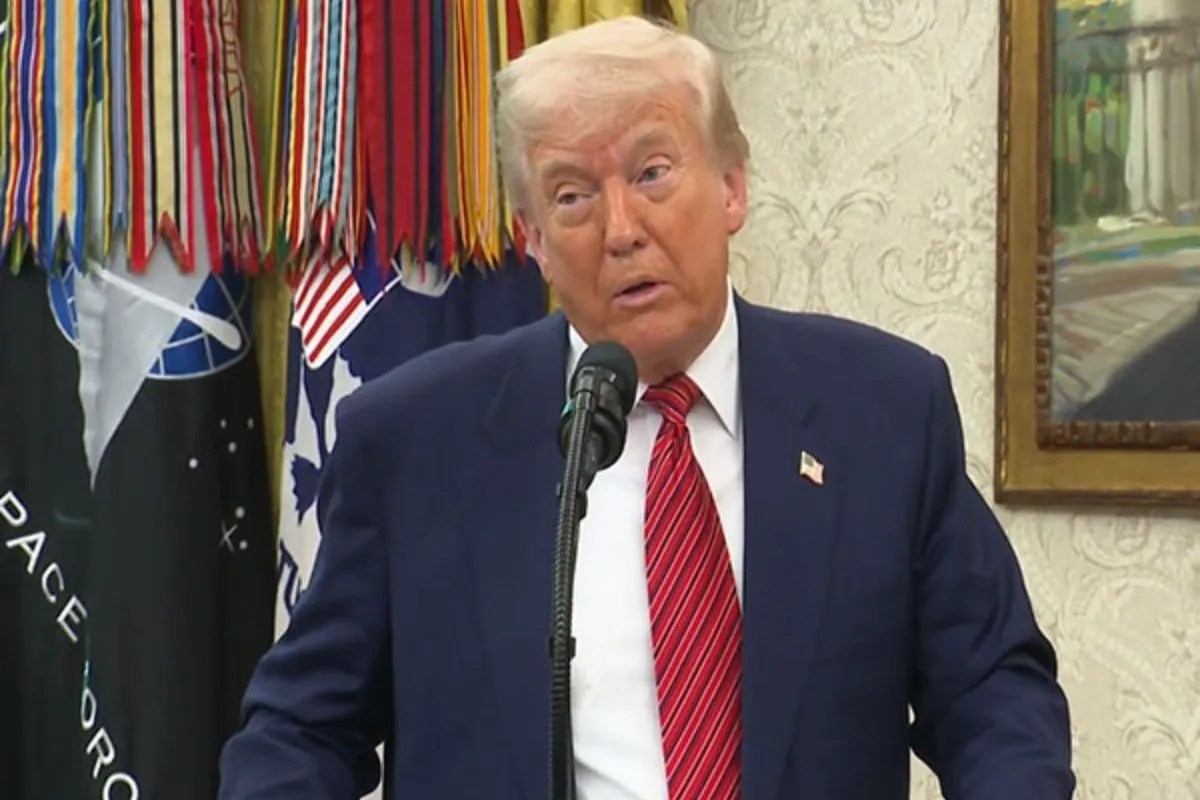
President Donald Trump has accused Canada of taking advantage of the United States for years through trade imbalances and tariffs while staging an extended White House audition between Vice President JD Vance and Secretary of State Marco Rubio as the 2028 Republican succession race takes shape. That dual spectacle, playing out across trade negotiations with Ottawa and high-profile appearances in Washington, reveals how economic brinkmanship and internal party rivalry are converging in the second half of Trump's term.
Surface coverage of these moments often treats them as disconnected soundbites. One day Trump claims Ottawa has been ripping off Washington and warns that talks remain incomplete; another day he summons Vance and Rubio to back up his policy pitch before testing who commands the room. Look closer, though, and a distinct strategic pattern emerges. Trade pressure on Canada gives the administration a tangible lever to project toughness after a bruising midterm cycle, while spotlighting potential 2028 contenders lets Trump keep every ambitious deputy on a tight leash.
How the Canada Trade Clash Became Leverage
The argument over whether Canada is taking advantage of the United States has moved far beyond routine diplomatic friction into a prolonged tariff standoff that began in early 2025 and escalated through 2026. Trump has repeatedly contended that Washington absorbs lopsided trade terms, complaining about deficits, protectionist barriers, and reliance on foreign goods while insisting the United States does not need Canadian energy, vehicles, or lumber. Even when he acknowledges brief contact with Canadian Prime Minister Mark Carney around international summits or hints that a deal could eventually come together, he keeps Ottawa off balance by refusing to promise quick relief.
For Canadian policymakers, the stakes are immediate and concrete. Ottawa has been pushing for an interim arrangement to ease steep tariffs on key exports and head off threats of even harsher auto and auto-parts duties slated for January 1. Canada-U.S. Trade Minister Dominic LeBlanc has indicated that any near-term compromise would likely leave some sectoral tariffs in place at reduced levels rather than wipe the slate clean overnight. Yet waiting out Trump carries its own economic toll, as factories, supply chains, and exporters face months of uncertainty while retaliatory measures and counter-tariffs ripple through North American commerce.
A trade dispute framed as a moral reckoning over fairness rarely ends with a tidy ledger; it reshapes supply chains and political bargaining power long before negotiators sign a text.
Economists and trade analysts point to an overlooked complication in Trump's rhetoric. Integrated supply chains in autos, metals, energy, and lumber mean tariffs rarely hit only the foreign exporter; they also raise input costs for American manufacturers and consumers while inviting counter-measures against U.S. goods. Still, from a domestic political standpoint, portraying a close neighbor as an unfair trading partner allows the White House to sound combative and transactional without committing to a permanent rupture. Whether that posture produces a durable agreement or simply prolongs friction remains an open question, especially when public polling in Canada shows sizable skepticism toward locking in concessions while Trump is in office.
Why Vance and Rubio Stand at the Center of 2028
While trade negotiators wrangle over tariffs and timelines, the question of who carries the Republican banner in 2028 is already reshaping behavior inside the administration. Trump has kept both Vance and Rubio visible at major moments, calling on them to defend administration policies and speak to questions ranging from foreign diplomacy to economic strategy. Putting two high-profile figures side by side in front of reporters turns routine briefings into a quiet stress test of loyalty, composure, and message discipline.
Vance brings populist credentials and a direct connection to the movement's nationalist wing, yet his public remarks have also drawn scrutiny when touching on sensitive topics like the aftermath of the midterms and the conflict with Iran. Rubio, operating from the State Department, projects traditional foreign-policy fluency and diplomatic polish while echoing administration themes on commercial fairness and great-power engagement. Neither man can afford to outshine the boss, nor can either look passive when the spotlight swings their way.
| Contender | Institutional Base | Core Appeal to GOP | Key Vulnerability |
|---|---|---|---|
| JD Vance | Vice Presidency | Populist economic framing and movement alignment | Friction over public commentary on recent elections and foreign policy |
| Marco Rubio | State Department | Foreign-policy command and mainstream conservative fluency | Balancing establishment polish with populist expectations |
| Stephen Miller | White House senior staff | Hard-line messaging and ideological consistency | Less traditional executive-branch or electoral resume |
Trump's habit of praising one aide, nodding to another, and occasionally tossing a surprise name like senior adviser Stephen Miller into the mix is no accident. By signaling that he might stay out of the 2028 race or withhold an early endorsement while still claiming decisive sway over party voters, Trump preserves maximum leverage. Rivals cannot coalesce around an anointed heir too early, and potential successors must keep proving their utility day by day.
What Investors and Policymakers Should Watch Next
Anyone tracking North American trade or Republican succession politics should look past sweeping declarations and focus on concrete signals. On the trade front, watch whether formal notices materialize ahead of tariff deadlines, whether sectoral duties on autos, steel, aluminum, and lumber narrow in an interim pact, and how cross-border infrastructure and data-center investments react to policy whiplash. Businesses operating across the border need contingency plans for both sudden tariff hikes and abrupt diplomatic pivots.
On the political front, pay attention to who gets sent out to defend the hardest choices when polling dips or negotiations stall. A cabinet official or vice president who absorbs heat without creating daylight between themselves and the president gains standing in the party's eyes, while any misstep that looks like freelancing invites a swift public check. Power in Washington flows to those who can read the room without losing their footing.