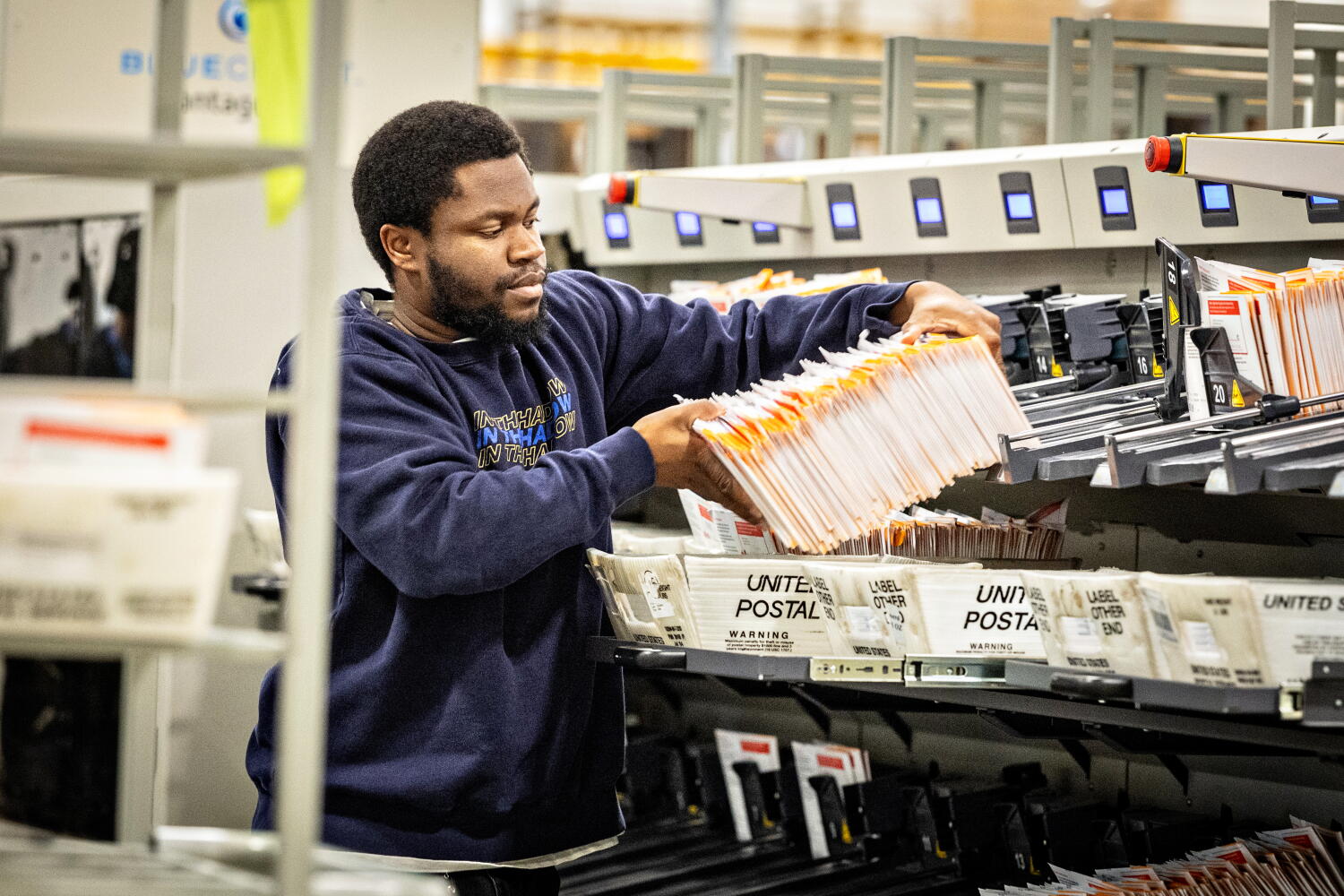
Democrats have secured control across virtually every major California down-ballot race, cementing their administrative grip on the state's executive agencies while leaving just one razor-thin contest still hanging in the balance. While national political observers fixate on top-of-the-ticket presidential margins or control of the U.S. House, the real engine of California governance runs through offices like Controller, Treasurer, Attorney General, Insurance Commissioner, and Superintendent of Public Instruction. By sweeping these contests—save for a single unresolved race locked in a late-ballot recount stalemate—the Democratic Party has effectively insulated its policy agenda from Republican interference for the next four years, demonstrating the overwhelming structural power of California's mail-in voting apparatus and labor-backed campaign infrastructure.
The victory is absolute. Yet the lingering uncertainty around that final, undecided contest reveals the exact fault lines where California's political consensus begins to fracture.
Why California Down-Ballot Races Matter More Than You Think
Most voters treat the bottom half of the ballot as an afterthought. They cast their vote for President, Governor, or Senator, and then either leave the rest blank or rely on party labels to guide their pen through a maze of obscure bureaucratic titles.
That habit is a massive strategic mistake. In a state with an annual budget exceeding $300 billion and an economy larger than almost every nation on earth, California's constitutional officers wield immense, unilateral authority. They do not just administer laws; they interpret them, fund them, and enforce them.
Consider the State Controller. This office acts as the state's chief fiscal officer, sitting on dozens of boards and commissions, including the Franchise Tax Board and the boards governing the massive public employee pension funds, CalPERS and CalSTRS. A Republican in that seat possesses the power to audit state agencies aggressively, delay disbursements during budget standoffs, and use the bully pulpit to expose wasteful spending. By keeping the Controller's office firmly in Democratic hands, the party ensures that fiscal oversight remains aligned with the legislature's spending priorities.
The Attorney General holds even sharper teeth. Beyond prosecuting complex criminal cases, the California Attorney General writes the official titles and summaries for every single ballot measure that goes before voters. Political operatives in Sacramento know that the wording of a ballot summary can swing an election by ten percentage points before a single campaign commercial airs. Controlling that pen means controlling the framing of direct democracy in the Golden State.
Then there is the Insurance Commissioner. California is currently navigating a severe property insurance crisis driven by catastrophic wildfires and soaring construction costs. Major carriers have paused new policies or pulled out of the market entirely. The Insurance Commissioner holds the statutory power to approve or reject rate hikes, regulate underwriting practices, and reshape the state's insurer of last resort, the FAIR Plan. Whoever sits in that chair dictates whether millions of homeowners can afford coverage—or find it at all.
When Democrats sweep these offices, they eliminate internal institutional friction. There is no opposing party official inside the executive branch leaking damaging audits to the press, filing lawsuits against the Governor's executive orders, or blocking regulatory appointments on state commissions.
The Structural Anatomy of a Democratic Sweep
To understand how Democrats consistently lock down these offices—even in election cycles where voters express deep frustration over the cost of living, homelessness, and crime—you have to look past the candidates themselves. Individual personalities rarely drive down-ballot outcomes in a state of nearly 40 million people.
Campaigning statewide in California is prohibitively expensive. Purchasing television airtime across the Los Angeles, San Francisco Bay Area, San Diego, and Sacramento media markets costs millions of dollars per week. Because down-ballot candidates rarely raise enough money to saturate the airwaves on their own, they rely entirely on institutional machinery to carry them across the finish line.
The Slate Mailer Industrial Complex
In the final three weeks before Election Day, California mailboxes overflow with glossy, oversized political brochures known as slate mailers. These mailers mimic official voter guides, grouping candidates and ballot measures under trusted banners like "Public Safety Voters," "Environmental Advocates," or "Senior Citizens Coalition."
Behind the scenes, slate mailers are a ruthless pay-to-play business. Political consultants run them for profit, charging campaigns tens of thousands of dollars for an endorsement slot. However, the Democratic Party and its aligned labor unions operate the most potent slate operations in the state, distributing millions of targeted mailers paid for through independent expenditure committees. When a low-information voter sits at their kitchen table with a mail-in ballot and a cup of coffee, that slate mailer becomes their cheat sheet.
The Union Ground Game
Organized labor remains the undisputed heavyweight champion of California politics. Unions representing teachers, nurses, service workers, and state employees do not just write checks; they deploy thousands of paid canvassers and phone bankers.
Their strategy is ruthlessly efficient. Rather than trying to persuade undecided swing voters in conservative enclaves like the Central Valley or the Inland Empire, labor operations focus almost exclusively on turnout among reliable Democratic voters in coastal counties. By chasing ballots—tracking who has not yet returned their mail-in envelope and knocking on their door until they drop it in a box—unions artificially inflate Democratic vote share in low-profile races where roll-off (voters skipping down-ballot contests) normally hurts the majority party.
The Top-Two Primary Filter
California's top-two open primary system, enacted in 2010, was originally sold to voters as a reform that would elect moderate, pragmatic problem-solvers. In practice, it has frequently functioned as a firewall protecting Democratic dominance.
In the June primary, all candidates appear on the same ballot regardless of party, and the top two vote-getters advance to November. In heavily Democratic statewide electorates, fractured Republican fields often split the conservative vote three or four ways, allowing two Democrats to advance to the general election. Even when a single Republican survives the primary, the sheer partisan registration advantage—where registered Democrats outnumber Republicans by nearly two to one—creates an uphill climb that requires a massive wave election to overcome.
Anatomy of the Outlier Race
If the Democratic machine is so formidable, why does one down-ballot contest remain stubbornly uncalled?
The answer lies in the unique mechanics of California's vote-counting timeline combined with specific ideological rifts within the state's electorate.
California allows mail-in ballots postmarked by Election Day to arrive at county registrar offices up to seven days later. Furthermore, county election officials must verify millions of signatures, cure mismatched signatures by contacting voters, and process conditional same-day registrations. In populous counties like Los Angeles, Orange, and Riverside, this process routinely stretches for weeks.
When a race is separated by less than half a percentage point, television networks and news desks cannot project a winner until nearly every provisional and late-arriving ballot is tabulated.
More importantly, the single unresolved race highlights a distinct vulnerability in the Democratic coalition. While California voters reliably back Democrats on social issues and environmental regulation, they grow deeply skeptical when a race touches directly on pocketbook economics, business regulation, or public safety accountability.
In contests where the Republican candidate successfully framed themselves not as a partisan culture warrior, but as an independent technocrat or fiscal watchdog—or in rare instances where two Democrats faced off in a battle between the party's progressive and business-aligned wings—the traditional partisan autopilot broke down. Voters paused. Ticket-splitting surged. Suburban moderates in Orange County, the East Bay, and Ventura County who voted Democratic at the top of the ticket crossed over to back a challenger they believed would apply the brakes to Sacramento's regulatory machinery.
The Myth of the California Republican Comeback
Every two years, political pundits seize upon a handful of competitive congressional districts or a close down-ballot race as evidence that the California Republican Party is finally staging a statewide comeback.
Do not buy the hype.
Winning a localized congressional seat in the Central Valley or holding onto a legislative district in Huntington Beach is fundamentally different from winning a statewide race. In a localized district, a Republican candidate can tailor their message to regional water rights, agricultural subsidies, or local crime rates, while avoiding national partisan baggage.
Statewide candidates enjoy no such luxury. To win statewide in California, a Republican must overcome a deficit of roughly five million registered voters. Doing so requires winning nearly every independent ("No Party Preference") voter while peeling off at least 15 to 20 percent of registered Democrats.
The modern California GOP has repeatedly failed to solve this math problem. Underfunded at the state party level and frequently pulled rightward by an activist base that prioritizes ideological purity over general-election viability, Republican statewide candidates enter the fall campaign starved for cash. Without the money to define themselves on television, they are instantly defined by Democratic attack ads tying them to national GOP figures who are deeply unpopular with California's suburban majority.
Even when a strong Republican challenger emerges with a compelling biography and a focus on kitchen-table issues like gas prices and housing affordability, the structural gravity of the electorate pulls them down in the final stretch. Late-arriving mail ballots in California historically skew significantly more Democratic than early returns, as younger, lower-propensity voters tend to drop their ballots off on Election Day itself. A narrow Republican lead on election night almost always evaporates over the ensuing two weeks as Los Angeles and Bay Area counties upload their remaining batches.
What One-Party Dominance Actually Produces
There is a dark irony to total political victory. When one party sweeps every branch of the legislature and every single down-ballot constitutional office, it loses the ability to blame the opposition when things go wrong.
California's governing class now owns every outcome completely.
If the state's budget swings back into a multi-billion-dollar deficit due to volatile capital gains tax revenues, there is no Republican Controller to blame for obstructing revenue reforms. If utility bills continue to climb to the highest rates in the continental United States, or if the property insurance market collapses further, voters will look directly at the Democratic regulators they just re-elected.
Furthermore, the absence of a viable opposition party shifts the real political battles inside the Democratic tent. When general elections become foregone conclusions, the true contests happen in legislative committee rooms, regulatory hearings, and primary challenges.
We are already seeing the friction between the party's two dominant factions:
- The Labor and Environmental Coalition: Pushing for aggressive decarbonization mandates, stricter workplace regulations, higher minimum wages, and expanded state-funded social programs.
- The Moderate Business and Housing Coalition: Desperate to streamline the California Environmental Quality Act (CEQA) to build more housing, rein in retail theft, and prevent major employers from relocating their headquarters to Texas or Nevada.
Without Republicans holding any institutional leverage in Sacramento, these two factions are forced to fight each other for control over the state's direction. That internal tug-of-war—not the partisan clash between red and blue—is what actually shapes California law.
The Real Takeaway for Voters and Campaigns
Watching the final tally trickle in for that last undecided down-ballot race offers a sobering lesson in modern American politics. Elections in massive, polarized states are no longer won by soaring rhetoric or viral debate moments. They are won in the trenches of data analytics, ballot-curing operations, and institutional endorsements.
For the single candidate still waiting on the final batch of signature-verified ballots in Sacramento or Los Angeles, the outcome will come down to a few thousand votes scattered across fifty-eight counties. Win or lose, their razor-thin margin proves that California voters are not entirely blind to the consequences of unchecked single-party rule—they just rarely find a challenger credible enough to hand the keys to.
Until the opposition figures out how to build an infrastructure capable of competing in a mail-in ballot environment, the Democratic sweep of California's down-ballot offices will remain the default setting of Golden State politics.