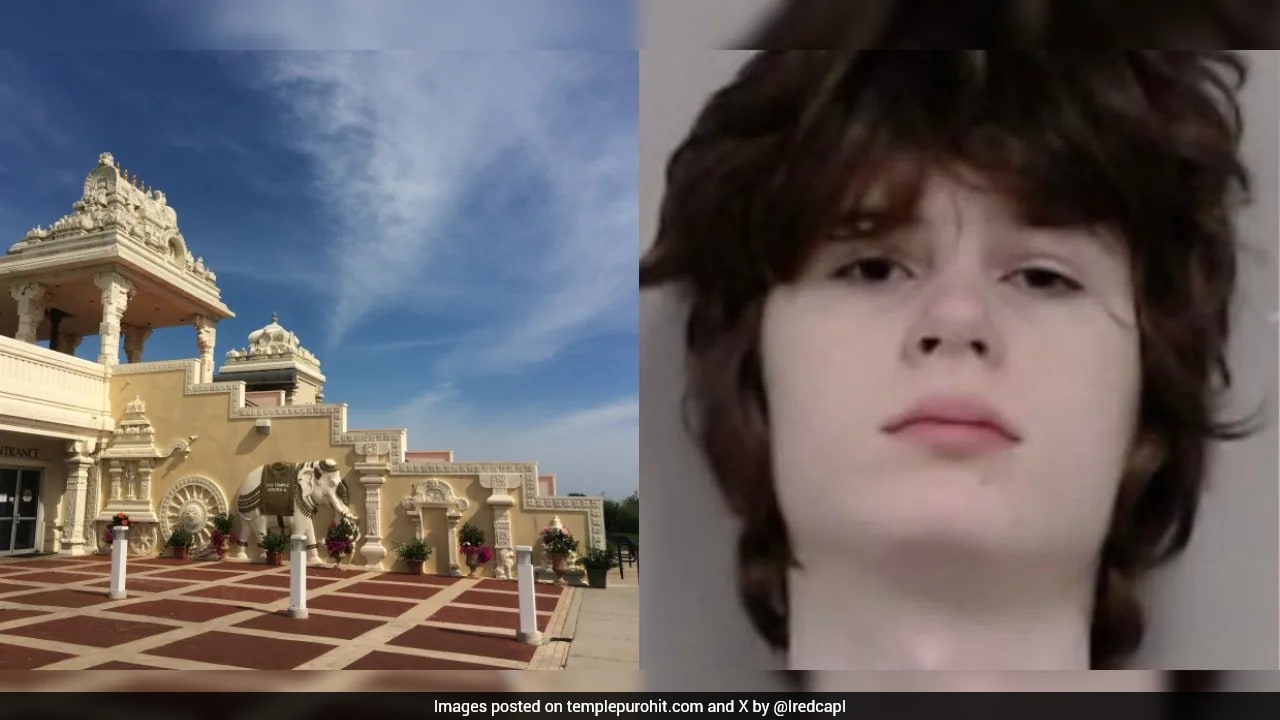
More than 100 members of Congress pressed the FBI in October to investigate an alleged shooting plot at the Sri Venkateswara Swami (Balaji) Hindu Temple in Aurora, Illinois, as a federal hate crime. The push followed the arrest of 19-year-old Alexandros Paporakis of Palatine after a coworker alerted police, with prosecutors alleging he visited the temple armed and left only after a rifle malfunction. By early November, a Cook County grand jury added dozens of state felony and misdemeanor charges, including counts of terrorism and armed violence, even as lawmakers demanded explicit federal civil-rights scrutiny and stronger protection for South Asian houses of worship.
Anyone who has covered extremism and domestic security for twenty years recognizes the pattern immediately. A local police department makes a high-stakes arrest. State prosecutors reach for tough felony counts to hold a defendant without bond. Elected officials write urgent letters to Washington demanding federal hate-crime treatment and better intelligence sharing.
On paper, the system worked. Nobody died inside the Aurora sanctuary on October 11.
Look closer at the mechanics of the case, though, and the comforting story of a clean save starts to fray. A mechanical failure on a rifle or a tip from a colleague is not a durable security architecture. It is luck intersecting with a late-stage intervention.
Why Lawmakers Demanded a Federal Hate Crime Lens
State charges move fast and hit hard, especially in Cook County, where prosecutors secured a sweeping grand jury indictment in November covering terrorism, making a terrorist threat, armed violence, and weapons violations. From a courtroom standpoint, those counts already carry severe exposure and justify pretrial detention.
So why did Rep. Raja Krishnamoorthi—who said he and his family were worshipping at the Aurora temple on the day of the alleged plot—lead more than a hundred lawmakers in writing to FBI Director Kash Patel? Because state indictments and federal civil-rights investigations do different jobs.
A state prosecution focuses on local peace, statutory weapons offenses, and state terrorism definitions. A federal hate-crime investigation asks a broader question about motive, ideology, online networks, and cross-jurisdictional threat patterns. When prosecutors allege a suspect wrote an eight-page manifesto rooted in white supremacist and neo-Nazi ideology and spent roughly 13 minutes in an SUV at a temple parking lot, treating bias strictly as a sentencing footnote misses the strategic picture.
Federal civil-rights authority does more than add prison time; it forces federal agents to map ideological pipelines across state lines and share threat intelligence with local houses of worship before an attack reaches the parking lot.
Lawmakers also pointed to a surge in online hostility targeting South Asian communities, citing a report that tracked over 542,000 hateful posts on X between January 2025 and June 2026, with monthly volume rising roughly 240 percent from January 2024 through June 2026. When online abuse climbs at that velocity, local police departments cannot be left to connect every digital dot on their own.
The Friction Between State Cases and Federal Probes
In theory, local police, state prosecutors, and federal agents work hand in glove. In practice, turf, evidentiary standards, and timing create real friction.
State prosecutors want an airtight, fast-moving case before a local judge. Federal civil-rights investigators often move more deliberately to prove bias beyond a reasonable doubt under federal statutes, while counterterrorism or cyber units examine digital devices, encrypted chats, and potential co-conspirators or online encouragers.
Consider a hypothetical example that shows how easily wires get crossed. Suppose a local police department seizes a suspect's phone during a fast-moving arrest and needs immediate digital extraction to support a state detention hearing. If federal agents hold specialized forensic tools or are building a parallel civil-rights file, disagreements over chain of custody or premature disclosure can slow down one side while the other rushes toward a grand jury.
There is a second gray area that politicians rarely acknowledge in press releases. Not every hate-motivated plot cleanly satisfies every technical element of a federal hate-crime charge on day one. Investigators must separate ideological rants, chaotic planning, and unverified claims from provable criminal intent tied to a protected characteristic. Pressing the FBI to treat potential hate-crime violations seriously is reasonable; demanding a predetermined legal label before the evidence is sorted is not.
What the Aurora Case Reveals About Temple Security
Suburban temples and gurdwaras across the United States sit in a difficult operational spot. Many serve thousands of worshippers on weekends and festivals, yet operate with lean security budgets, volunteer parking attendants, and open campus layouts designed for welcoming crowds rather than hardening perimeters.
When an alleged plot unfolds at a major suburban temple—even one where an Indian American congressman happened to be present with his family—it exposes a gap between symbolic reassurance and practical readiness.
| Security Layer | Current Reality at Many Houses of Worship | Practical Upgrade Needed |
|---|---|---|
| Perimeter & Access | Open parking lots with brief or unmonitored vehicle stops | Sightline checks, license-plate awareness, and clear exterior camera coverage |
| Threat Intelligence | Reactive updates after major incidents or local arrests | Direct, timely briefings from federal and local fusion centers to temple boards |
| Grant Funding | Uneven access or delayed release of federal security funds | Faster, predictable disbursement of nonprofit security grants for smaller temples |
| Insider & Community Reporting | Reliance on informal tips after threats escalate | Clear, rehearsed escalation paths between community leaders, staff, and police |
Lawmakers have also pressed for the timely release of federal nonprofit security grants to help religious institutions pay for physical safeguards. Money alone does not stop a determined attacker. Cameras and gates do not replace a trained eye or rapid police response, and over-fortifying a house of worship can turn a place of prayer into an armed compound. Still, under-resourced congregations should not have to choose between basic safety upgrades and financial strain.
Beyond the Press Conference
Washington loves a high-profile letter. Over one hundred signatures in a single push signals political weight, and it puts public pressure on FBI leadership and the Justice Department to answer questions about how threats against Hindu, Sikh, and broader South Asian communities are handled.
Letters do not harden a building, though. Nor do they fix the underlying reality that a teenager allegedly spent two years planning an attack before a coworker stepped in and a weapon reportedly jammed.
If temple boards, local police chiefs, and federal investigators want fewer close calls, they have to treat the Aurora episode as an operational stress test rather than a one-off headline. Audit parking lot vulnerabilities, test emergency lockdown and evacuation drills with local officers, and verify that temple leaders actually receive actionable threat bulletins before a crisis reaches the front steps.