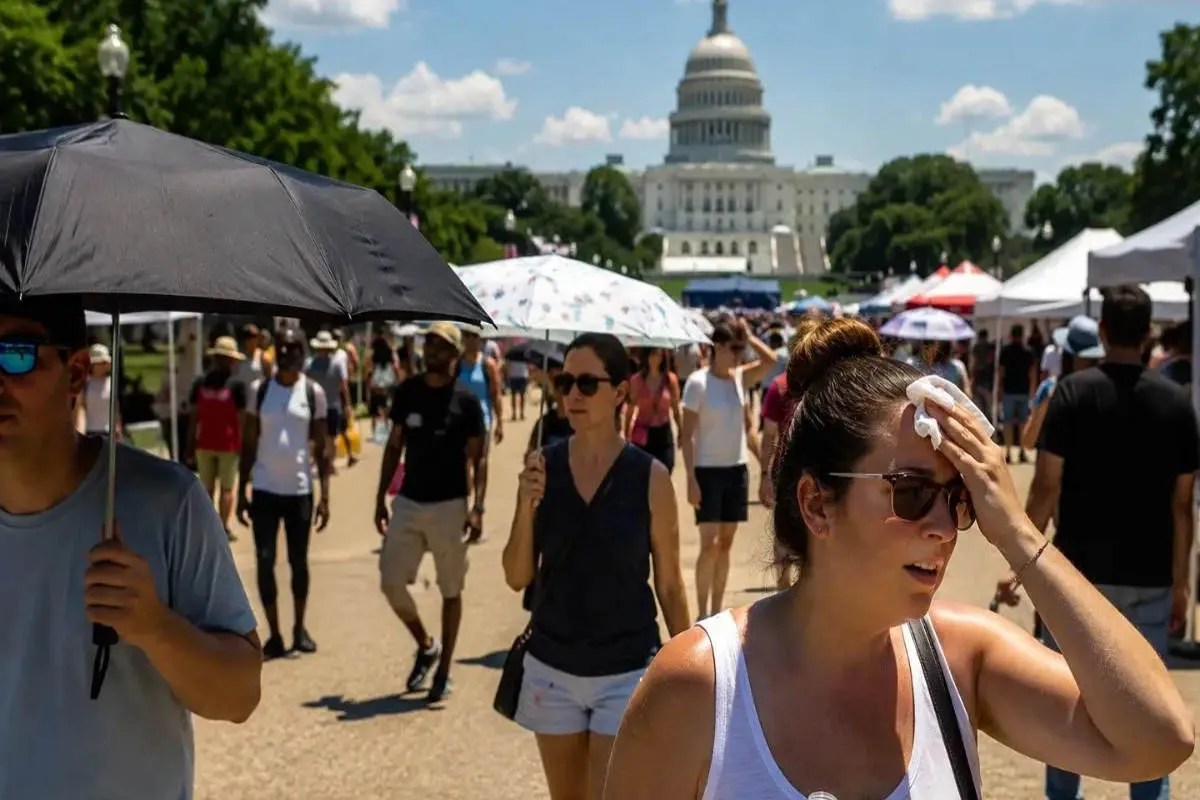
A relentless heatwave across the United States has claimed at least 24 lives and left over 40 million people under heat alerts, exposing a systemic failure in national infrastructure rather than just a streak of bad weather. The immediate toll is measurable in morgues and emergency rooms, but the deeper crisis lies in how the country's power grids, labor laws, and urban designs are failing to adapt to prolonged thermal stress. This is not a temporary seasonal inconvenience. It is a structural emergency catching major metropolitan areas completely unprepared.
The Lethal Illusion of the Thermostat
When temperatures soar past triple digits, the standard response is to tell people to stay indoors and turn on the air conditioning. This advice assumes everyone has equal access to functioning cooling systems and the financial means to run them. It ignores a harsh economic reality.
Air conditioning is treated as a luxury commodity rather than a life-saving utility. In many older municipal building codes, landlords are legally required to provide heating during the winter, but there is no equivalent mandate for cooling in the summer. Tenants in low-income housing often trap heat in brick and concrete ovens, unable to afford the spike in utility bills even if they own a window unit.
The physical toll of this economic gap is immediate. When the human body cannot cool down through sweat, core temperatures rise, leading to heat exhaustion and eventually heat stroke. Organ failure follows quickly. The 24 recorded deaths are merely the tip of an iceberg, representing only the most acute cases verified by medical examiners, while thousands more suffer lasting cardiovascular and renal strain out of public sight.
A Grid Built for the Past
The surge in power demand to cool millions of homes simultaneously pushes regional electrical grids to their absolute breaking point.
Most of the American electrical grid was designed and built decades ago, predicated on historical weather patterns that no longer exist. Transformers degrade faster when they cannot cool down at night, a phenomenon becoming increasingly common as nocturnal temperatures stay dangerously high.
The Urban Heat Island Compounding Effect
Cities do not just experience the weather. They amplify it. Asphalt, steel, and concrete absorb solar radiation during the day and radiate it back into the environment long after the sun goes down.
- Tree Canopy Deficits: Wealthier neighborhoods often enjoy mature tree lines that lower ambient temperatures by several degrees through shade and evapotranspiration.
- Industrial Concentration: Working-class districts are frequently paved over, lacking green spaces and bearing the brunt of the urban heat island effect.
- Stagnant Airflow: High-rise configurations can block natural wind currents, trapping pollutants and hot air at street level.
This structural disparity means two people living in the same city can experience vastly different microclimates, with the poorest residents facing the highest temperatures with the fewest resources to combat them.
The Invisible Workforce at Risk
Public messaging focuses heavily on the elderly and vulnerable infants, which leaves another massive risk category largely ignored: outdoor laborers.
Agriculture, construction, and delivery services require millions of individuals to exert themselves physically in direct sunlight during peak thermal hours. Federal protections specifically regulating heat exposure for outdoor workers are non-existent. A patchwork of state laws creates a dangerous environment where taking a water break can be grounds for termination in certain jurisdictions.
The economic pressure to maintain productivity creates a culture of silence. Workers routinely ignore early symptoms of heat illness—dizziness, nausea, muscle cramps—out of fear of losing their daily wages. By the time a worker collapses on a job site, permanent neurological or physical damage may already be done.
The Financial Mirage of Mitigation
Local governments often point to cooling centers as their primary defense mechanism against extreme heat events. These are usually libraries, senior centers, or public gymnasiums opened during emergencies.
While well-intentioned, this strategy suffers from fundamental logistical flaws. Getting to a cooling center requires vulnerable individuals to walk through the very heat they are trying to escape, often relying on unreliable public transit systems with unshaded bus stops. For an elderly person with limited mobility, a cooling center two miles away might as well be on the moon.
True resilience requires shifting funding away from temporary band-aids and toward permanent infrastructure overhauls.
Necessary Structural Upgrades
- Mandatory Cool Roofs: Requiring commercial and residential buildings to use reflective materials that bounce sunlight away rather than absorbing it.
- Grid Decentralization: Investing in localized microgrids and battery storage to prevent widespread blackouts when demand peaks.
- Shade Infrastructure: Treating shade as a public utility by aggressively planting urban forests and constructing physical canopies over transit hubs.
These changes require significant capital investment and political will, two things often in short supply until a disaster becomes too large to ignore.
The High Cost of Inaction
Relying on emergency responses to handle predictable climate patterns is an expensive, deadly strategy. The economic toll manifests in melted asphalt, buckled train tracks, strained healthcare systems, and lost labor productivity.
The current death toll of 24 is a warning sign of a system operating beyond its parameters. Without an immediate, systematic rewriting of building codes, labor standards, and energy priorities, the casualty lists of future summers will inevitably grow longer, transforming a manageable weather event into an annual national catastrophe.