Disaster response in geopolitically sensitive border zones triggers a predictable friction between transparent public accounting and state-managed security narratives. When a catastrophic flash flood driven by glacial collapse tears across the Tibet-Nepal frontier—destroying infrastructure at the Gyirong Port crossing and generating thousands of casualties and missing persons—the structural response from authorities dictates the integrity of the historical record. Analyzing the systemic removal of citizen-generated crisis documentation from domestic digital platforms reveals how information management functions as an operational mechanism during high-casualty environmental events.
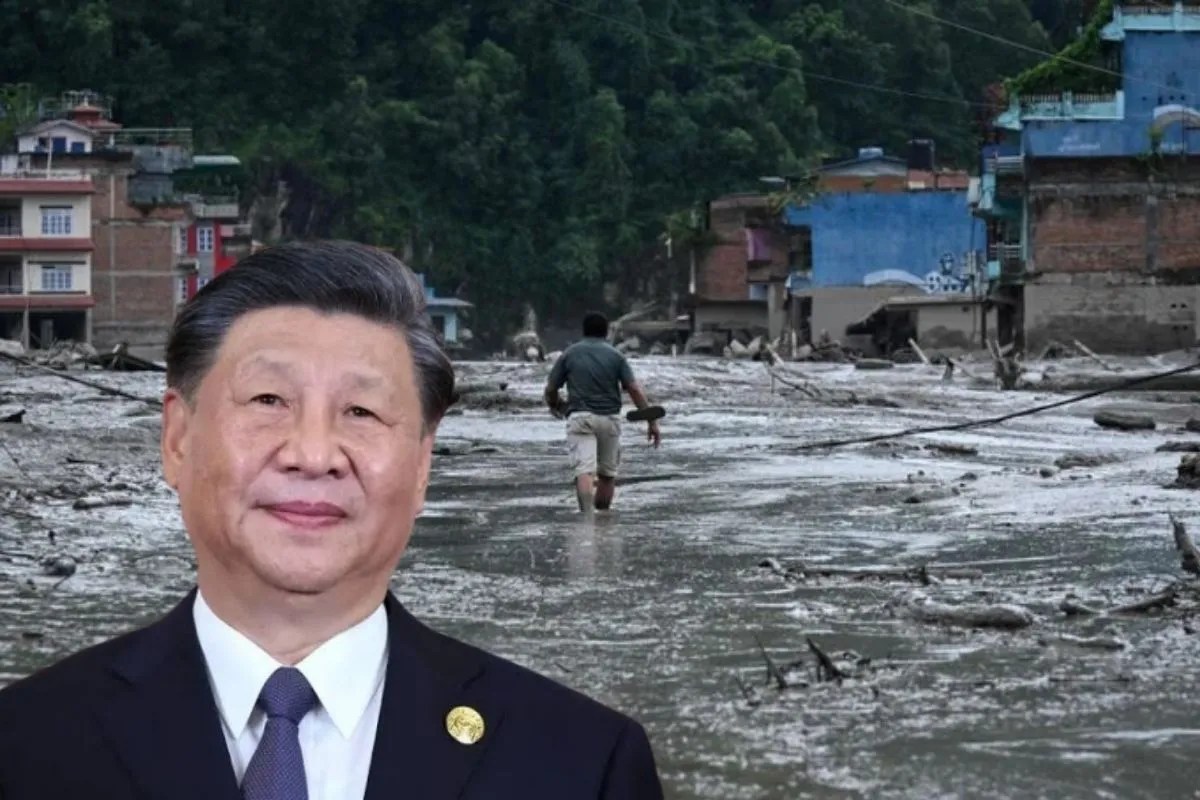
The mechanical sequence of the disaster began when destabilized terrain and glacial detachment sent a massive volume of water, mud, and debris cascading down the Lhende Khola into the Bhote Koshi and Trishuli river systems. Physical destruction spanned multiple jurisdictions, yet the downstream propagation of the floodwaters meant that while Nepal absorbed the vast majority of documented fatalities, the genesis point remained locked inside a tightly regulated administrative zone. Within hours of the initial impact, local surveillance footage and mobile recordings captured the kinetic scale of the mudslide sweeping across border infrastructure. These artifacts quickly migrated to domestic social applications before systematic content removal protocols were executed.
Understanding why authorities suppress organic visual data requires evaluating the operational costs of an uncurated information ecosystem. In regions where administrative access is strictly conditioned by national security directives, visual proof of catastrophic structural failure challenges official competence metrics. The state-sanctioned response operates through centralized communication channels that prioritize rescue mobilization optics—highlighting emergency personnel deployments, aerial asset allocation, and leadership directives—over raw damage assessments. When citizen uploads depict scale that exceeds official parameters, the divergence creates a legitimacy deficit. Consequently, platform algorithms and moderation teams enforce content removal to eliminate competing baseline measurements of the crisis.
This dynamic creates a profound asymmetry in cross-border accountability. Downstream populations and independent observers rely on open reporting to model hydrological risks and assess structural vulnerabilities. When the upstream sovereign restricts independent journalists and deletes localized digital media, downstream stakeholders lose the empirical inputs necessary for predictive flood modeling. Hypotheses regarding secondary contributing factors—such as localized infrastructure projects, tunneling operations, or seismic triggers—cannot be verified through direct field inspection. The resulting information vacuum forces analysts to depend exclusively on restricted state releases, rendering independent verification statistically impossible.
Managing environmental catastrophes through information suppression alters the risk calculus for neighboring states sharing transboundary river basins. When early warning telemetry and localized visual records are treated as state secrets rather than public safety utilities, downstream disaster preparedness is severely degraded. Future risk mitigation requires establishing institutional frameworks that mandate real-time hydrological data sharing across borders, decoupling basic environmental safety metrics from geopolitical security classifications.
Nepal Flash Flood News LIVE : नेपाल में तबाही का LIVE Video | Big Breaking | China | India | Tibet
This live news broadcast covers the unfolding flash flood disaster along the Nepal-Tibet border, providing visual context on the rescue operations and regional impacts.