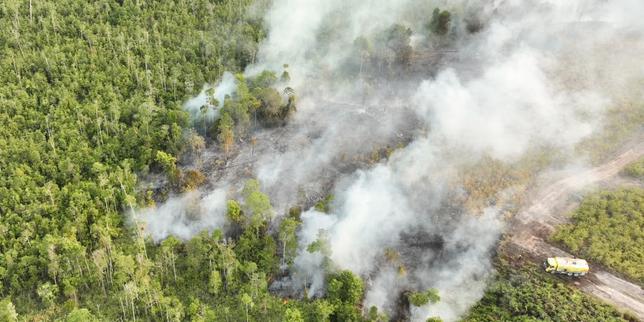
Smoke is choking Borneo. The sky over Kalimantan looks like bruised orange metal. President Prabowo Subianto just ordered an immediate surge of 1,500 additional soldiers straight into the heart of the disaster zone.
If you are wondering why normal firefighting methods are failing here, look at the scale. Over 200,000 hectares have already burned between January and July. That footprint is three times the total area of Jakarta.
The El Nino Factor
Dry weather is a killer. A powerful El Nino pattern has locked Southeast Asia in a chokehold, bringing severe drought right when the dry season peaks.
Experts like David Gaveau, who runs the deforestation tracking platform Nusantara Atlas, point out a harsh reality. Four decades of intense deforestation turned massive swaths of peatland into literal tinderboxes. When peat dries out, it doesn't just burn on the surface. It smolders underground, creating toxic smoke that defies standard water hoses.
The damage is already outpacing previous dry spells in 2019 and 2023. Officials are bracing for September and October, which typically bring the absolute peak of heat and drought.
How the Military Response Works
Three fresh military battalions are moving in from outside Kalimantan. They aren't arriving empty-handed. Six heavy-duty helicopters are hitting the skies for round-the-clock waterbombing operations.
At the same time, authorities are ramping up weather modification efforts. Cloud-seeding planes are trying to squeeze rain out of stubborn skies before the dry spell deepens further.
Ground teams face brutal conditions. Peat fires require digging trenches, flooding subterranean hotspots, and manual smothering. It is exhausting, hazardous work.
Regional Fallout and Air Quality
The crisis stops at no borders. Thick smog has already drifted across the border into Malaysian Borneo. Sarawak state recorded hazardous air quality levels, forcing local authorities to issue urgent health warnings.
Back in Indonesian Borneo, mayors in cities like Palangkaraya are telling residents to stay indoors and wear masks. Visibility on local roads has dropped to dangerous levels in broad daylight.
Only heavy, sustained rainfall will finally put an end to the disaster. Until then, thousands of boots on the ground remain the only line of defense against total ecological collapse.