The Department of Justice’s decision to indict former FBI Director James Comey over an Instagram post of seashells spelling "8647" marks a significant expansion of federal threat statutes. Comey, who claims he merely found the shells arranged on a North Carolina beach, was charged with willfully threatening the President of the United States. Almost immediately, an underground economy of independent vendors, led by an Air Force veteran selling apparel bearing the numerical sequence, defied the Justice Department's interpretation. The confrontation highlights a dangerous intersection between political hyperbole, slang interpretation, and free speech.
When a grand jury returned the indictment in late April 2026, it did more than just target a high-profile former law enforcement official; it cast a wide net over the burgeoning cottage industry of anti-administration merchandise. The case raises profound questions about what constitutes a genuine threat under 18 U.S.C. Section 871, a statute originally designed to protect the commander-in-chief from physical harm.
By criminalizing a numerical sequence found on a beach, prosecutors have thrust themselves into an ideological battle. The merchandise community, specifically former military personnel who view the prosecution as a heavy-handed suppression of dissent, has pushed back. Vendors openly dare federal authorities to enforce the law against their small businesses, which continue to print shirts, hats, and bumper stickers bearing the four-digit code.
The Legal Architecture Behind the Indictment
The government's case against James Comey relies on a literal reading of 18 U.S.C. Section 871, which makes it a class E felony to knowingly and willfully make any threat to take the life of, or to inflict bodily harm upon, the President of the United States. Historically, this statute has been applied to individuals who communicate explicit, unambiguous declarations of intent to harm the chief executive. The bar for conviction has traditionally required proof of a true threat, a legal standard defined by the Supreme Court to separate protected political hyperbole from unprotected criminal behavior.
In the 1969 case Watts v. United States, the Supreme Court considered a protester who said during a public rally that if he were drafted and had a rifle, the first man he would get in his sights was Lyndon B. Johnson. The court held that this statement was not a true threat but rather political hyperbole. The Court emphasized that context matters, and even highly offensive or threatening-sounding language must be evaluated in light of the circumstances surrounding its utterance.
In the case of James Comey's 2025 social media post, the numerical arrangement presents a unique problem of interpretation. The number 86 is widely understood in American slang as meaning to dispose of, discard, or reject something. The number 47 refers to the current president, Donald Trump, who is the 47th (and 45th) president of the United States. The conjunction of these two numbers creates a phrase that means "get rid of the president."
Prosecutors argue that, given the historical animosity between Comey and Trump, the implication is clear: it constitutes an implicit call to violence or assassination. However, defense attorneys and First Amendment advocates argue that "eighty-sixing" someone in American vernacular refers to firing them, throwing them out of an establishment, or voting them out of office. By criminalizing the ambiguity of this slang, the Justice Department has created a legal theory that could criminalize millions of citizens who have used similar rhetoric.
Furthermore, in federal criminal cases, the mens rea requirement is essential. The Supreme Court's 2023 decision in Counterman v. Colorado clarified the First Amendment standard for true threats, holding that the state must show the defendant consciously disregarded a substantial risk that their communication would be viewed as threatening violence. Comey's defense team intends to use this precedent to argue that the former FBI director lacked the necessary intent, as he claims he simply found the shells and posted them as a political joke without considering the violent interpretation of the numerical code.
The Linguistic Origins of Eighty-Six
To understand the absurdity of the prosecution, one must examine the history of the number 86. The phrase originated in the early 20th century. While its exact etymology remains a subject of linguistic debate, it is heavily documented in American food and beverage lexicon.
According to records from the Merriam-Webster dictionary, the term dates back to the 1920s or 1930s. One origin story points to soda fountain and lunch-counter slang, where a restaurant would announce that they were "86" an item, meaning they were completely out of stock. Another story relates to the legendary Chumley's bar in New York City. The story goes that when police would raid bars during prohibition, they would call the bartender to "86" the customers, meaning to make them exit through the 86 Bedford Street door.
Over the decades, the term evolved to mean the ejection of a customer from a venue or the refusal to serve them. In modern corporate and everyday English, it is routinely used as a synonym for canceling, discarding, or abandoning an idea or person.
During the previous administration, critics of Joe Biden sold merchandise featuring the number 86 followed by 46, signifying a desire to see the 46th president removed from office either through impeachment, resignation, or the next election. While some conservative groups criticized this merchandise, the Justice Department under the Biden administration never pursued criminal charges against the vendors or the buyers. This selective prosecution argument forms a significant part of the defense's strategy, demonstrating that the government is applying the law differently depending on the political target.
The Cottage Industry of Retail Resistance
The commercialization of political slang has evolved from simple bumper stickers into a multi-million dollar direct-to-consumer industry. Platforms such as Etsy, Redbubble, and independent online storefronts have democratized the production of political merchandise. When Comey posted the picture of seashells on a beach in North Carolina, the phrase "8647" was already circulating in anti-administration circles.
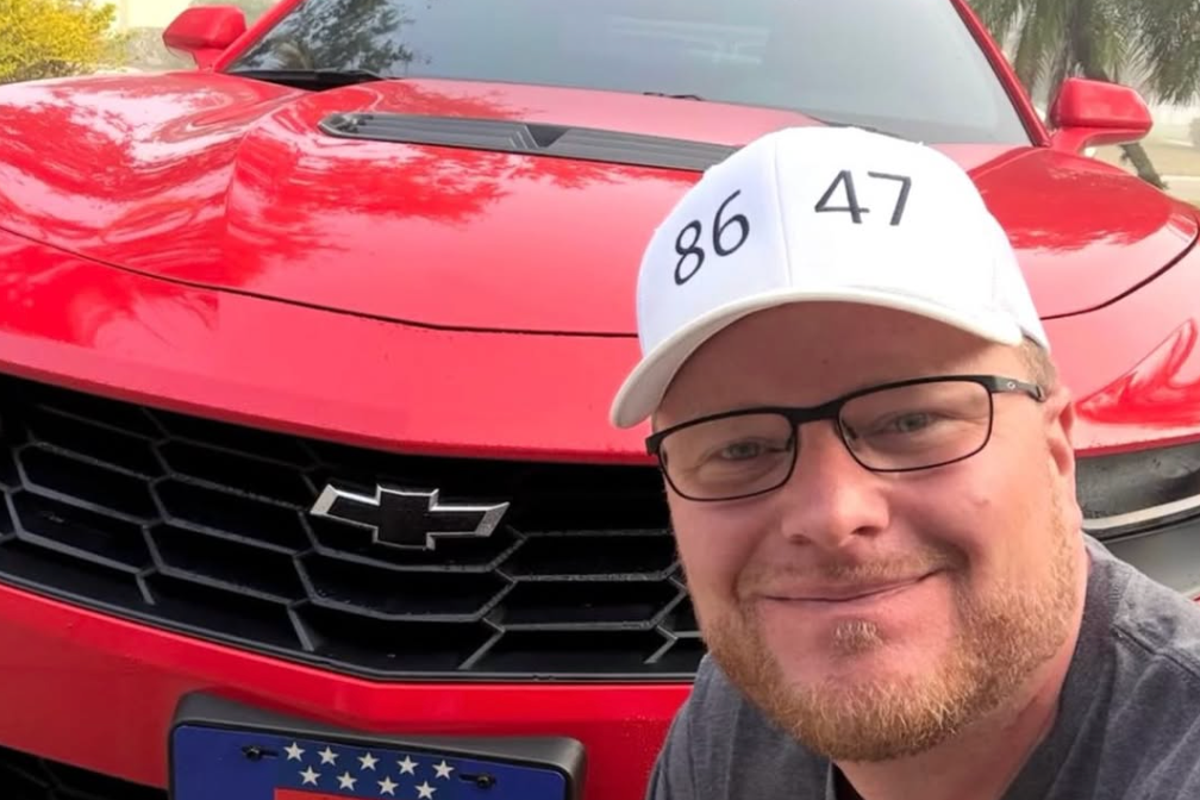
Following the indictment, an Air Force veteran who operates a small online merchandise store in the American Midwest decided to capitalize on the controversy. Speaking on condition of anonymity due to fears of federal retaliation, the vendor explained the business model.
"We started printing the shirts because people wanted to express their frustration with the current administration's overreach," the veteran stated in an interview. "When Comey was indicted, our sales skyrocketed. The government thinks they can intimidate us by going after a high-profile figure, but it’s just making people more defiant."
The veteran's shop sells dozens of variations of the design, featuring the number 8647 in bold font on hats, flags, and t-shirts. The entrepreneur maintains that the merchandise represents political dissent, not a physical threat.
The strategy of these small business owners is to challenge the federal government to enforce the law against everyday citizens. By daring authorities to arrest them, they are attempting to create a legal bottleneck that would force the courts to clarify the limits of the statute. If the Justice Department begins arresting small business owners for printing ambiguous numerical slang on cotton t-shirts, it could trigger a constitutional crisis regarding commercial speech and freedom of expression.
The Economics of Political Apparel
The market dynamics of political merchandise are largely driven by controversy and the desire of individuals to signal their political identity. In the past, political campaigns relied on large organizations to manufacture and distribute campaign buttons, yard signs, and t-shirts. Today, print-on-demand technology allows a single individual with an internet connection to design and sell merchandise globally within minutes.
This decentralized distribution network makes it incredibly difficult for law enforcement to regulate or censor speech. If an online platform bans a specific design, creators simply migrate to another platform or set up independent e-commerce sites using decentralized hosting.
The price of a typical 8647 t-shirt ranges from twenty to thirty dollars. A significant portion of this revenue goes to the creator, making it a lucrative side hustle for many Americans. The veteran’s operation, for instance, generates thousands of dollars in monthly revenue. The high profit margin and the speed of production mean that any legal action taken against these individuals faces massive logistical hurdles.
Furthermore, the merchandise serves as a tool for offline activism. Protesters wear these items at rallies, public meetings, and demonstrations. The items become a visual language that allows individuals to express complex ideas—such as the desire to see a change in leadership—without needing to articulate them in lengthy speeches. The government's attempt to criminalize the symbol is viewed by many in this industry as an attack on the very mechanism of modern protest.
Constitutional Tensions and Free Speech
The First Amendment protects even offensive or controversial speech from government suppression, with narrow exceptions for incitement and true threats. The Supreme Court has repeatedly affirmed that the government cannot ban speech simply because it finds the message offensive or because the message implies a desire for political change.
Legal experts argue that the indictment of James Comey is an example of viewpoint discrimination, where the Justice Department is using a vague statute to penalize a prominent critic of the administration. In cases involving speech against the president, courts apply a high degree of scrutiny to ensure that prosecutors are not using threat statutes as a tool for political censorship.
If the case proceeds to trial, the defense will likely call linguists and sociologists to testify about the meaning of the number 86 in contemporary American slang. They will present evidence showing that the term is used across the service industry, in corporate settings, and on popular television shows to mean the cancellation or removal of an object or person, rather than a physical threat.
The prosecution will face a significant burden in proving that Comey acted with the specific intent to threaten the president's life. The fact that the image was a formation of seashells on a beach further complicates the government's argument. It requires the jury to infer that Comey possessed a malicious, violent intent based on an arrangement of objects that he claims to have found by chance.
The Ripple Effect on Digital Commerce
The implications of this case extend far beyond the legal troubles of a former FBI director. They strike at the heart of the digital e-commerce ecosystem. Independent creators rely on a relatively hands-off approach from major tech platforms to sell their merchandise. If platforms such as Amazon, Redbubble, and Etsy face pressure from the federal government to remove products containing anti-administration slogans, it could lead to widespread self-censorship.
The veteran vendor expressed concern over the possibility of payment processors, such as Stripe or PayPal, freezing their accounts. This form of financial de-platforming has become a common tool used by financial institutions to cut off funding for controversial or politically sensitive businesses.
"If the banks decide that selling an 8647 t-shirt is a violation of their terms of service because it’s somehow related to an ongoing federal investigation, our business is gone overnight," the veteran remarked. "That's the real threat here. It's not the FBI knocking on the door. It's the financial system deciding what political views are acceptable."
The case highlights how administrative power can be exerted not just through direct criminal prosecution, but through the infrastructure of the internet itself. By framing political dissent as a potential threat to national security or public safety, the government and its corporate partners can throttle the financial lifelines of small, independent creators.
Historical Precedent and the Path Ahead
To understand the significance of the 8647 prosecution, it is useful to look back at how previous administrations handled similar expressions of political discontent. During the war in Vietnam, protesters carried signs bearing the phrase "Draft Johnson" alongside various expletives. While many found the language deeply offensive, the Supreme Court ruled that the First Amendment protected the use of vulgarity in political speech as a way to express the intensity of the speaker's emotions.
Similarly, during the presidencies of Barack Obama and George W. Bush, protesters regularly carried effigies and used language that expressed a desire for the leaders to be removed from office. While some individuals were investigated by the Secret Service, indictments were rare and usually reserved for cases where the suspect made a direct, credible, and specific threat against the physical safety of the leader.
The current administration's approach represents a break from this historical precedent. By focusing on symbolic speech and numerical codes, the government is expanding the definition of a threat to include any expression of a desire to see a leader removed from power.
The Air Force veteran and other independent vendors remain defiant. They continue to print and ship merchandise across the country, turning the indictment into a symbol of resistance. As the legal battle unfolds in the federal courts, the merchandise stands as a physical manifestation of a broader debate over the boundaries of free speech in a deeply polarized nation.
The courtroom battle over the Comey indictment will set a dangerous precedent for future administrations. If the government succeeds in criminalizing ambiguous slang, it will establish a blueprint for suppressing dissent.
The t-shirts and hats continue to sell. The message remains clear to those who wear it.