The rain in Brussels rarely falls straight down. It drifts sideways, cold and relentless, clinging to the concrete pillars of the King Baudouin Stadium. Inside the dressing rooms, beneath the weathered stands, you can hear the faint hum of the city moving past, oblivious to the quiet pressure cooker sitting at its center.
To coach the Belgian national football team is to inherit a phantom estate. For a decade, this small nation possessed a concentration of talent so pure, so outrageous, that winning became an expectation rather than a dream. Eden Hazard gliding past defenders with casual arrogance. Kevin De Bruyne threading passes through eye-of-the-needle gaps that only he could see. Thibaut Courtois filling the goal like a fortress wall.
Then came the rust. The silver vanished, leaving behind the heavy weight of what might have been.
When Rudi Garcia walked into that storm, he brought a specific brand of frantic tactical philosophy—quick transitions, high emotional energy, a belief that momentum could override underlying friction. It was a brief, volatile period. Dressing room whispers grew into public side-eye. Results flickered like a dying lightbulb. When the federation finally parted ways with Garcia, the Belgian job did not look like an opportunity. It looked like a trap.
Enter Mark van Bommel.
The Enforcer at the Whiteboard
To understand why Belgium turned to Mark van Bommel, you have to remember what he was as a player.
He was not the artist. He was the man who stopped the art from happening.
As a midfielder for Bayern Munich, AC Milan, and the Dutch national team, van Bommel perfected the dark arts of midfield survival. He knew exactly when to drag a thumb across an opponent’s collarbone, when to step on a boot just outside the referee’s field of vision, and how to break the rhythm of an over-confident attack with a single, surgical foul. He played football with the cold calculation of a chess grandmaster who wasn't above knocking over the board if things got untidy.
Yet, as a manager, van Bommel is something far more nuanced than his playing career suggested. At Royal Antwerp, he proved he could take a fragmented, historical giant drowning in its own past and forge a resilient, double-winning machine. He did not rely on poetry. He relied on structure.
Imagine walking into a room filled with young prodigies and aging icons, all carrying the bruised ego of a failed generation. That is van Bommel’s current reality.
"Players don't need another friend," a former international midfielder once told me over coffee in Antwerp, reflecting on van Bommel's coaching style. "They need someone who knows exactly where the landmines are hidden because he planted half of them himself."
The Ghost of the Golden Era
The fundamental problem facing Belgian football is not a lack of talent. It is a crisis of identity.
When you spend ten years telling a fan base that they possess the best team in the world, anything less than absolute dominance feels like a betrayal. But football eras do not die with a bang; they wither through quiet attrition.
Consider the contrast between the outgoing management and the incoming regime:
| Managerial Approach | Rudi Garcia Era | Mark van Bommel Era |
|---|---|---|
| Tactical Philosophy | High-risk fluidity and emotional momentum | Rigid defensive compactness and clinical counters |
| Dressing Room Style | Charismatic, reactive, explosive | Methodical, uncompromising, direct |
| Primary Focus | Unleashing offensive talent | Restoring defensive discipline and game control |
| Handling Pressure | Public deflections and media sparring | Internal isolation and pragmatic realism |
Garcia wanted the team to play with flair, to regain the lost magic of 2018. But you cannot recreate magic with a squad in transition. Van Bommel understands this reality deeply. He knows that when a team is fragile, you do not build from the attack backward. You build from the mud up.
A Metaphor in Tactical Chalk
During his first training session, van Bommel did something telling. He did not set up complex attacking drills or encourage freestyle possession games. He spent forty-five minutes positioning his back four relative to the center circle.
Step two meters left. Drop three meters back. Hold.
It was boring. It was repetitive. It was precisely what a team suffering from defensive amnesia required.
Metaphorically speaking, if Rudi Garcia tried to repair a broken sports car by polishing the hood and revving the engine, van Bommel immediately crawled under the chassis with a wrench, covered in grease, checking the oil lines.
The stakes could not be higher. Belgium finds itself in a precarious qualification landscape where mid-tier European nations no longer fear the red shirts. The intimidation factor is gone. Opponents no longer park the bus and hope for a draw; they attack Belgium's flanks with aggressive confidence.
To fix this, van Bommel must execute a delicate balancing act. He must integrate the promising new wave of talent—players who grew up watching Hazard and De Bruyne on television—without crushing their creative spirit under the weight of his tactical dogma.
The Human Reality of the Sideline
Watch a manager on the touchline during a high-stakes international match.
The stadium is a roaring wall of noise, eighty thousand voices screaming in unison. But for the man in the dark suit standing inside the technical box, the world shrinks to a patch of grass sixty yards wide.
Every misplaced pass feels like a personal insult. Every defensive lapse triggers a spike of adrenaline that burns the back of the throat.
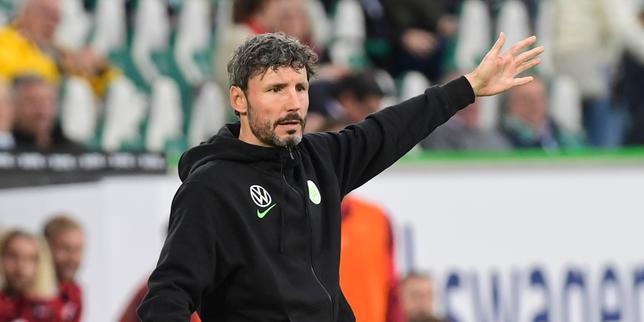
Van Bommel stands there, hands jammed deep into his coat pockets, jaw clenched so tight you can see the muscle flexing beneath the skin. He does not yell constantly like Garcia did. He watches. He waits.
He knows that international management is not about day-to-day coaching. You get the players for five days every two months. You have eight training sessions to install a complex tactical system, fix deep-seated mental fatigue, and convince twenty-three millionaires to run through brick walls for a shared vision.
It is an absurd job. It defies logic. Yet, men like van Bommel are drawn to it precisely because of its impossible nature.
The Long Road to Redemption
In the corridors of the Belgian Football Association in Tubize, the mood has shifted from panic to a guarded, quiet tension. The hyperbole has been stripped away. Nobody is talking about winning world titles anymore. The conversation has returned to fundamentals: work ethic, structural integrity, and accountability.
Van Bommel’s appointment marks the end of Belgium's romantic period. The dream of winning with unbridled beauty is over. The era of cold, hard pragmatism has arrived.
If the new manager succeeds, it will not be because he reinvented the game or uncovered a hidden prodigy in the Belgian second division. It will be because he taught a proud, wounded footballing nation how to suffer together again, how to grind out ugly 1-0 victories on rainy Tuesday nights in Eastern Europe, and how to respect the dirty work that precedes any true glory.
The sideways rain outside the King Baudouin Stadium continues to fall, slicking the turf where so many promises were broken. On the sidelines, Mark van Bommel turns up his collar, steps out into the damp cold, and gets to work.